Dangerous Medicinals: The Plants That Are Both Cure and Poison
A sixteenth-century physician named Paracelsus left behind one line that, more than any other single sentence, explains everything in this entry: the dose makes the poison. Nearly every plant in this archive proves that principle in one direction or another, but a specific subset proves it both ways at once — genuinely dangerous in raw or excessive form, and genuinely valuable, even life-saving, in carefully measured doses. This piece pulls together the entries where that duality isn't incidental folklore color, but the literal, central fact of the plant's story.
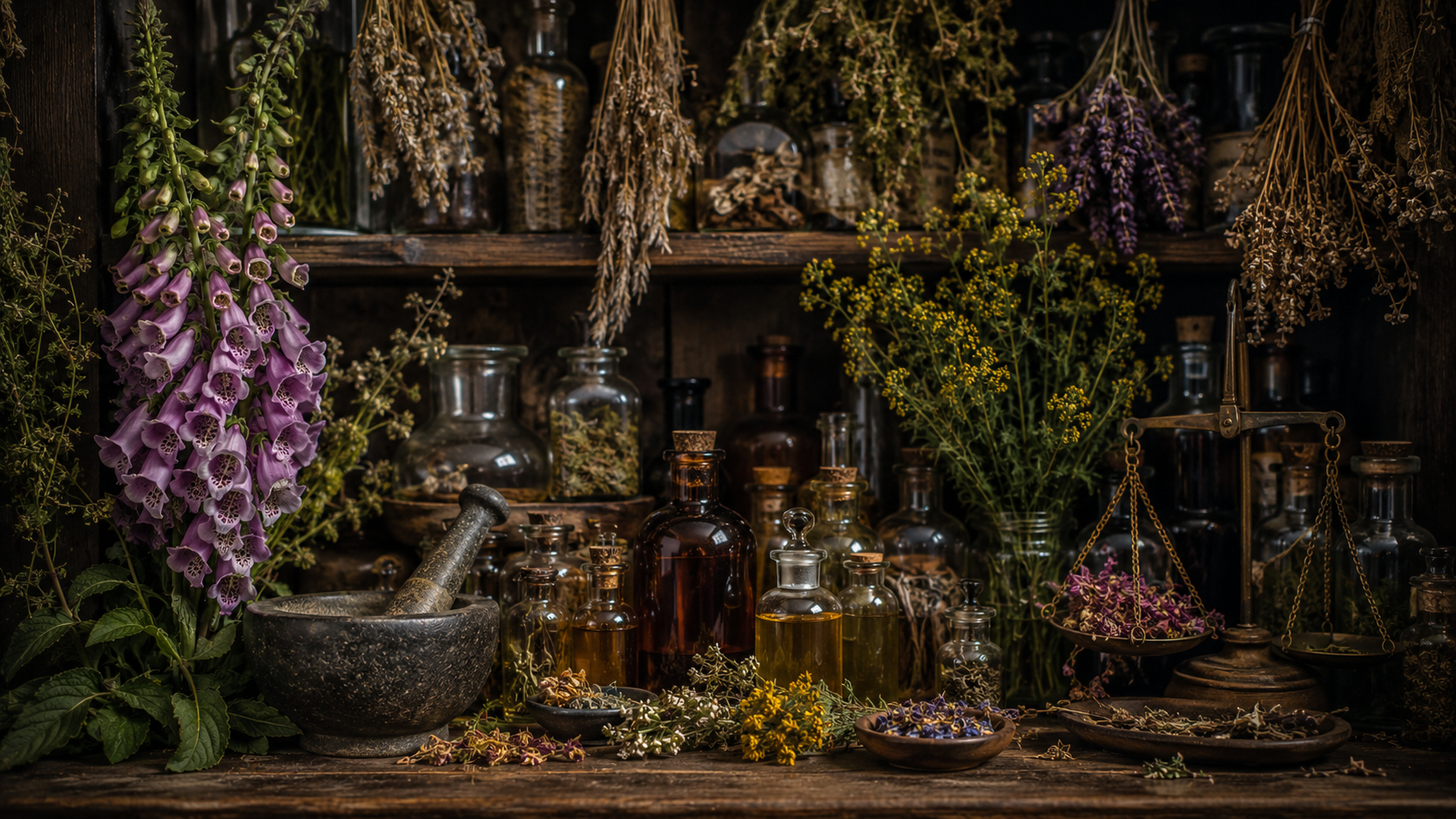
When the Measurement Actually Worked
Two plants in this archive represent something close to a clean success story: a genuinely dangerous compound, identified, measured, and turned into reliable modern medicine without losing its usefulness in the process.
Foxglove's path to digitalis is the model case. A Scottish physician learned a folk remedy from a healer his own era might otherwise have dismissed or persecuted, spent a decade methodically studying dosage and risk, and produced a heart medication still in clinical use over two centuries later. The compounds he isolated remain the basis of digoxin and digitoxin today — proof that a plant's folk reputation, taken seriously rather than dismissed, can become rigorous medicine.
Pacific Yew's journey to Taxol followed a messier but ultimately similar arc: an overlooked, unremarkable forest tree, a single specimen logged almost by accident during a federal screening program, and eventually one of modern oncology's most important chemotherapy drugs — paclitaxel — derived from a compound that nearly cost the species its own survival before science found a sustainable production method.
Both stories share a structure worth naming directly: a dangerous plant, a patient and rigorous process of measurement, and a result genuinely safer and more useful than the raw plant ever was.
When Separation, Not Measurement, Is the Solution
Castor Bean solves the poison-versus-medicine problem differently than foxglove or yew — not through careful dosing of the same compound, but through outright separation. Commercial castor oil removes the toxic protein ricin during processing entirely, leaving behind a genuinely benign product used in everything from skin care to industrial lubrication. The "medicine" and the "poison" aren't the same substance at different strengths here; they're two different substances extracted from the same seed, one kept, one discarded.
Belladonna occupies a related, more split-purpose position: atropine, the alkaloid responsible for the plant's lethality, is also a real and continuing medical tool — used to dilate pupils for eye examinations, treat certain heart conditions, and, in a detail covered elsewhere in this archive, serve as part of the standard treatment for poisoning from an entirely different plant, death camas. Atropine doesn't need to be separated from belladonna's danger the way ricin is separated from castor oil's safety; it needs to be precisely measured, used deliberately for its specific pharmacological effect rather than diluted away from it.
Folk Medicine Modern Caution Hasn't Fully Resolved
A separate cluster of plants in this archive occupies murkier territory — genuinely used medicinally for centuries, genuinely still used in narrow, modern contexts, but without the clean, confident dosing resolution foxglove or yew eventually achieved.
Rue carried a documented reputation as a poison antidote (mithridate) and a treatment for various ailments across ancient and medieval medicine, and still appears today in small culinary and traditional contexts — but its phototoxicity and reproductive-health risks mean modern guidance treats it with caution rather than confident clinical application.
Wormwood's medicinal thread never broke despite absinthe's notoriety eclipsing it in public memory — it remains used in digestive bitters today, and its close relative, sweet wormwood, produced one of the most significant antimalarial breakthroughs in modern medicine. But common wormwood itself remains something used carefully in small amounts, not confidently dosed the way digitalis is.
Mugwort spans an unusually wide range of traditions — Greek and Roman gynecological use, Anglo-Saxon protective medicine, and genuinely current use in Chinese moxibustion therapy — but like rue and wormwood, it occupies a "used cautiously, in specific contexts" position rather than a fully resolved modern pharmaceutical one.
Pennyroyal represents the most serious unresolved case in this entire category. Its historical reputation, particularly around reproductive health, persisted for centuries despite real, severe danger that modern toxicology has now documented in stark terms — including fatal cases. Unlike foxglove, no safe, reliable dosing threshold was ever established for pennyroyal's most historically significant use, and modern medicine's answer here isn't measurement. It's a clear, unambiguous warning.
The Pattern This Category Keeps Teaching
Lay these entries side by side and a clear lesson emerges: "used in traditional medicine for centuries" is not the same claim as "safe," and the plants that successfully crossed from folklore into modern pharmacology — foxglove and Pacific Yew specifically — did so only after rigorous, patient, scientific measurement replaced folk-dosage guesswork. The plants that haven't made that crossing yet, or never will, aren't necessarily less historically significant. They simply represent cases where the gap between traditional belief and demonstrated safety was never fully closed, and in pennyroyal's case, where closing that gap revealed genuine, serious danger rather than validation.
Quick Answers
Which plant in this archive best demonstrates "the dose makes the poison"? Foxglove is the clearest example — the same compound that's lethal in raw form became digoxin, a precisely dosed heart medication still used in modern cardiology.
Is "natural" or "traditional" medicine automatically safer than synthetic drugs? No — several plants in this archive, particularly pennyroyal, demonstrate that long traditional use doesn't guarantee safety, and some traditional uses have been documented as genuinely dangerous once modern toxicology examined them closely.
How did castor oil become safe if the plant produces one of the deadliest toxins known? Through processing and separation rather than dosing — commercial castor oil has the toxic protein ricin removed during manufacturing, leaving a genuinely different, safe product behind.
Are any of these plants still recommended for home medicinal use today? Generally, no, without professional guidance — even the plants with genuine modern pharmaceutical value (like foxglove and yew) are used in precisely measured, manufactured medications rather than home preparation of the raw plant.
Which plant in this category represents the most serious unresolved danger? Pennyroyal — unlike foxglove or yew, no safe dosing threshold was ever successfully established for its most historically significant use, and modern medicine's response is caution rather than measured application.