Mugwort: The Mother of Herbs
Medieval Europeans gave mugwort a title few other plants in this archive can claim: Mater Herbarum, the Mother of Herbs. It was counted among the nine sacred plants of Anglo-Saxon herbal tradition, believed capable of warding off evil, poison, and disease all at once — and it shares its genus, and its namesake goddess, directly with wormwood, already covered elsewhere in this archive. Where wormwood became infamous through absinthe and biblical apocalypse imagery, mugwort built its reputation more quietly, as a household protector, a dream-inducing herb, and one of the oldest continuously used medicinal plants in the world.
Some traditions go further still, claiming mugwort isn't just an old plant — it's the oldest plant, full stop. The Ainu people of Japan reportedly hold mugwort as the oldest herb in existence, used specifically to drive demons out of a possessed person by brushing them away with bundled stalks of it.
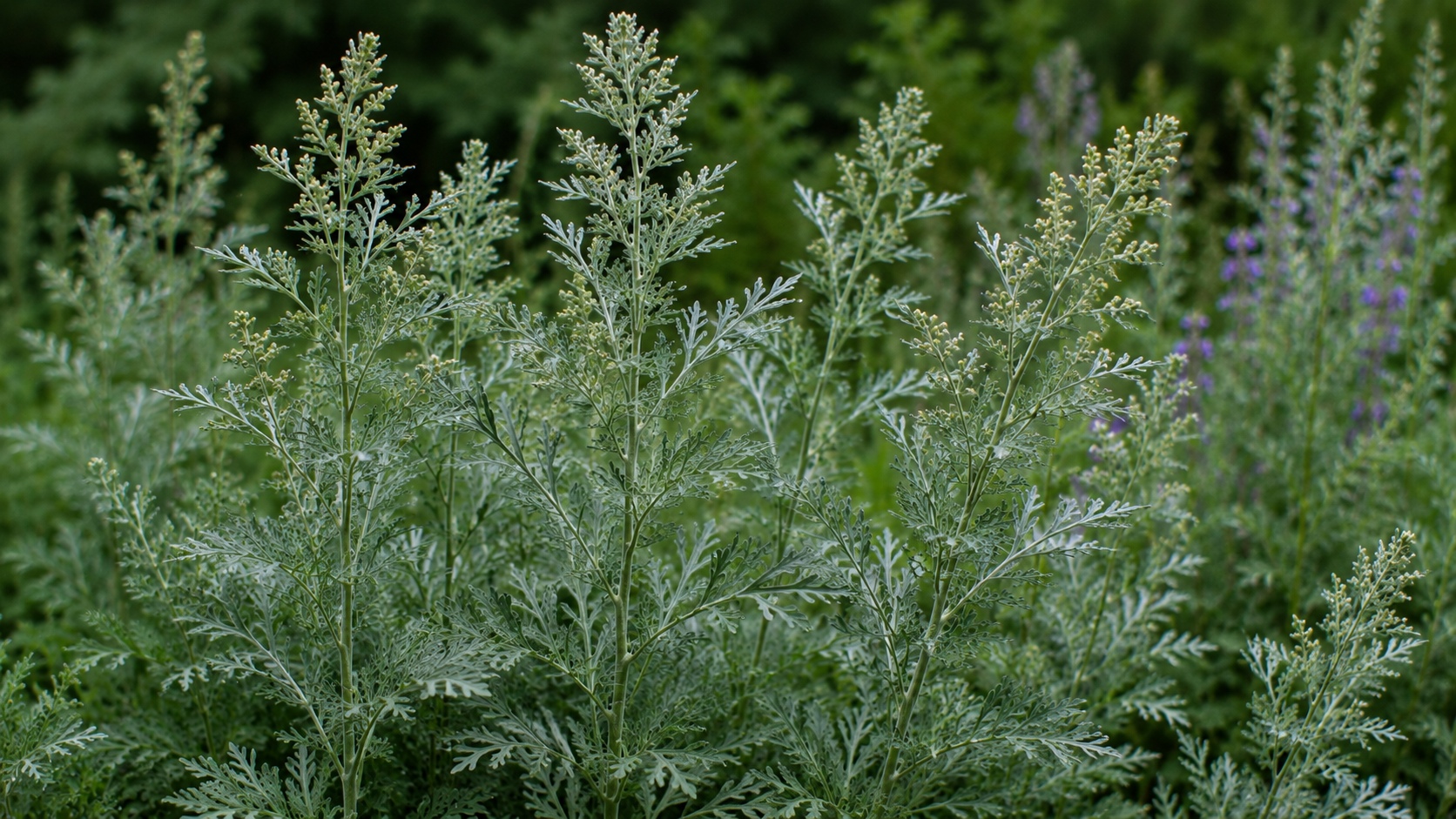
A Name Shared With a Hunting Goddess
Like wormwood, mugwort's scientific name, Artemisia vulgaris, ties it directly to Artemis, the Greek goddess of the hunt, wilderness, and childbirth — and the connection wasn't purely symbolic. The first-century physician Dioscorides documented Artemisia specifically for digestive complaints and gynecological conditions, and mugwort was historically carried as a protective amulet specifically for pregnant women, invoking the goddess's own association with safe childbirth directly through the plant that bears her name.
The English name "mugwort" has a more down-to-earth, considerably less mystical origin: most sources trace it to its historical use flavoring beer and mead — a "mug" herb, in the most literal sense — predating the widespread use of hops in brewing by centuries.
A Plant for Midsummer, and a Plant Against Evil
Mugwort's folklore concentrates overwhelmingly around a single date on the calendar: Midsummer's Eve, also known as St. John's Eve, the night before the feast of John the Baptist. Anglo-Saxon tradition held that mugwort should be dug up specifically on this night, in search of a small "coal" believed to form secretly beneath the plant's roots — a charm said to grant its finder protection from lightning, plague, and carbuncles for the year ahead. Parallel traditions across medieval Germany and the Netherlands gave mugwort the alternate name St. John's Plant, worn or carried on the same night specifically to ward off evil spirits — a belief rooted partly in legend that John the Baptist himself carried the plant with him into the wilderness for protection.
The protective folklore extended well beyond a single night. Mugwort was traditionally believed to protect travelers specifically from exhaustion, heatstroke, and dangerous wild animals on long journeys — a use with a surprisingly literal historical echo, since Roman soldiers reportedly tucked mugwort leaves into their sandals on long marches, whether for genuine physical relief, ritual protection, or both. In Sicily, women fashioned small crosses from mugwort and placed them on rooftops on the eve of Ascension Day, seeking a blessing through exactly the same plant valued elsewhere as a ward against entirely different, more sinister forces.
The Herb of Dreams
Mugwort's other defining folkloric reputation concerns sleep, and specifically dreaming. Across English, Victorian, and modern occult tradition alike, the plant has been consistently associated with vivid, prophetic, or more easily recalled dreams — placed under pillows, brewed as a bedtime tea, or stuffed into small dream pillows specifically to influence what happens once the sleeper drifts off. This reputation is sometimes attributed to thujone, a compound also found in wormwood, suspected of producing a mild oneirogenic, or dream-intensifying, effect, though the exact mechanism remains poorly understood scientifically even today.
It's worth noting, as a point of historical accuracy this archive tries to hold itself to: some of the more elaborate Victorian-era claims about mugwort's dream-inducing folklore trace back to writers citing earlier sources rather loosely, occasionally overstating or subtly misquoting what those original texts actually said. The dream association is genuine and old, but like much of herbal folklore passed hand to hand across centuries, it's accumulated some exaggeration along the way.
A Medicine Stretching From Ancient Rome to Modern Acupuncture Clinics
Mugwort's medicinal use spans an unusually wide range of traditions, all converging on roughly the same plant for related purposes. Beyond its long-documented reproductive and digestive use in ancient Greek and Roman medicine, mugwort remains a foundational herb in traditional Chinese medicine today, where dried, aged mugwort leaf is rolled or pressed into a tool called moxa and burned close to the skin in a practice called moxibustion — a heat-based therapy still used alongside acupuncture in clinics around the world, with the word "moxa" itself believed to derive from a Japanese term for the plant.
As with several entries elsewhere in this archive carrying a comparable historical reputation, mugwort was also historically used in attempts to influence menstruation and pregnancy — a use documented across multiple folk medicine traditions, though, as with those other entries, this is a use modern medicine approaches with real caution rather than guidance.
Quick Answers
Is mugwort the same plant as wormwood? No, though they're closely related — both belong to the genus Artemisia and share some folklore and chemistry, but mugwort (Artemisia vulgaris) and common wormwood (Artemisia absinthium) are distinct species, distinguishable by mugwort's leaves being green on top and whitish underneath, versus wormwood's silvery color on both sides.
Why is mugwort associated with dreams specifically? The plant has a long folkloric and some anecdotal modern reputation for intensifying or aiding recall of dreams when consumed as tea or placed near a sleeper, possibly related to thujone, though the scientific evidence for this effect remains limited.
Is mugwort dangerous to use? Like its relative wormwood, mugwort contains thujone and should be used cautiously and in moderation; it's generally considered safer in typical culinary or topical use than in concentrated extracts, but should be avoided during pregnancy.
What is moxibustion, and is it related to mugwort? Yes directly — moxibustion is a traditional Chinese and East Asian medicine practice involving burning a prepared form of dried mugwort, called moxa, near acupuncture points on the skin, and remains in clinical use today.
Why is mugwort called "the mother of herbs"? The title dates to medieval Europe, where mugwort was counted among the nine sacred Anglo-Saxon herbs believed to ward off evil, poison, and disease, reflecting its broad, foundational reputation across European folk medicine.
Is mugwort the same plant referenced in the Chernobyl wormwood myth? It's related to the confusion — "Chernobyl" is a Ukrainian word that actually refers to mugwort (translating roughly to "black bush" or a related local plant name), not to true wormwood, despite the popular but mistaken belief connecting the disaster's name to Artemisia absinthium specifically.