ABOUT UNDINE GRIMOIRES
Undine Grimoires is designed as a structured archive, not a linear blog.
While individual essays can be read on their own, the site itself is organized as an interconnected system of sections — each devoted to a recurring area of study. Mythology connects to seasonal practice. Haunted geography intersects with cultural history. Horror in popular media traces back to older symbolic frameworks. The Witch’s Curio Cabinet anchors theory in tangible tools and materia.
Nothing here exists in isolation.
The structure encourages exploration rather than consumption. Pages reference one another. Themes resurface in new contexts. Older material is revisited and expanded rather than buried beneath new posts.
You are not expected to read everything.
You are invited to follow what calls to you.
Some sections lean historical.
Some lean analytical.
Some move through story.
All are placed deliberately.
This site will continue to grow in layers — not through volume, but through depth. As new research reshapes older conclusions, pages may evolve. As seasonal rhythms shift focus, emphasis may change. The architecture remains steady, even as the contents expand.
Undine Grimoires is not meant to be scrolled quickly.
It is meant to be wandered.
“What endures is not what was loudest, but what was remembered.”
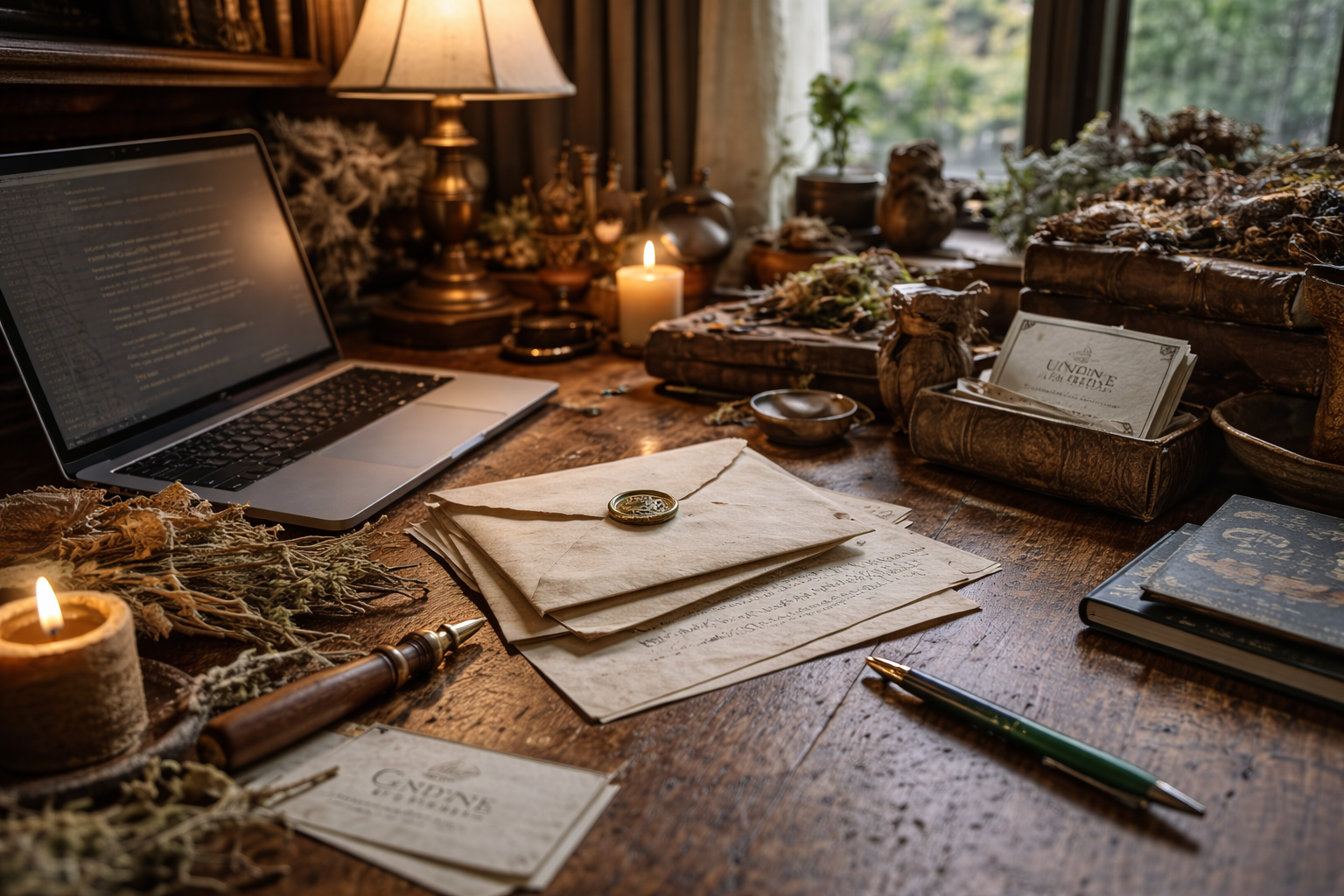
Our Mission: To document and explore the enduring echoes of mythic and occult traditions across history and modern culture, prioritizing depth, context, and integrity over spectacle.
“Every archive has quiet shelves… and doors that creak when you open them.”
A Message From the Author:
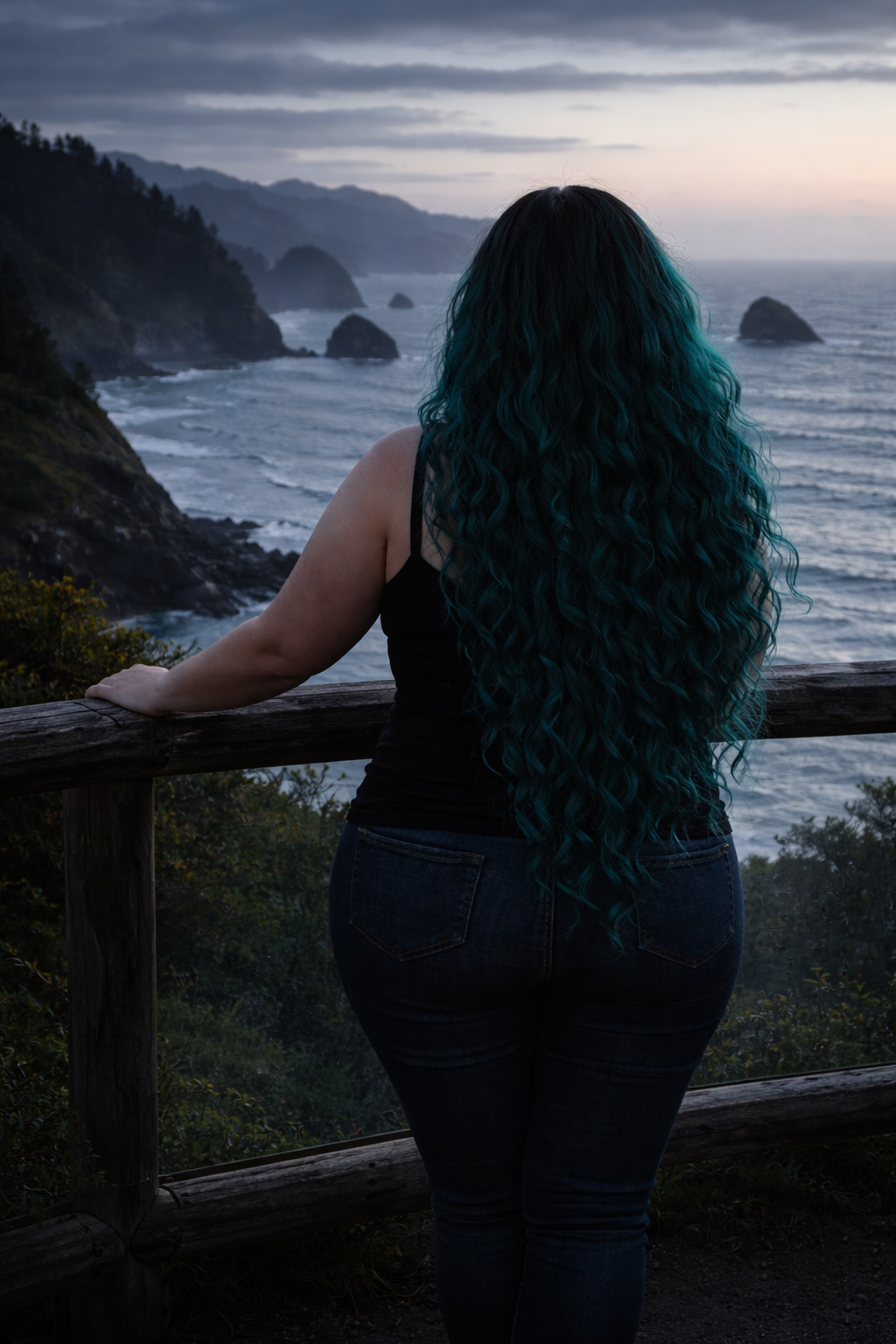
I’m Dryad Undine.
I’m a writer, researcher, and lifelong collector of folklore, occult history, and the strange ways humans make meaning out of uncertainty. Undine Grimoires grew out of years spent reading across disciplines—mythology, anthropology, religious history, psychology, and folk practice—and noticing how often those threads were either oversimplified or sensationalized elsewhere.
I wanted a place where complexity could survive. An archive I wish I’d had earlier: one that treats folklore seriously without demanding belief, approaches occult material without theatrics, and makes room for curiosity, skepticism, and restraint to exist side by side.
Much of what lives here sits at thresholds—between history and story, practice and symbolism, memory and invention. Some entries are analytical. Some are narrative. Some exist simply because something strange, beautiful, or unsettling deserved to be examined more carefully than it usually is.
You are welcome to read quietly, wander without direction, disagree with conclusions, or leave things unresolved. You don’t need to believe in magic to be here. You don’t need to practice anything. Reading is enough.
Undine Grimoires is a living body of work. It changes as I learn more, as sources are reexamined, and as new questions arise. If you return years from now, some things may look different—and that’s intentional.
Thank you for being here, however briefly or deeply you choose to stay.
— Dryad Undine
Mythologies that survived suppression and reinterpretation
The turning of the Wheel and its seasonal thresholds
Lost civilizations and cultural enigmas
Haunted places approached as site records, not spectacle
Urban legends and fairy tales traced to their roots
Occult symbols examined through historical lens
Horror in popular media and its ancestral lineage
A curated cabinet of tools and correspondences
Nothing stands alone. Everything cross-references something else. The archive is meant to be explored slowly — not consumed, not rushed.
If you choose to wander, follow the threads.
What You’ll Find Here
Myth reduced to aesthetic fragments without context.
Seasonal rites stripped of history for the sake of trend.
Lost civilizations presented as certainty without evidence.
Haunted places sensationalized for spectacle rather than examined as record.
Urban legends repeated without tracing their origin.
Occult symbols detached from the cultures that shaped them.
Horror consumed without questioning what it inherits.
Tools and correspondences promoted without research or responsibility.
Nothing here is rushed. Nothing is posted simply to fill space. The archive is meant to be studied slowly — examined, questioned, and revisited.
If you choose to wander, do so with care.
…. AND WHAT YOU WON’T
FAQs
-
No. Many readers approach Undine Grimoires through historical, literary, anthropological, or cultural interest. Belief is not required. Curiosity and thoughtful reading are enough.
-
No. Undine Grimoires does not promote a single belief system or expect readers to adopt one. It is an archive of traditions, symbols, and practices examined with context. What you do with that knowledge is your own decision.
-
Not necessarily. When ritual or seasonal practices are discussed, they are presented with historical and symbolic context. They are offered as study material, not prescriptions. Responsible adaptation requires discernment and awareness of cultural boundaries.
-
Research draws from historical texts, academic sources, folklore collections, comparative mythology, cultural studies, and reputable modern scholarship. When uncertainty exists, it is acknowledged. When sources conflict, that tension is named.
This archive prioritizes context over certainty.
-
With caution and restraint. Some traditions are not open for adaptation or reinterpretation. Where boundaries exist, they are respected. Undine Grimoires does not present closed practices as universal tools.
-
Because modern horror frequently inherits older symbolic frameworks. Studying horror reveals how ancient fears and archetypes continue to surface in contemporary storytelling. Cultural continuity often hides in plain sight.
-
No. Undine Grimoires operates independently and is not formally aligned with any religious, esoteric, or occult order.
-
No item is included solely for commission. Affiliate links support the maintenance of the archive, but recommendations are selected based on research and alignment with the site's standards.
-
Yes, under clear guidelines. Guest submissions are reviewed for accuracy, tone, and respect for cultural context. Not all submissions will be accepted. Click Here to Get Started!
-
No. It is meant to evolve. As research deepens and new connections surface, older pages may be revised and new ones added. Growth here is intentional and ongoing.