Pennyroyal: The Midwife's Herb That Modern Medicine Had to Warn Against
Pennyroyal looks like nothing more than an unassuming, low-growing mint — small oval leaves, a cluster of lilac flowers, a sharp, pleasant scent when crushed between fingers. For most of its long history, it was treated as exactly that: a humble household herb, useful for keeping fleas away, settling an upset stomach, and easing a headache. It also carries a far darker, more specific reputation that has persisted for over two thousand years, one that modern medicine has had to address directly and seriously, because the consequences of acting on it have proven fatal.
This entry is going to handle that reputation factually and historically, the way this archive treats every dangerous plant — without providing guidance on use, because pennyroyal's danger here isn't theoretical. People have died from it.
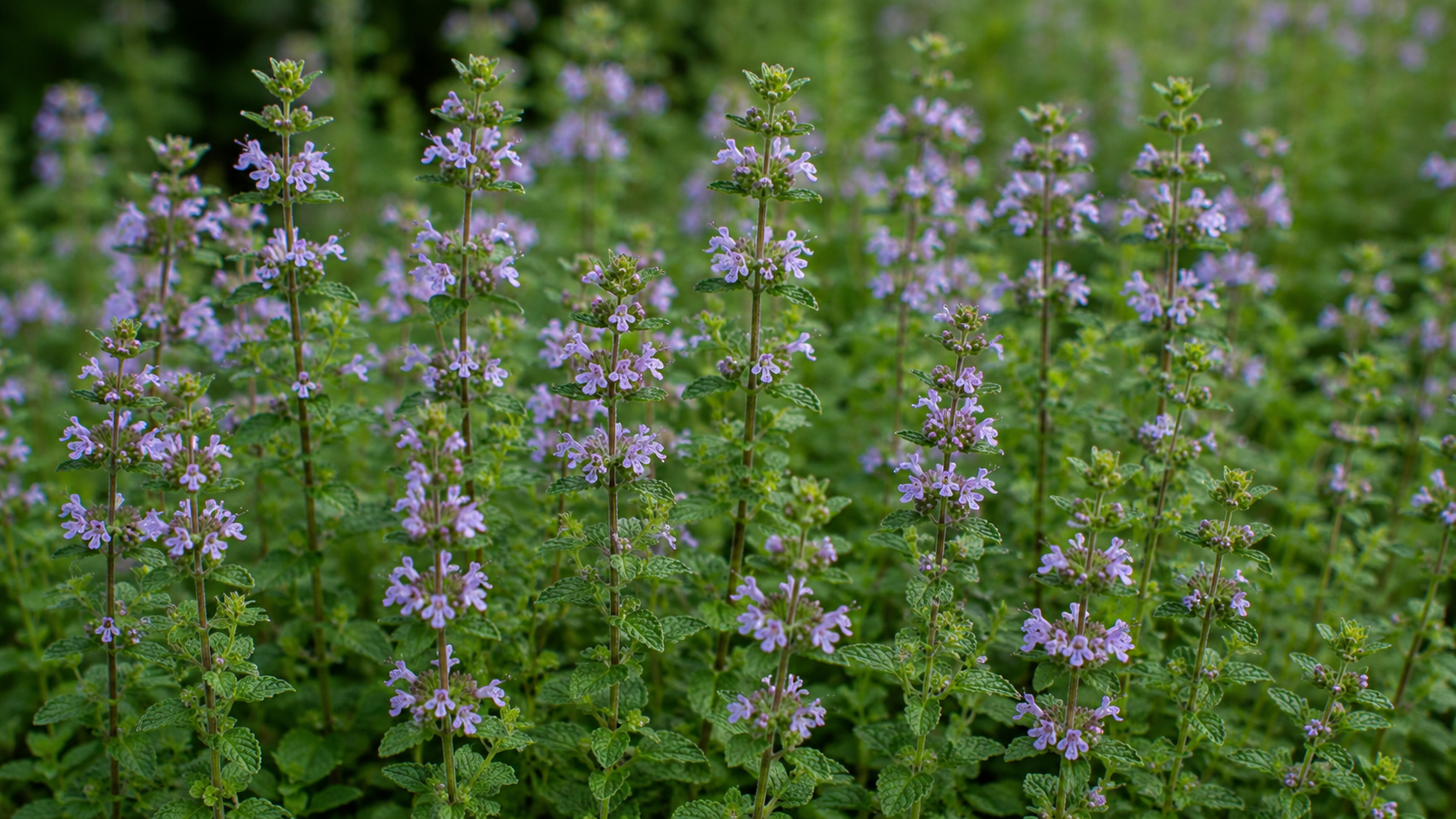
A Name Built From Fleas, Not Coins
Pennyroyal's name has nothing to do with royalty or currency, despite how it sounds. It derives from the Latin word pulex, meaning flea — a direct reference to its long-standing use as an insect repellent, a use reflected in its very chemistry, since pulegone, the plant's primary toxic compound, doubles as an effective natural flea and mosquito deterrent. The plant's common nickname, "mosquito plant," carries the same association forward into the present day.
In ancient Greece and Rome, that pest-repelling reputation lived alongside genuinely benign daily use — pennyroyal flavored wine and savory dishes, scented households strewn across floors, and according to tradition, a crown woven from its leaves was even believed to relieve headaches. The historical record shows it treated, for centuries, as an unremarkable, useful kitchen and household herb, not an exotic or feared one.
A Reputation That Goes Back to Antiquity
Alongside its everyday uses, pennyroyal carried a specific, widely known reputation in the ancient world tied to women's reproductive health — recorded in Greek and Roman sources as a substance believed capable of bringing on delayed menstruation and, by extension, ending an early pregnancy. This use persisted across medieval and early modern Europe as well, with historical records describing it being sought out, often in desperation, by people with few other options available to them. The old folk name "midwife's herb" reflects how deeply embedded this specific reputation became across centuries of folk medicine.
What history rarely recorded, because the science to explain it didn't yet exist, was how genuinely dangerous this use actually was — and modern toxicology has since made that danger starkly, unambiguously clear.
What Modern Medicine Actually Found
Pennyroyal's toxicity comes from pulegone, a compound the body metabolizes into other byproducts that deplete a key protective antioxidant in the liver, leaving liver cells dangerously exposed to free-radical damage. Even comparatively small amounts of concentrated pennyroyal oil can cause nausea, vomiting, abdominal pain, and dizziness. Larger amounts can cause multi-organ failure and death. There is no known antidote.
Modern case reports documenting pennyroyal oil poisoning, including fatalities, are part of why contemporary medical and toxicology literature treats this plant with such unambiguous seriousness, despite its centuries-long folk reputation as a manageable, even routine household remedy. The gap between pennyroyal's old reputation and its real chemistry is about as wide as anything covered in this entire archive — a plant genuinely capable of killing the person using it, while attempting an outcome it often didn't reliably achieve in the first place.
There's an additional layer of risk built into the plant itself that makes any attempt at a "safe" dose essentially unknowable: like many aromatic herbs, pennyroyal's production of its toxic volatile compounds shifts depending on growing conditions, environmental stress, and pest pressure, meaning two plants grown in different conditions can carry meaningfully different concentrations of pulegone. There's no reliable way to know, just by looking at a given batch of the herb, how much of the toxic compound it actually contains.
Still Present, Quietly, in Modern Use
Despite everything above, pennyroyal hasn't disappeared from contemporary life entirely — it persists in dramatically reduced, regulated contexts. Naturally derived pulegone, in carefully controlled trace amounts, is permitted by the FDA as a flavoring agent, and the plant is still used today in North African cuisine and in topical insect-repellent applications, where the dose and exposure route are entirely different from ingestion of the concentrated oil.
This is, in its own way, a familiar pattern across this archive: a plant capable of real harm in one form or dose, and genuinely benign in another — except that with pennyroyal, the line between the two isn't a clean, well-understood threshold the way it is with, say, foxglove's measured medical dosing. It's a far blurrier, more dangerous line, and one that modern medicine still doesn't fully understand at a mechanistic level.
Quick Answers
Is pennyroyal poisonous? Yes — its concentrated oil contains pulegone, a compound that can cause severe liver damage and multi-organ failure, and there is no known antidote for pennyroyal poisoning.
Is pennyroyal safe to use as a flea or insect repellent? Topical and environmental insect-repellent use is a different exposure route than ingestion, and trace amounts of pulegone are permitted by the FDA as a flavoring agent, but concentrated pennyroyal oil should never be ingested.
Why was pennyroyal historically called the "midwife's herb"? It carries a documented reputation, dating to ancient Greece and Rome and persisting through medieval Europe, as a substance believed to bring on menstruation and end early pregnancy — a use modern medicine recognizes as both dangerous and unreliable.
Has pennyroyal actually caused deaths? Yes — documented modern case reports include fatal poisonings from concentrated pennyroyal oil, which is part of why medical literature treats it with serious caution today.
Is European pennyroyal the same plant as American pennyroyal? They're related but botanically distinct — European pennyroyal is Mentha pulegium, while American pennyroyal is Hedeoma pulegioides, a different genus that shares similar toxic chemical properties.
Why is pennyroyal's toxicity considered unpredictable? The plant's production of its toxic compound varies depending on growing conditions and environmental stress, meaning there's no reliable way to know how concentrated a given batch of the plant actually is just by looking at it.