Wormwood: The Bitter Herb Behind the Green Fairy
Few plants have inspired as much moral panic over as little real evidence as wormwood. For most of a century, this silvery, bitterly aromatic herb was blamed for driving artists mad, fueling hallucinations, and corrupting an entire generation of Parisian bohemians through the drink it gave its name and flavor to — absinthe, "the green fairy." Modern toxicology has since walked most of that reputation back considerably. The real story is older, stranger, and considerably more medical than the legend ever gave it credit for.
Wormwood's actual history runs continuously for roughly three and a half thousand years, through Egyptian medical texts, biblical prophecy, Greek mythology, medieval monastery gardens, and finally into the absinthe-soaked cafés of Belle Époque Paris — making it one of the longest unbroken threads of human plant use in this entire archive.
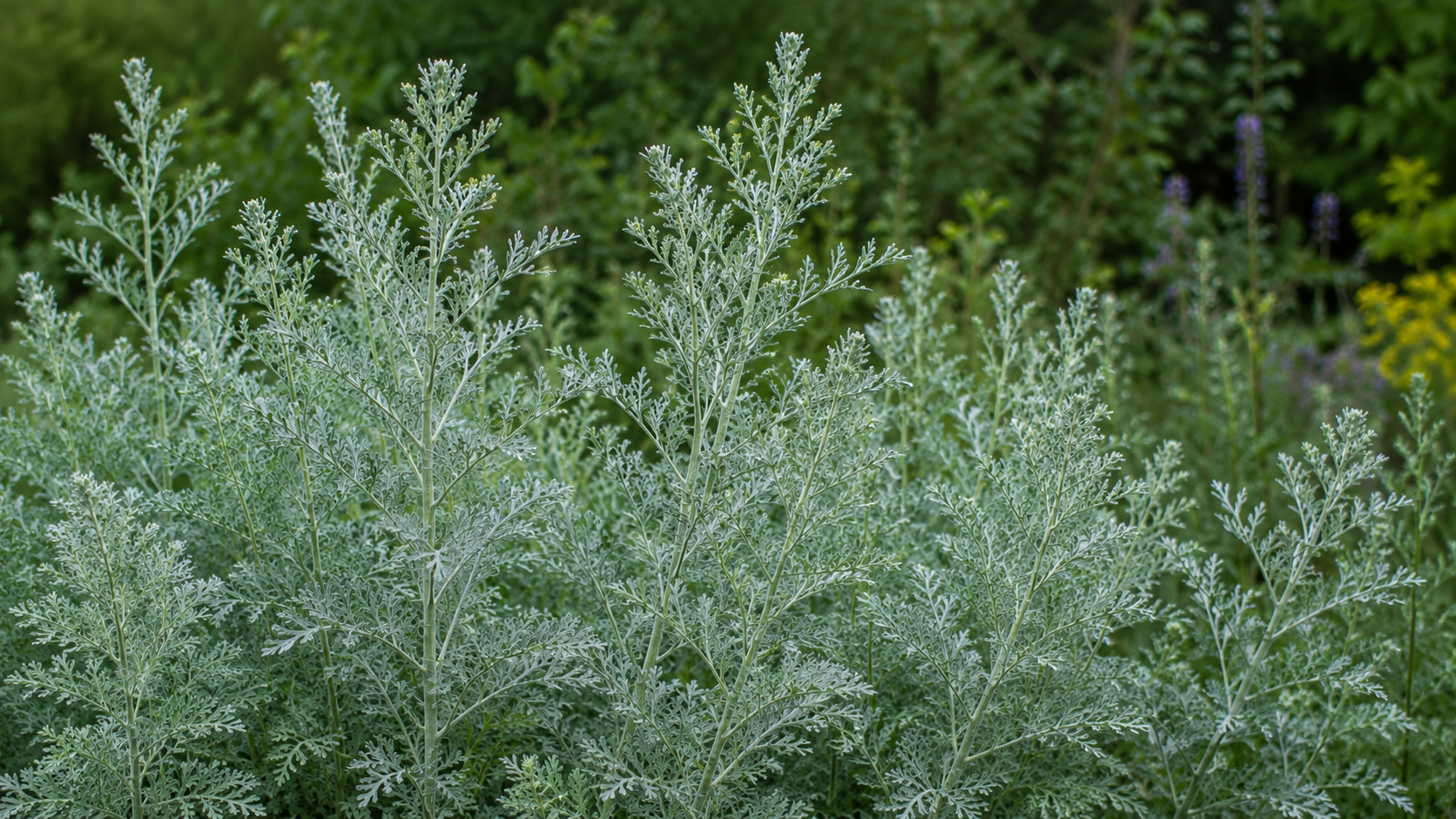
Named for a Goddess, or a Queen Who Knew Plants
Wormwood's scientific name, Artemisia absinthium, carries genuine etymological ambiguity that historians still debate. Most commonly, the genus is said to honor Artemis, the Greek goddess of the hunt, wilderness, and childbirth. But the Roman naturalist Pliny the Elder offered a competing theory in his own writing, suggesting the name might instead honor Queen Artemisia II of Caria, a historical ruler credited with discovering or championing the plant's medicinal properties. True to form, Pliny hedged his bets and mentioned both possibilities rather than committing to either — a fittingly uncertain origin for a plant whose entire reputation has spent centuries shifting between fact and exaggeration.
Medicine Three Thousand Years Before Absinthe Existed
Long before anyone associated wormwood with bohemian Paris, it was simply medicine — and reliably so, across multiple, unconnected ancient civilizations. The Ebers Papyrus, an Egyptian medical text written around 1550 BCE, documents an Artemisia species being prescribed for intestinal parasites and fever, a use consistent enough that some scholars believe it directly describes wormwood itself, even though precise species identification from such an old text remains debated. Hippocrates later prescribed it for menstrual disorders, jaundice, and anemia, and Roman drinkers reportedly blended it into wine specifically to counteract the effects of overindulgence — a use later generations of absinthe drinkers would find more than a little ironic.
This pattern — bitter plant, prescribed for digestive and parasitic complaints, repeated across cultures with no apparent coordination — shows up so consistently across wormwood's early history that it almost becomes the plant's defining trait: useful, trusted, and bitter enough that nobody who used it correctly seemed to mistake it for anything pleasant.
A Star Falls From Heaven, and Poisons the Water
Wormwood holds a uniquely prominent place in biblical symbolism, appearing seven times across the Old Testament as a recurring symbol of calamity, bitterness, and sorrow. Its most dramatic appearance comes in the Book of Revelation, where a falling star named Wormwood poisons a third of the earth's rivers and springs, killing many who drink from the contaminated waters — language vivid enough that it later attached itself to real-world tragedy in the public imagination. After the 1986 Chernobyl nuclear disaster, a wave of pseudo-religious speculation connected the event directly to this prophecy, based on a popular but mistaken belief that "Chernobyl" translates to "wormwood" in Russian. It doesn't. Chernobyl is a Ukrainian word meaning "black bush" or "mugwort" — a different, related Artemisia species entirely — and the biblical wormwood reference almost certainly doesn't even describe the same plant covered in this entry, since true Artemisia absinthium isn't native to the biblical Middle East in the first place. The connection, compelling as it sounds, appears to be coincidence layered on mistranslation.
The Drink That Built and Then Wrecked a Reputation
Wormwood's transformation from respected medicinal herb into cultural scapegoat began in the late eighteenth century, when a Swiss physician named Pierre Ordinaire reportedly developed a medicinal tonic combining wormwood, anise, and fennel — the formula that would evolve into absinthe. By the nineteenth century, the drink had become inseparable from Parisian bohemian culture, embraced by artists including Van Gogh, Toulouse-Lautrec, Picasso, Gauguin, and Manet, who worked, drank, and socialized under its influence at the height of the Belle Époque.
The backlash that followed was severe and, by modern scientific standards, considerably overblown. Absinthe was blamed for causing madness, hallucinations, violent behavior, and addiction distinct from ordinary alcoholism, fueled by hysteria around a compound in wormwood called thujone. The moral panic grew severe enough that absinthe was banned outright in France and numerous other countries in the early twentieth century, remaining illegal in many places for nearly a century before bans began lifting in the 1990s and 2000s.
Modern toxicological research has significantly walked back the original panic. Thujone is genuinely present in wormwood and can cause convulsions in very high, concentrated doses, but the quantities present in properly distilled absinthe are far lower than nineteenth-century critics assumed, and most contemporary researchers now attribute absinthe's historical reputation for madness primarily to its considerably high alcohol content — typically 45 to 74 percent ABV — rather than to any unique hallucinogenic property of wormwood itself. The "green fairy" turned out to be, chemically speaking, mostly just very strong liquor with a dramatic reputation attached.
A Bitter Herb, Still Working Quietly Today
Wormwood's medicinal thread never actually broke, despite absinthe's notoriety eclipsing it in popular memory. It remains used today in digestive bitters and traditional formulations, valued for the same bitter-tonic properties Hippocrates and ancient Egyptian physicians relied on millennia ago. Its close botanical relative, sweet wormwood (Artemisia annua), achieved a far more unambiguous modern triumph entirely separate from absinthe's controversy: the discovery of artemisinin, a compound derived from sweet wormwood, led directly to one of the most effective antimalarial treatments ever developed, and the discovery earned its researcher a Nobel Prize.
It's a fitting final note for a plant whose reputation has swung this dramatically across history — vilified as a corrupting, mind-bending poison in one century, and quietly responsible for saving millions of lives from malaria in the next, both true stories belonging to the same bitter, silver-leafed genus.
Quick Answers
Does absinthe actually cause hallucinations? Modern research suggests this reputation was largely overblown — most experts now attribute absinthe's historical effects primarily to its very high alcohol content rather than to any unique hallucinogenic property in wormwood itself.
Is wormwood dangerous to consume directly? In high or concentrated doses, the compound thujone found in wormwood can cause convulsions and other serious effects, so it should only be used in small, controlled amounts, such as in traditional bitters, rather than consumed freely.
Is the "wormwood" in the Bible the same plant used in absinthe? Probably not — true Artemisia absinthium isn't native to the biblical Middle East, so most scholars believe the biblical references describe a different, related bitter plant rather than the specific species used in absinthe.
Does "Chernobyl" really mean "wormwood"? No — this is a popular but mistaken belief; Chernobyl is a Ukrainian word meaning "black bush," referring to mugwort, a related but different Artemisia species.
Is wormwood still legal today? Yes, generally — most countries lifted their absinthe bans in the 1990s and 2000s once modern research clarified that the original health concerns had been significantly overstated, though regulations on thujone content still apply in some regions.
Is wormwood related to the plant that helped cure malaria? Yes — sweet wormwood (Artemisia annua), a close relative of common wormwood, is the source of artemisinin, a compound behind one of the most effective modern antimalarial treatments, a discovery that earned a Nobel Prize.