The Cosmic Egg & the Sacred Hare: Fertility Symbols at the Root of the World
Before the Easter basket. Before the chocolate egg. Before the pastel ribbon and the department store display. There was a much stranger and more serious set of objects at the center of spring — and the people who used them were not celebrating in any decorative sense. They were participating in something cosmological.
The egg, in the oldest traditions that placed it at the center of spring, was not a symbol of new life in the soft modern sense — the cheerful chick emerging into a world that was fundamentally safe and welcoming. It was the container of everything. The universe itself, in the creation mythologies of cultures separated by thousands of miles and centuries of development, had hatched from an egg. The egg was not a metaphor for potential. It was the literal form that absolute potential took before it became a world.
And the hare — the mad, wild, moon-running hare of the March fields — was not a rabbit. Understanding the difference between the two matters more than it might seem. The rabbit is domesticated, beloved, gentle. The hare is none of these things. The hare is something older and stranger, a creature of the liminal hours, the field's edge, the moon's particular attention. To place the hare at the center of spring was not to invite sweetness. It was to invite wildness — the kind of generative, uncontrolled, slightly dangerous energy that spring actually requires.
Together, the egg and the hare form the symbolic architecture of Ostara: the contained and the uncontained, the potential and the force that cracks it open, the world-before-becoming and the wild energy of becoming itself.
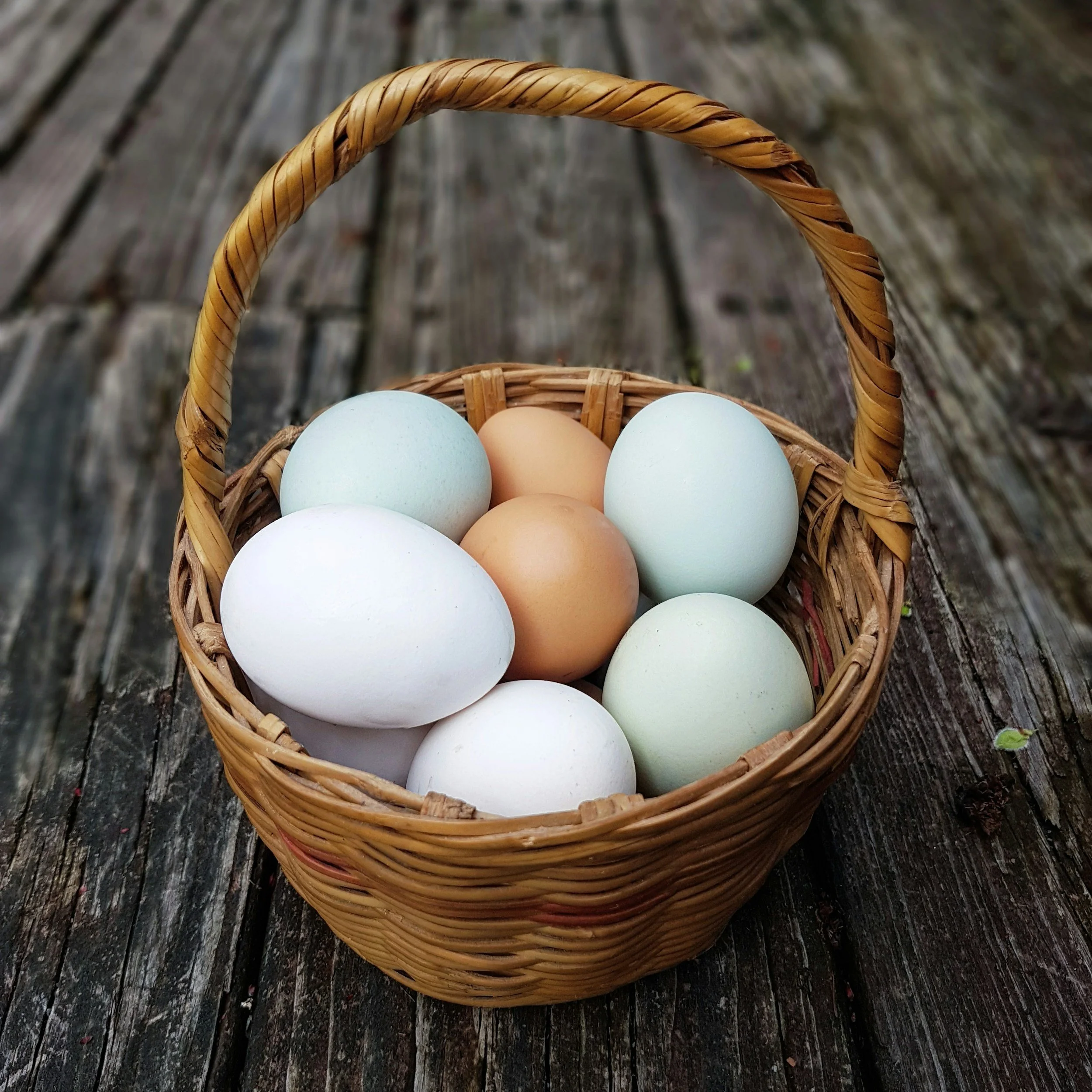
The World Egg: Cosmos in a Shell
The cosmic egg — the primordial egg from which the universe hatched — appears in the creation mythologies of cultures so geographically separated that direct transmission seems impossible. This is either evidence of a shared ancient origin so deep it predates any identifiable cultural history, or evidence that the egg is simply the most intuitive image available to any human intelligence confronting the question of how everything began from nothing: something contained, something prior, something that holds within it everything that will exist, before it exists.
In the Finnish creation myth preserved in the Kalevala — the great nineteenth-century compilation of Finnish oral tradition — the world is made from the fragments of an egg laid by a divine bird on the knee of the water-mother Ilmatar. The upper shell becomes the sky. The lower shell becomes the earth. The yolk becomes the sun. The white becomes the moon. The mottled parts of the shell become the stars. Nothing is wasted. The entire cosmos is the egg's interior, reorganized.
In the Orphic tradition of ancient Greece — one of the mystery religions that circulated at the edges of mainstream Hellenic practice — the primordial egg was called the Orphic Egg or the Cosmic Egg, and from it hatched Phanes, the first deity, the god of procreation and the emergence of light into the world. Phanes was depicted as a golden-winged being coiled with a serpent, emerging from the egg into a darkness that had no other content — the first light in the first moment, the world's initial spark.
"The egg precedes the world. Everything that will ever exist is already inside it, folded into a space so small it cannot be seen. The crack, when it comes, is not destruction. It is the world deciding to begin."
In Hindu cosmology, the Hiranyagarbha — the golden womb or golden egg — floated on the primordial waters before creation. From it was born Brahma, the creator, who then made the world from the two halves of the shell. The Vedic hymns that describe the Hiranyagarbha are among the oldest written texts in any language, dating to the second millennium BCE, and the image they describe — the golden egg floating in the dark before the world exists — is one of the most ancient creation images we have direct textual evidence for.
The egg decorated at Ostara, hung in the bare branches of the spring tree, placed on the altar as an offering — this object carries that weight. Not consciously, perhaps, not with the full mythological freight of the Kalevala or the Orphic hymns. But the intuition that the egg contains something essential, something about the nature of beginning, is not modern and not accidental. It is the oldest intuition there is about what new life means and where it comes from.
Pysanky: Writing the World Back Into Being
The Ukrainian tradition of pysanky — intricately decorated eggs whose name derives from the verb pysaty, to write — represents perhaps the most sophisticated and most ancient egg-decoration tradition that has survived continuously into the present.
Pysanky are not painted. They are written. The designs are applied in wax using a fine stylus called a kistka, then dyed in successive baths of color, each wax application protecting what lies beneath it from the next dye. The process is slow, detailed, and requires genuine skill — a single egg can take many hours of concentrated work. The designs are geometric and symbolic: spirals, meanders, fish, deer, suns, stars, flowers, birds. Each symbol carries meaning. The egg, when finished, is not decorative. It is a text.
Picture a woman in western Ukraine sometime in the nineteenth century — though the tradition is considerably older than that, its roots extending at least to the pre-Christian period — sitting at a table in the weeks before Easter, which has absorbed the spring equinox custom wholesale. The kistka is in her hand, its copper tip heated in the candle flame. She works slowly, breathing evenly, the wax flowing in lines so fine they seem impossible. She is not working from a pattern written on paper. The pattern is in her hands, learned from her mother, who learned from hers. The egg she is making is a kind of prayer, a kind of spell, a kind of map — the symbols she is writing are a record of everything she wants the coming year to contain. She will give it away when it is done. You don't keep pysanky for yourself. You give them where the protection is needed most.
In the folk belief surrounding pysanky, the eggs held genuine protective power. Given to a new mother, they protected the child. Given to a sick person, they carried healing. Buried in the corners of a field at planting time, they ensured a good harvest. The decorated egg was the world's potential, specifically directed — the cosmic egg made local, made personal, made useful.
The tradition held, in some regions, that the fate of the world depended on the continued making of pysanky. There was said to be a great serpent chained at the center of the earth who tested his chains each year; as long as people continued to make the eggs and give them away in love, the chains held. If pysanky ceased to be made, the serpent would break free and the world would end. Whether taken literally or as metaphor, the meaning is the same: this practice matters. The making and giving of these specific objects, at this specific time of year, participates in the continuation of everything. Decoration is never just decoration.
The Hare's True Nature: Moon Animal, Liminal Creature
The hare and the rabbit are so thoroughly conflated in modern spring iconography that distinguishing between them has become an act of deliberate recovery. They are not the same animal, and they were never treated as the same animal in the folklore traditions that placed one of them — specifically the hare — at the center of spring.
The European brown hare (Lepus europaeus) is a fundamentally different creature from the domestic rabbit. Hares do not burrow. They live entirely above ground, in forms — shallow depressions pressed into the earth — that offer minimal protection. Their leverets are born fully furred and open-eyed, able to run within hours of birth, because they have no underground shelter to protect them. Everything about the hare's biology is oriented toward speed and vigilance over protection and concealment: they are the most exposed of creatures, the least sheltered, the most completely committed to the surface of the world and the speed of their own legs.
This exposure — this absolute refusal of the underground, the hidden, the enclosed — is what made the hare the animal of spring rather than autumn. Spring is the season of emergence, of coming above ground, of the world deciding to be visible again after months of concealment. The hare never concealed itself. It was already there, on the surface, running.
"The hare does not emerge in spring. It was never underground. It was always in the open, in the frost, in the dark. Spring simply makes it visible again — the way spring makes everything visible that was there all winter, waiting."
The hare's association with the moon runs through folklore traditions across extraordinary geographic range: in China, in India, in pre-Columbian Mesoamerica, in West Africa, in the British Isles. The specific stories differ, but the association is consistent — the hare belongs to the moon, runs under the moon, is the moon's creature in a way that no other animal is. The reason may be partly observational: hares are most active at dawn and dusk, the liminal hours when the moon is transitioning, and their March behavior — the leaping, boxing, seemingly erratic movements of their breeding season — does coincide with the spring full moons. But the depth and consistency of the association across cultures that could not have influenced each other suggests something more than observation. It suggests a recognition that the hare, like the moon, embodies something about cyclical transformation, about appearing and disappearing, about the rhythm of visibility and concealment.
The March Hare's Madness: Fertility as Force
✦ ✦ ✦
The phrase "mad as a March hare" predates Lewis Carroll by centuries — it appears in writings as early as the sixteenth century and likely circulated in oral tradition for longer. The behavior it describes is real: in March, at the height of the hare's breeding season, females can be seen standing upright and boxing the males who pursue them, sometimes for extended periods, with genuine force. For a long time this was misinterpreted as male competition — two males fighting over a female. Modern observation has clarified it: it is the females testing the males, assessing their persistence and their vigor, determining through direct physical contest whether the male pursuing her is worth mating with.
This reframing is significant. The March hare's madness is not random, not merely hormonal excess, not simple aggression. It is a sophisticated process of evaluation — the female exerting control over the reproductive decision at the moment when that decision matters most. The energy of March, in the hare's world, is not chaos. It is purposeful. The wildness has direction.
In the folk magic of the British Isles, the hare was associated with witches — witches could take the form of hares, hares were familiars, killing or injuring a hare might injure the witch who inhabited it. This association connected the hare to the same liminal power that characterized witchcraft: knowledge that exceeded ordinary categories, transformation between states, the ability to move between the visible and invisible worlds. The hare was never quite only an animal. It was always also something that watched back.
To place the hare at the center of spring was to place this quality of watching, knowing, transformative wildness at the center of the season. Spring is not gentle. Spring is the earth deciding, with some force, to begin again — pushing growth through frozen ground, cracking the shell of winter, insisting on itself regardless of the cost. The hare is the right emblem for this. Not the rabbit. The hare.
Eggs and Hares Together: The Logic of the Pairing
The egg and the hare seem, on the surface, like an incongruous pairing. Hares do not lay eggs. The combination that produced the Easter bunny bearing eggs is clearly the product of symbolic combination rather than natural history. But the symbolic logic is precise.
The egg is the form of absolute potential — everything, contained and not yet realized. The hare is the force of wild, directed fertility — purposeful, tested, moon-aligned, knowing. Together they express the full arc of what spring means in the oldest terms available: the potential waiting to be cracked open, and the force capable of cracking it. The contained and the uncontained. The world before it begins and the energy that begins it.
To decorate eggs at Ostara, to watch for the hare in the March fields, to bring these objects and images into the ritual space of the equinox, is to participate — consciously or not — in a symbolic system that is older than any named religion, older than writing, rooted in the deepest layer of human observation about what happens to the world in spring and what forces are responsible for making it happen.
The egg holds the world. The hare cracks it open.
That's always been the arrangement.