Milk, Lambs & Early Spring Omens: Reading the Land at Imbolc
The name tells you everything, if you know how to read it.
Imbolc — the word itself, from the Old Irish i mbolg, meaning "in the belly," or possibly from oimelc, meaning "ewe's milk" — is not named for a goddess, or a fire, or a mythological event. It is named for what was happening in the fields and the byres in early February: the ewes were pregnant, or had just given birth, and their milk had returned. The lambing season was beginning. The first milk of the year — thin and fresh, completely unlike the stored and preserved foods that had sustained the winter — was flowing again.
This was, in the most concrete and physical sense possible, the first proof that winter would end. You could not argue with a ewe's milk. You could not tell the lambs it was still too cold for them to have arrived. They were there, and they were alive, and the milk that fed them was the same abundance that would, in a few months, feed everyone. Imbolc was the festival of that first evidence — the proof of life returning, visible and tangible, in the most vulnerable and precious form it could take: a newborn animal, unsteady on its legs, still damp from birth, pressing its face against its mother.
The agricultural reality of Imbolc grounded every other thing the festival contained. The fires and the goddesses and the threshold customs were built on this foundation: the land was showing its first signs, and the people who depended on the land were reading them with the careful attention of those who understood that their survival depended on interpreting correctly.
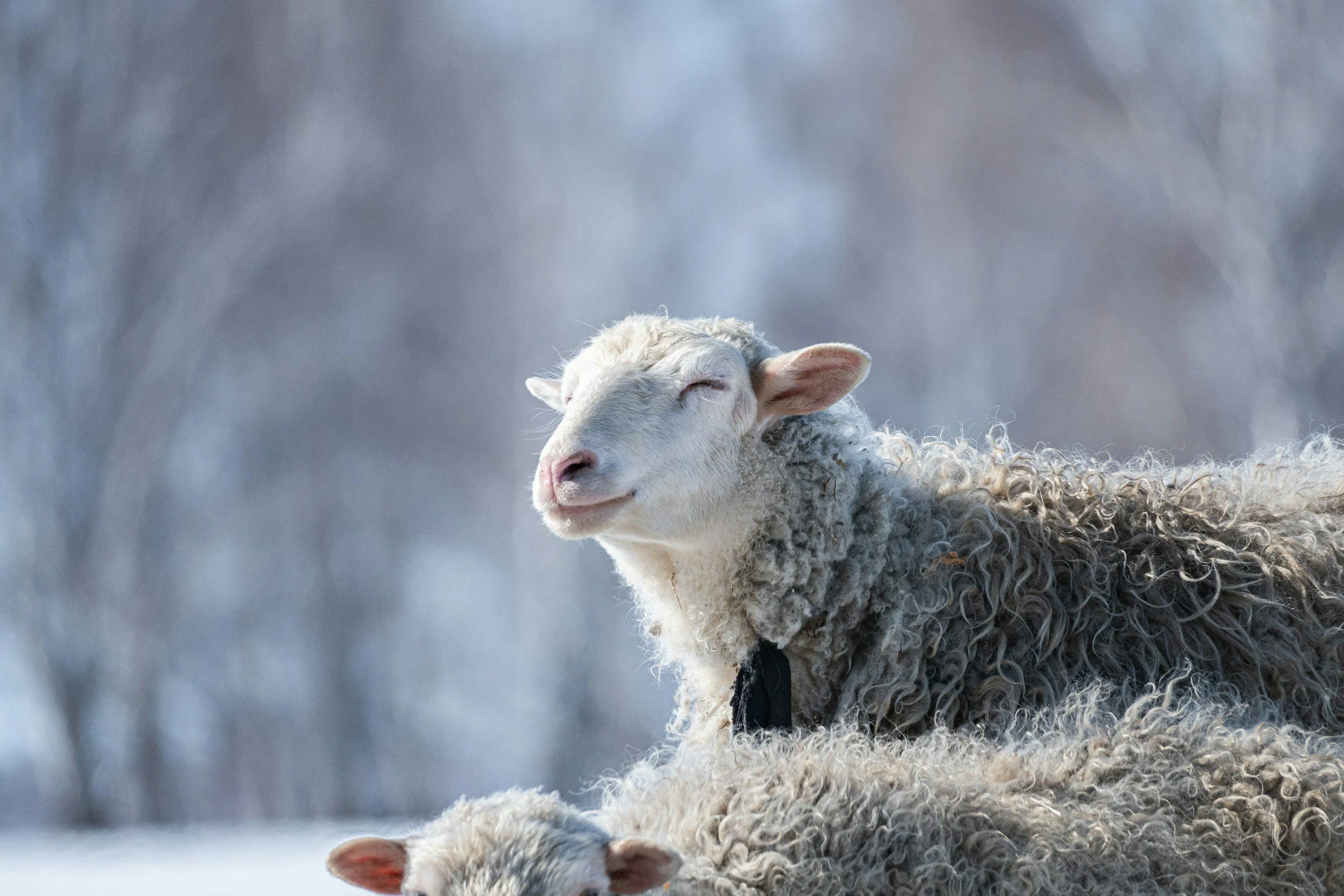
The Ewes and the Biology of Imbolc
In the pastoral farming of early Ireland and Britain, the flock of sheep represented a form of wealth that was simultaneously vulnerable and essential. Sheep provided wool, meat, milk, and lanolin — and the timing of their lambing was one of the most significant agricultural events of the year.
Ewes begin their reproductive cycle in response to the decreasing daylight of autumn, meaning that lambing arrives roughly five months later, in late January or February. This is not coincidence — it is evolutionary programming, matching the birth of lambs to the time when the cold is beginning to ease, when the ewes' milk will soon be supplemented by the first new grass, when the lambs born earliest will have the longest growing season before the following winter. The biology of the flock and the calendar of the Celtic year are aligned because they are both responding to the same underlying reality: the movement of light.
For the shepherd watching over a pregnant flock through the last weeks of winter, the first successful birth of the season was a moment of genuine relief and genuine celebration. A lamb born alive, nursing successfully, with a ewe showing good milk — this was wealth realized, the promise of the breeding season fulfilled, the first addition to the flock that would carry the household into the following year. The first lamb of Imbolc was precious in the specific way that things are precious when they arrive against the odds.
"The lamb did not know it had been waited for. It did not know that it represented the first proof, in a winter that had gone on for months, that the world intended to continue. It only knew its mother's warmth. But the people who watched it arrive knew. They had been counting on it."
The first milk of the season held a particular sacred status that shows up repeatedly in Imbolc folklore across Ireland and Scotland. It was offered to Brigid — poured on the earth, or set out in a dish at the threshold. It was used in ritual contexts: the first churn of the season, the first butter made from fresh spring milk, was believed to carry particular potency and was sometimes reserved for specific sacred uses or shared among the community as a kind of first-fruits offering. The milk was not simply food. It was evidence — and evidence, at Imbolc, was sacred.
The Serpent of Bride and the Weather Lore
In the Scottish Gaelic tradition, Imbolc carried with it a body of weather lore that is among the most specific and richly documented of any Celtic festival — and at the center of it was an image both ancient and strange: the serpent coming out of the hill.
A traditional Gaelic rhyme, preserved in Alexander Carmichael's Carmina Gadelica — the great nineteenth-century collection of Scottish Gaelic oral tradition — describes the serpent of Bride emerging on her feast day:
Thig an nathair as an toll Là donn Brìde, Ged robh trì troighean dhen t-sneachd Air leac an làir.
The serpent will come from the hole / On the brown Day of Bríde / Though there should be three feet of snow / On the flat surface of the ground.
The serpent — nathair in Scottish Gaelic — was understood in this context not as a symbol of danger or evil (the specifically Christian association) but as a barometric creature: one of the first animals to emerge from winter dormancy in response to the returning warmth beneath the surface. If the serpent came out on Brigid's Day, spring was genuinely stirring, even if the surface of the world showed no evidence of it. The cold three feet of snow could not stop what was moving underground if the serpent had already felt it.
This is an extraordinarily sophisticated piece of natural observation made into ritual knowledge. Snakes do emerge from hibernation in response to ground temperature increases, not air temperature — meaning that a snake's emergence on a February day when the surface is still frozen is genuinely meaningful information about the state of the earth beneath, where spring truly lives. The people who preserved this rhyme were not being credulous. They were recording, in traditional form, something they had observed to be true.
Picture a hillside in the Western Highlands on February 1st. The surface of the ground is still iron-hard, the grass brown and pressed flat by months of cold. At the base of a south-facing slope, where the sun has been striking the earth for the past few weeks as its arc climbs higher, a crack in the rocky ground opens slightly. Something moves in the darkness. A slow emergence, deliberate and unhurried — the first snake of the year, making its way into the February air. A woman watching from the field's edge sees it and breathes out slowly. Something she had been holding since November releases. The serpent is out. Brigid has spoken. Spring is in the earth, even if it hasn't reached the air yet.
The Cailleach and the Weather Battle
The serpent of Bride was not the only creature reading the Imbolc weather. In the broader folkloric tradition of Ireland and Scotland, the figure of the Cailleach — the old woman of winter, the divine hag who governed the dark half of the year — was the counterforce against which Brigid's warmth was measured.
At Imbolc, the Cailleach and Brigid stood in a kind of mythological negotiation: winter and spring, darkness and light, the old power and the new one. The weather on Brigid's feast day was understood as evidence of which power was stronger.
The logic of the weather lore that developed around this negotiation is, paradoxically, the inverse of what modern intuition might expect. In the Scottish and Irish tradition: a fine, bright day on February 1st meant that the Cailleach was gathering her wood — making preparations to extend winter further, stocking up for the cold weeks ahead. A grey, wet, stormy day meant she was asleep, unable to gather fuel, and winter would therefore end sooner.
This logic is preserved, in substantially transformed form, in the North American tradition of Groundhog Day, which falls on February 2nd — Candlemas in the Christian calendar, the day following Imbolc. The groundhog's shadow on a sunny day predicts six more weeks of winter; a cloudy day without shadow predicts an early spring. The shadow on a sunny day is the European weather lore's "Cailleach is active" transposed into an American animal and an American landscape by Scottish and German immigrants who brought the underlying logic with them and dressed it in new clothes.
"The Groundhog Day tradition is Imbolc weather lore wearing a Pennsylvania costume. The animal has changed. The question is the same: what does the earth know, today, that we cannot yet see? Is winter finished? Is the Cailleach asleep? Tell us what you found in the hole."
The Cailleach herself, in some versions of the mythology, had a final act at Imbolc: the striking of the ground with her staff to extend the cold, the freezing of rivers to maintain winter's dominion. In other versions, she drank from a sacred spring at dawn on Brigid's Day and was transformed — her white hair darkening, her bent body straightening, her winter power exchanged for the beauty of approaching spring. She did not die. She changed. She became what spring needed her to be, as the year always does.
Snowdrops, Alder, and the First Signs
The natural world around Imbolc offered the attentive observer a series of signs that required neither serpents nor groundhogs to read, because they were there in the landscape for anyone who knew how to look.
The snowdrop — Galanthus nivalis, "milk flower of the snow" — is perhaps the most precisely symbolic plant of the entire wheel of the year. It is the first flower to bloom in the northern hemisphere, emerging through frozen ground and snow cover, its white heads hanging in a posture that looks like nothing so much as a candle flame bent by wind. It blooms, in most years, around the time of Imbolc — sometimes slightly before, sometimes slightly after, depending on the year and the locality. It was called Lus Bríde in Irish — Brigid's plant — and its emergence was read as the goddess's own sign: I am coming. I am already in the ground. Watch for me at the edge of the snow.
The alder tree, whose reddish-purple catkins begin to appear in February when no other tree shows any sign of life, was also read as an Imbolc marker — the first tree to bud, reliable enough to use as a calendar. In Celtic tree lore, alder was associated with courage and with the in-between: alder wood does not rot in water, making it the bridge-builder's tree, the tree of crossing between one state and another. Its February budding, at the exact threshold of winter and spring, placed it in perfect alignment with Imbolc's quality of being not one thing yet but no longer the other.
These signs — the snowdrop, the alder catkin, the increased birdsong as days lengthen, the first crocuses pushing through cold earth, the returning curlews on the moorland — were read not as mere botanical calendar markers but as messages. The land was communicating. Winter was not over, but it was communicating its intention to end.
Reading the Signs: The Practice of Imbolc Attention
✦ ✦ ✦
Of all the wheel's festivals, Imbolc is the one that rewards the most subtle and patient kind of attention. Samhain announces itself — the dark, the cold, the thinning veil. Yule announces itself — the solstice, the longest night, the dramatic return of the fire. Beltane announces itself — the blossoming, the warmth, the undeniable arrival of summer. Imbolc whispers.
It asks for a different quality of awareness: the willingness to look for something that is barely there yet, to trust the evidence that is present even when the evidence is small. A snowdrop. A ewe's milk. A serpent emerging from frozen ground. A grey sky on February 1st that means, if you know how to read it, that winter is sleeping and will not wake for much longer.
This is the deepest practice of Imbolc, and it is not specifically pagan or Celtic or religious in any sectarian sense. It is the practice of paying close enough attention to the world around you to notice when it changes — before it announces its change, before the change is obvious, at the first whisper of a shift that will not become undeniable for another six weeks.
The lamb does not know it is a sign. The snowdrop does not know it is a symbol. But the person who goes outside at Imbolc and looks — really looks, at the ground and the sky and the trees and the birds — and who finds the first evidence of spring hiding in the landscape before spring has officially arrived, understands something that no amount of reading can fully transmit.
Spring is not coming. It is already there, in the belly. In the milk. In the ground, where the serpent has been sleeping.
You only have to be willing to look for it.