Sun, Fire & the Long Dark: The Sacred Astronomy of Yule
On the longest night of the year, the sun stops moving.
Not metaphorically. Astronomically. For two or three days around the winter solstice, the sun rises and sets at nearly the same position on the horizon — the word solstice derives from the Latin sol sistere, meaning "the sun stands still." To the naked eye observer of the ancient world, the sun appeared to halt its southward retreat before finally, incrementally, beginning to climb again. The days would lengthen. The light would return. But in those still days before the turning, there was no guarantee. There was only waiting, and fire, and the accumulated wisdom of every generation that had made it through the dark before.
This is where Yule begins. Not in mythology, not in ritual — in the sky. In the observable, measurable fact of the solstice and in the human response to it, which turned out, across virtually every culture that experienced northern winter, to be almost the same: build a fire. Keep it burning. Do not let the light go out.
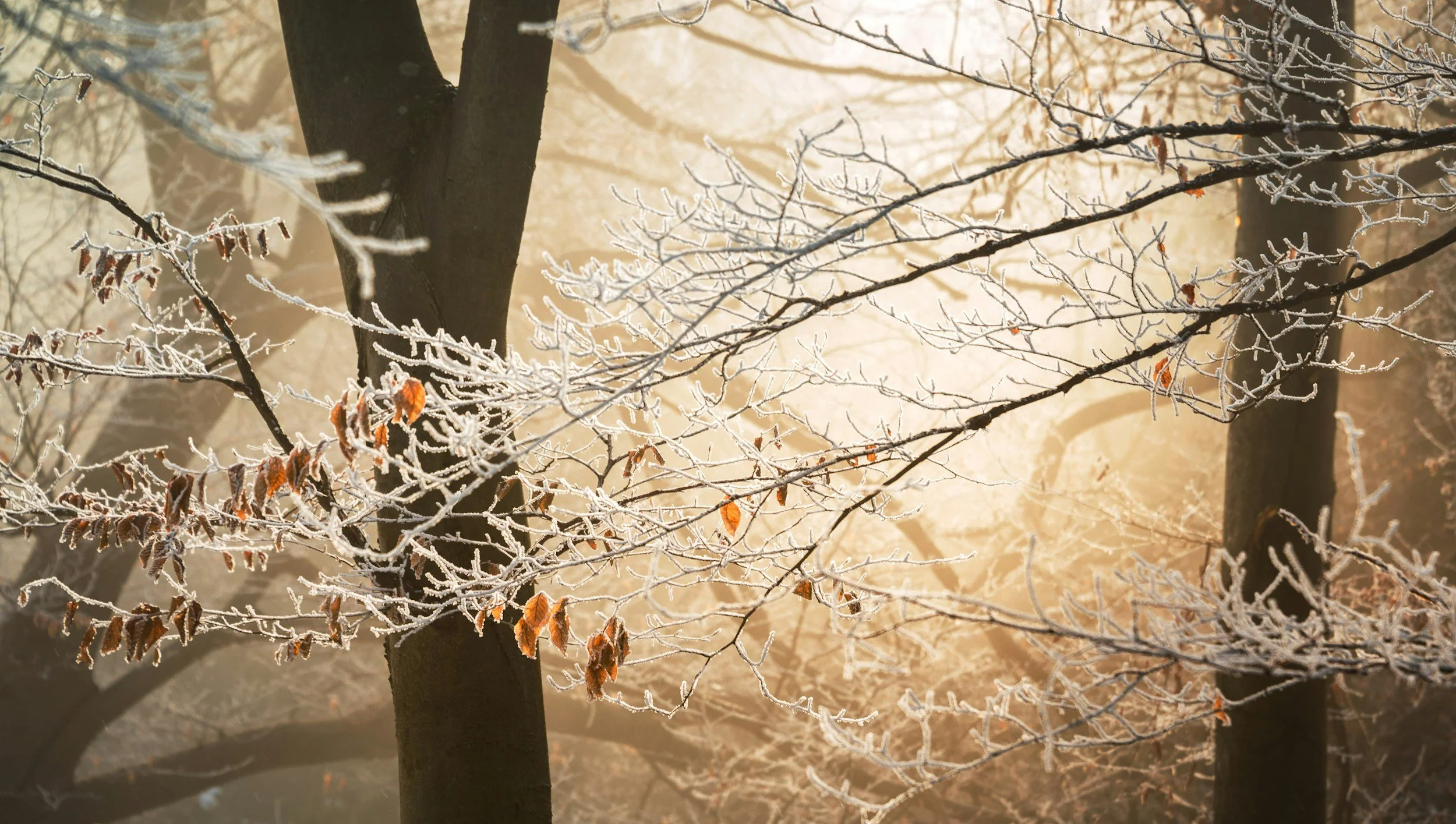
The Solstice and Why It Terrified
We have lost, in the age of electric light and climate-controlled interiors, any instinctive sense of what the winter solstice meant to a pre-industrial people. We know intellectually that it is the shortest day. We do not feel it the way they felt it — as the culmination of weeks of darkening, the point at which the retreat of the sun seemed genuinely threatening, when the question of whether warmth and light would return was not abstract but urgent.
In the northern latitudes where Norse, Germanic, and Celtic peoples lived, the solstice was not a minor astronomical footnote. At 60 degrees north — the latitude of Oslo, of the Orkney Islands, of the southernmost tip of Greenland — the winter solstice brings fewer than six hours of daylight. The sun barely clears the horizon. Shadows are long at noon. The dark is not evening-dark but something denser and more absolute, pressing down from all sides.
"They did not celebrate the solstice because it was the longest night. They celebrated it because it was the last longest night. The darkness had reached its limit. What came after could only be more light."
This is the psychological architecture that underlies every Yule fire tradition: the darkness has peaked. Whatever comes next is the return. The fire is not a response to despair but to the precise moment when despair becomes unnecessary — when the turning has happened and survival, if not yet certain, has at least become possible again.
The Norse called this turning jól — the origin of the word Yule, though its exact etymology remains debated. Some scholars connect it to a word meaning "wheel," which would make Yule the turning of the great wheel of the year. Others connect it to the Old Norse ýlir, a month name. What is consistent across sources is that the Norse festival of Yule was not a single night but an extended season — twelve nights, in most accounts — during which the barriers between the ordinary world and the supernatural thinned in ways that demanded both celebration and caution.
Sol Invictus: The Unconquered Sun
The Romans understood the solstice too, and they celebrated it with a festival that would leave its fingerprints on virtually every winter holiday that followed: Dies Natalis Solis Invicti, the Birthday of the Unconquered Sun, observed on December 25th.
Sol Invictus — the Unconquered Sun — was a solar deity whose cult rose to prominence in the Roman Empire in the third century CE, promoted particularly by the emperor Aurelian, who declared December 25th an official imperial holiday in 274 CE. The date corresponded, in the Julian calendar of the time, to the calculated date of the winter solstice — the day when the sun, having reached its lowest point, began its return. To call the sun invictus — unconquered — was to declare that the darkness had not won. The sun had survived the night, as it always survived, and was returning.
Picture Rome on the 25th of December, 274 CE. The city is already in the long tail of Saturnalia, the great winter festival that had been running since the 17th. Social hierarchies have been temporarily suspended: masters have served their slaves at table. Gifts have been exchanged. The streets are louder and warmer than the season warrants. And now comes the climax — the birth of the unconquered sun, the official declaration that light has returned, that the empire, like the sun, cannot be permanently dimmed. The date was chosen deliberately. The emperor understood that what people needed, in the long dark of December, was a ceremony of return.
The relationship between Sol Invictus and the Christian Christmas — also assigned to December 25th, first recorded in the Roman calendar of 354 CE — has been debated by historians for centuries. Whether the Church deliberately chose the date to absorb an existing solar festival, or whether both dates derived independently from the Julian solstice calculation, is a question without a clean answer. What is clear is that December 25th carried a meaning before it carried its most famous one — that it was already a date of solar return, of light reborn from darkness, when it became the date of another kind of birth.
Saturnalia: The Festival That Would Not Die
The Roman festival that most directly fed into modern winter traditions was not Sol Invictus but Saturnalia — a weeklong celebration beginning December 17th and extending, in some forms, to the 23rd, in honor of Saturn, the god of agriculture, time, and the Golden Age.
Saturnalia was extraordinary by Roman standards. It was the festival of inversion: the normal rules of society were suspended, slaves were freed from their duties and served at the feast by their masters, social distinctions were temporarily dissolved, and a spirit of general license prevailed. Gifts were exchanged — particularly candles and small clay figures called sigillaria. Schools and courts were closed. The streets were festive. The Roman writer Catullus called it "the best of days."
The Yule traditions that filtered through Northern Europe carried this same spirit of temporary inversion, of communal generosity, of deliberate warmth built against the cold. The midwinter feast — whatever it was called in whatever culture it occurred in — was not just a celebration of the sun's return. It was a social technology for surviving winter communally, for redistributing warmth and food and goodwill through a community that would need all of those things to make it to spring.
"The feast was not because there was enough. Often there was not enough. The feast was because sharing what existed was the only way to ensure that enough people survived to plant again in spring."
The Yule Log: Fire as Ritual, Fire as Magic
✦ ✦ ✦
Of all the fire traditions associated with Yule, the Yule log is the most widely recognized and the most thoroughly misunderstood. The modern version — a decorative log, sometimes a chocolate cake, sometimes a flickering video on a streaming service — bears essentially no relationship to what the Yule log originally was and what it was meant to do.
The original Yule log was large. Genuinely large — sometimes an entire tree trunk, dragged in from the forest with ceremony and effort. In Norse tradition, the log was cut from a fruit tree or from oak, specifically chosen and brought in as part of the solstice observance. In the British Isles, the tradition varied by region: in some areas it was ash (the tree of the World Tree Yggdrasil, in Norse cosmology); in others, oak; in others, whatever hardwood would burn longest through the twelve nights of Yule.
The log was lit from the embers of the previous year's Yule log — a piece of which had been deliberately saved for this purpose. This continuity was the point: the fire that burned at Yule was never entirely new. It carried within it the fire of last year, and the year before, and back through the generations. To light the Yule log was to participate in an unbroken chain of winter fire that stretched back beyond anyone's memory into the time before memory.
The fire was kept burning — ideally through all twelve nights of Yule. To let it go out was bad luck at best and genuinely dangerous at worst: a cold hearth at midwinter was an invitation to the things that walked in the dark, a signal that the household's protection had failed. The light was not merely warmth. It was a declaration of presence, of continued life, of the refusal to be extinguished.
Picture a longhouse in Norse Scandinavia sometime in the ninth century. The log has been burning for three days. Outside, the dark is absolute — no moon, cloud cover, the kind of winter dark that has weight to it. Inside, the fire is the center of everything. People are pressed close around it: children half-asleep, adults telling stories, the elder of the household watching the fire with the particular attention of someone who knows exactly what the fire is keeping out. The twelve nights are not over yet. The fire will not go out. This is not hope. This is agreement. The fire will not go out because they will not let it.
In Scotland, the Yule log tradition took a particular form: the Cailleach Nollaich, the Old Woman of Christmas, a log roughly carved into the shape of a woman's face and burned on Christmas Eve. The Cailleach — the divine hag of winter, the ancient goddess of storms and cold — was symbolically consumed by fire, her power acknowledged and then ended by the returning warmth. To burn the Cailleach was to burn winter itself, to participate in the sun's return through the ritual destruction of what had stood in its way.
Solar Deities and the Return of the Light
Across the mythological traditions that shaped Yule, the sun was not an abstraction but a being — a god or goddess whose journey through darkness and return to light was not merely a metaphor for the season but a narrative with characters, stakes, and meaning.
In Norse mythology, the sun was personified as Sól — a goddess who drove the sun chariot across the sky each day, pursued by the wolf Sköll, who would eventually, at the end of the world, catch and devour her. But her son, born before the end came, would drive the chariot in her place. Even in the mythology of solar death, there was a solar heir. Even the end of the sun contained a return.
The Germanic figure of Sunna carried similar weight, driving her chariot between two divine horses, guided by the movements assigned to her at the beginning of the world by the gods. The daily journey of the sun was not automatic — it required effort, divine labor, the continued attention of a being whose path was relentless and whose pause at the solstice was therefore something extraordinary. The sun, resting.
In the Celtic tradition, the solar associations of Yule are less explicitly personified but no less present. The alignment of the great megalithic monument at Newgrange in County Meath — a passage tomb constructed around 3,200 BCE, centuries before Stonehenge — with the winter solstice sunrise is one of the most precise astronomical alignments in the ancient world. On the mornings around the solstice, the rising sun sends a beam of light directly through the long passage and illuminates the interior chamber for approximately seventeen minutes. This was not accidental. It was engineered, by people who had no writing and no metal tools but had watched the sun for long enough to build a permanent marker of its lowest point.
"Newgrange was built before the Celts arrived in Ireland, before the Norse settled Scandinavia, before Rome existed. And it was already oriented toward the solstice sun. The impulse to mark this moment, to align a permanent structure with the day the sun stands still — that impulse is older than any civilization we have a name for."
The Living Practice: What the Fire Was For
Contemporary Yule observance — whether in a pagan, Wiccan, or secular spiritual context — tends to center the fire and the sun in ways that connect clearly to these older traditions. The Yule candle, the bonfire at sunset on the solstice, the decorated log placed at the hearth even when there is no hearth: these are gestures toward an understanding that this particular darkness matters, that the turning of the light deserves acknowledgment, that something is being celebrated that is older and stranger than any specific religion.
If you are observing Yule, the fire is not decoration. It is the practice.
Whether that means a single candle kept burning from solstice sunset to sunrise, a Yule log chosen and lit with intention, a bonfire built at the turning point of the longest night, or simply the deliberate act of sitting with open flame in the dark and paying attention to what that means — the tradition is the same. You are doing what the people at Newgrange were doing. What the Romans were doing. What the Norse were doing, pressed around the longhouse fire with the dark outside and the light refusing to go out.
You are declaring that the darkness has reached its limit. That the sun, though it stood still, was never conquered. That warmth will return because it always has, and because you are here to receive it.
Keep the fire burning. The sun is on its way.