Spirits, Ghosts & the Restless Dead: Who Walks at Samhain
Not everything that walks at Samhain is your grandmother.
This is the part of the festival that the comfortable modern version tends to leave out. The Halloween aesthetic has given us ghost costumes — white sheets, cartoonish specters, skeletons with their grins fixed in permanent good humor. It has made the dead playful. Manageable. A little bit funny. But the spirits of the Celtic Samhain were not playful, and the ones who walked farthest from the ancestral hearth were not funny at all.
At Samhain, the veil between the world of the living and the world of the dead grew thin enough to pass through in both directions. This meant that beloved ancestors could return — and that other things could too. Things that had never been human. Things that had once been human and had become something else in the long dark of the Otherworld. Things that had always existed at the margins of the living world and were, on this one night of the year, given permission to step fully into it.
To understand who walks at Samhain is to understand that the ancient Celts inhabited a world populated by beings of radically different orders — and that Samhain was the night when all of those orders converged.
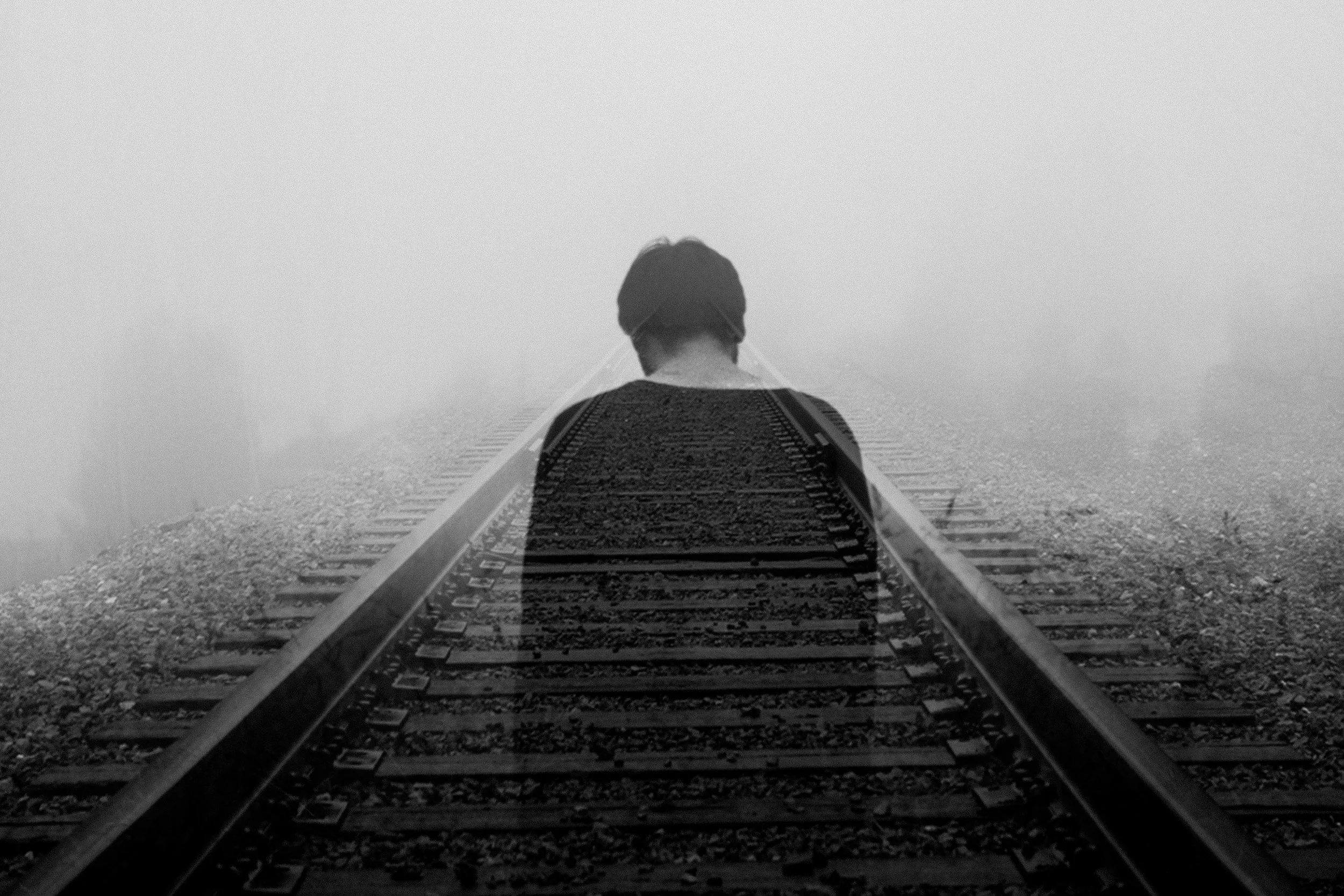
The Beloved Dead: Ancestors Who Return
The first category, and the most tender, were the ancestors. The recently dead — those who had died within the past year and had not yet fully crossed into the Otherworld — were thought to be especially present at Samhain. The veil's thinning gave them a chance to return to the places and people they had loved in life.
For this reason, the dead were actively welcomed. Fires were lit to guide them home. Doors were left ajar. Food was set at the table — a full portion, the best the household could offer, set for hands that would not visibly reach for it and mouths that would not audibly eat. The presence of the dead was not dreaded in this aspect of the festival. It was desired. Grief is not a problem to be solved; it is a relationship that continues after death, and Samhain gave it a form.
"The door was left open not from carelessness but from love. Come in, the open door said. We have not forgotten you. There is still a place for you here."
The Irish tradition held that the sídhe — the fairy mounds, the ancient burial mounds scattered across the Irish landscape — opened at Samhain, allowing free passage between the Otherworld and this one. These mounds, many of which were genuinely ancient megalithic tombs such as Newgrange in County Meath, were understood as points of intersection between the living world and the realm of the dead. On ordinary nights, the passage was sealed. At Samhain, it opened.
This had consequences. It meant that the dead could leave the Otherworld — but so could everything else that resided there.
The Aos Sí: The People of the Mounds
The Aos Sí — pronounced roughly as "ees shee," and sometimes anglicized as the Sidhe — were not ghosts. They were not the spirits of the human dead, though they dwelled in proximity to the dead and could move between worlds as the dead could. They were something older and stranger than that: the supernatural beings of Irish mythology, the remnants of the divine race known as the Tuatha Dé Danann, who, according to legend, retreated underground after their defeat by the incoming Milesian peoples who became the human Irish.
In that retreat, they became something other than gods but greater than humans — powerful, beautiful, dangerous, capricious, and possessed of a relationship to time and death that was nothing like the human one. They lived in the hills, under the water, in the spaces between — and at Samhain, they moved.
Imagine the landscape of ancient Ireland on Samhain night as seen from above: bonfires burning on the high hills, their light throwing the hollow places into deeper shadow. And in those shadows, movement. Not human movement — something too fluid, too purposeful, traveling paths that do not follow roads or rivers but something older than either. The Aos Sí are about their business, and their business is not yours. They cross the land because it is their land too, and on this night the agreement that keeps the seen and unseen worlds separate has been temporarily suspended. They are not looking for you. But you might stumble into their path. And that would be a problem.
Offerings were left at the boundaries of fields and at the mounds themselves — at crossroads, at the edges of woods, at the thresholds of homes — not as worship, exactly, but as appeasement. We acknowledge you. We respect your passage. We ask that you pass us by. Food, milk, portions of the Samhain feast. The leaving of offerings at liminal places on Samhain night survived in Irish and Scottish rural practice into the nineteenth century and later, long after the explicit mythology behind it had been forgotten by most who practiced it.
The Aos Sí could bring gifts: prosperity, healing, protection, the kind of good fortune that arrives from outside ordinary human effort. They could also bring catastrophe. Crops blighted. Livestock taken. Children exchanged for changelings — a terrifying category of folk belief in which a human child was taken by the fairy folk and a sickly simulacrum left in its place. The Aos Sí were not evil in the way that Christian theology uses the word, not defined by opposition to goodness. They were simply other, operating by rules that were not human rules, and crossing them was dangerous for reasons that had nothing to do with malice.
The Sluagh: The Unforgiven Dead
There was another category of Samhain spirit, less often discussed, more consistently frightening: the Sluagh.
The Sluagh — the word means "host" or "crowd" in Scottish Gaelic, and the full phrase is often given as Sluagh na Marbh, the Host of the Dead — were the spirits of the restless, the unshriven, the unforgiven. Those who had died in a state of wrongdoing, or who had been denied proper burial, or who had unfinished business so urgent and so bitter that it kept them from passing fully into the Otherworld. They traveled as a host, a dark flock moving against the wind, and their passage brought misfortune.
In Scottish Highland tradition, the Sluagh were thought to fly in from the west — the direction of the sea, the direction of death — and to snatch the souls of the dying to add to their number. Windows on the western side of the house were kept shut on Samhain night to prevent their entry. This was not metaphor. People closed those windows.
"They moved against the wind, which is how you knew they were not natural. Everything natural blows with the wind. The Sluagh had their own direction. Their own purpose. And it was not yours."
The distinction the Celtic tradition drew between the beloved dead and the restless dead was sophisticated and important. It was not that all the dead were dangerous — the ancestors were welcomed, honored, fed. It was that some of the dead were dangerous, for reasons that had to do with how they had lived and how they had died. The violence of an unmourned death. The weight of unfinished harm. These things did not resolve simply because the body stopped. They continued, transformed into spiritual force, and that force required caution.
The Wild Hunt: The Sky Full of the Dead
✦ ✦ ✦
Across the broader Germanic and Norse cultural sphere — closely related to and intersecting with the Celtic — a parallel figure moved through the Samhain-adjacent calendar: the Wild Hunt.
The Wild Hunt went by many names in different traditions. Woden's Hunt in the English and Germanic traditions. Cŵn Annwn, the Hounds of the Underworld, in Welsh mythology. Odin's Riders in the Norse. The specifics varied — the leader of the Hunt was sometimes a god (Odin, Gwyn ap Nudd, Herne the Hunter), sometimes a legendary figure, sometimes a demon — but the central image was consistent: a great host of the dead, moving through the sky with terrible speed, led by a figure of enormous power, accompanied by spectral hounds whose howling was the sound of death approaching.
To see the Wild Hunt was dangerous. To be caught outside when it rode was worse. In some traditions, the Hunt could sweep up the souls of the living along with those of the dead, carrying them off into the sky to ride forever. In others, merely witnessing the Hunt presaged your own death within the year. Travelers caught in a sudden storm that howled with an unnatural quality — that felt too purposeful, too directed — recognized what was moving through the air above them and pressed themselves against the earth until it passed.
Picture yourself on a hillside in early medieval Wales, making your way home in the dark of Samhain night. You are moving quickly because you know what night it is. Then, above the wind, you hear it — not quite hounds, not quite horns, not quite human voices, all three things mixed into a sound that has no name in any language you speak. The air turns cold in a way that has nothing to do with autumn. Something is passing overhead in the dark, moving fast, moving west. You press yourself to the ground and you cover your face and you do not look up. You have been told, very clearly, not to look up. You do not look up.
The Wild Hunt occupied the same imaginative and ritual space as the Samhain host: the dead in collective, purposeful motion, moving through the liminal period of the year when the boundary between the living world and whatever lay beyond had failed. It was a way of giving form to the terror that the dying season produced — the knowledge that winter killed, that death was not a distant abstraction but an annual visitor, that the sky itself could become a road for the dead to travel.
Ghosts in the Modern Sense: The Irish and Scottish Tradition
Beyond the mythological categories of the Aos Sí and the Sluagh and the Wild Hunt, there were also, in the Samhain tradition, what we would now simply call ghosts — the spirits of specific dead people, bound to specific places by the strength of their feeling.
A woman who had died in childbirth, still listening for the child she never held. A man killed in an ambush, still walking the road where he fell. A suicide, traditionally the most difficult category — the most bound to this world, the least able to pass through. These specific, particular hauntings became associated with Samhain because the thinning of the veil made them more active, more visible, more capable of interaction with the living.
The banshee — from the Irish bean sí, woman of the fairy mound — occupies a particular place in this tradition. She was not a ghost in the ordinary sense, not the spirit of a specific dead person, but a supernatural being attached to certain Irish families whose wailing announced an imminent death. To hear the banshee was not to encounter the dead — it was to receive news that someone among the living was about to join them. She appeared most commonly at liminal times and liminal places: at dusk, at dawn, at crossroads, at the edges of water. And most powerfully at Samhain.
"She was not the cause of the death. She was its herald. And there was, in her mourning, something that was not entirely terrible — the knowledge that the death would be witnessed, that someone inhuman and ancient and beyond grief was already grieving, that the passing would not go unacknowledged."
What to Do With All of This
Contemporary practitioners of Celtic-inspired spirituality navigate this landscape with varying degrees of engagement with its darker dimensions. It is tempting to take from the Samhain tradition only its most comfortable elements — the ancestor altar, the memory feast, the candle lit for the beloved dead — and leave the Sluagh and the Wild Hunt and the dangerous Aos Sí to the history books.
This is a choice, and a legitimate one. But something is lost in the sanitizing. The original tradition's power came partly from its refusal to pretend that the spirit world was entirely benevolent. It acknowledged that the veil thinned for everyone, not only for the spirits you wanted to see. It took seriously the idea that protection was necessary — that certain boundaries needed to be maintained, that certain offerings needed to be made, that certain behaviors on Samhain night were wise and others were foolish.
If you practice any form of Samhain observance, it is worth sitting with the full texture of what the night was held to contain. Welcome the ancestors with warmth. But set your wards. Leave the offerings at the threshold. Keep your fires burning. Close the western windows.
Not from fear. From knowledge.
The beloved dead come home at Samhain. So does everything else.