Lughnasadh: First Harvest, Sacred Grain, and the Cost of Abundance
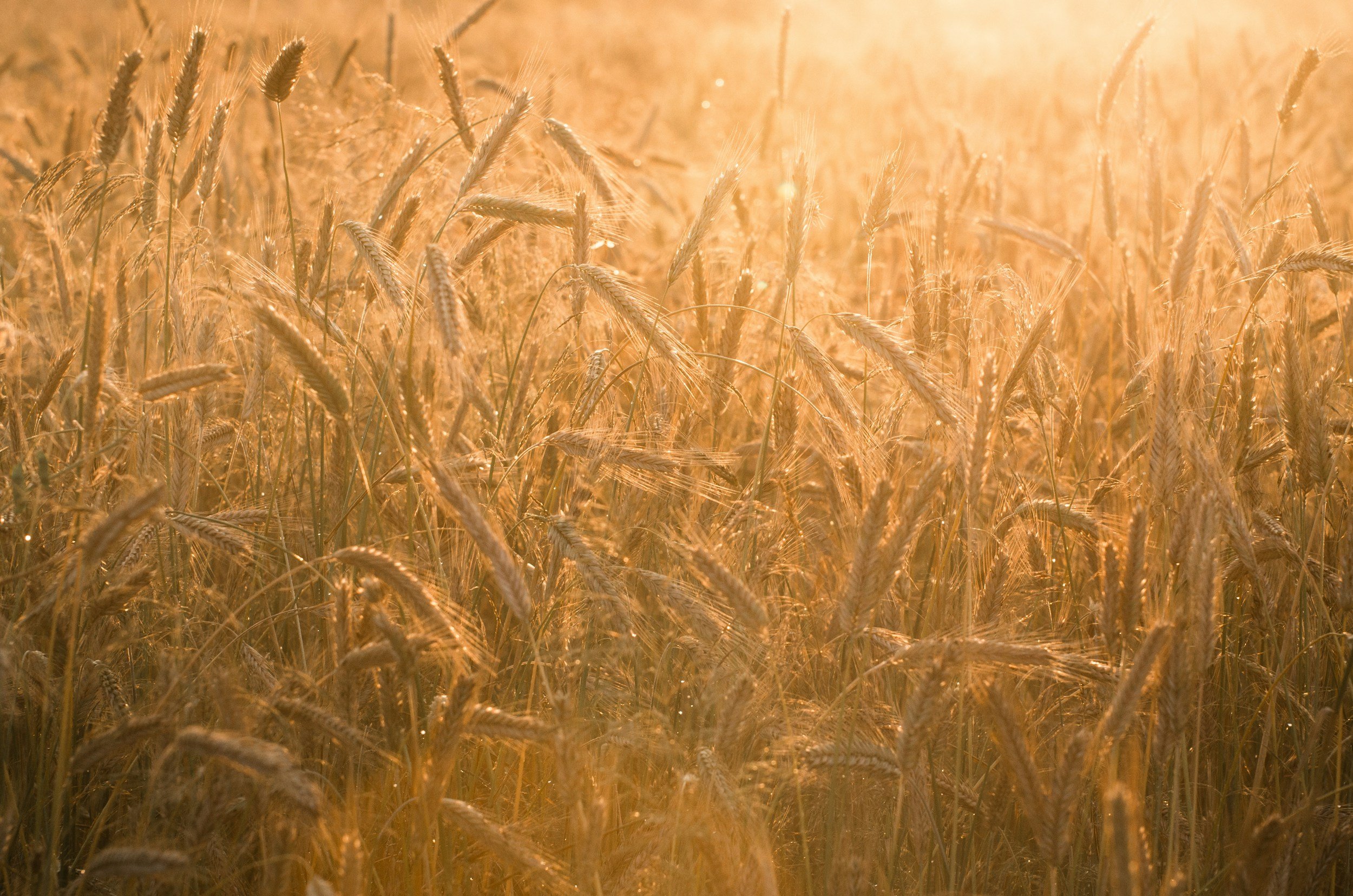
There is a particular quality to August light that is unlike any other light in the year. It is not the sharp, climbing brightness of June, full of ambition and ascent. It is something richer, heavier, more considered — a light that has been working all summer and knows it, that falls at a lower angle than it did a month ago and in falling makes everything it touches look like a painting of itself. The fields of wheat glow as though lit from within. The hedgerows are dense and dark with leaf. The sky at midday is an almost impossible blue, the blue of a world at maximum saturation, and by evening it deepens toward something ancient and serious, the first intimation of a darkness that has been patient all summer and is beginning, quietly, to remember that it has its turn.
This is the season of Lughnasadh. The great harvest festival of the Celtic world, falling on the first of August at the precise midpoint between the summer solstice and the autumn equinox, is the most bittersweet of the four great fire festivals — a celebration shot through with the knowledge of what celebration costs. You cannot reap without cutting. You cannot have bread without the death of grain. You cannot feast without something having given its life to make the feast possible. Lughnasadh knows this, holds it without flinching, and feasts anyway — because the harvest is not only a gift. It is a responsibility, and honoring it fully means acknowledging everything it contains.
The Name and the God Behind It
Lughnasadh — pronounced roughly LOO-nah-sah in Irish, with variations across the Gaelic world — carries its mythology in its name. It is compounded from Lugh, one of the greatest of the Irish gods, and násad, a word meaning assembly, games, or commemoration. Lughnasadh is the assembly of Lugh — but more specifically, in the mythological tradition, it is the funeral games of Lugh's foster mother, Tailtiu.
Tailtiu was a goddess — or perhaps a divine queen — of the Fir Bolg, one of the pre-Tuatha Dé Danann peoples of Irish mythology. Her great act, the one for which she is remembered and honoured at Lughnasadh, was the clearing of the great forest of Ireland to make it fit for agriculture. She worked until the land was prepared, until the plains were open and ready for the plough. And then she died of the effort. She gave herself entirely to the making of the cultivated world, and the cultivated world consumed her. Lugh, the shining god, instituted the festival in her memory — the first harvest feast as a tribute to the woman who made the harvest possible, at the cost of her own life.
"Tailtiu cleared the forest and the grain grew where the trees had been. She gave everything she had to make the world productive, and the world received her gift and continued without her. Lughnasadh is the festival that does not let this be forgotten."
This founding myth gives Lughnasadh its distinctive emotional register from the outset. This is not a simple celebration of abundance. It is a commemoration, a funeral feast, a feast held in the shadow of a specific sacrifice. The grain is cut. The harvest is gathered. And at the heart of it all is the memory of someone who gave herself so the cutting and gathering could happen. Every loaf of bread baked from the first grain of Lughnasadh was, in the Celtic imagination, a continuation of Tailtiu's sacrifice — her gift, made into food, made into life, passed from her hands through the earth and into the hands of the living.
Lugh: The Shining One
To understand the festival, you must understand the god for whom it is named. Lugh — Lugh Lámhfhada, Lugh of the Long Arm, or the Shining One — is among the most fully realized figures in the Irish mythological tradition: a god of extraordinary skill and versatility, master of every art and craft, whose arrival at the court of the Tuatha Dé Danann was announced by a list of his accomplishments so comprehensive that the gatekeeper could find no single skill Lugh possessed that the court did not already have covered — until Lugh asked whether anyone among the gods was master of all the arts simultaneously. There was no one. The gates were opened.
Lugh is a solar deity — his name connected to light across the Celtic and wider Indo-European world, cognate with the Latin lux and the Welsh lleu. He is a warrior, a craftsman, a poet, a harper, a physician, a sorcerer. He is the father of Cú Chulainn, the great hero of Ulster. He wields the spear Gáe Dearg, one of the four great treasures of the Tuatha Dé Danann, which never misses its mark and from which no one recovers.
But at Lughnasadh, Lugh is not the warrior. He is the mourner, the institutor, the one who transforms grief into festival. He takes the death of his foster mother and makes it the occasion for games, for assembly, for the first cutting of the grain — as if to say: this is what we do with loss. We do not let it lie silent. We build something out of it. The festival is Lugh's act of love for Tailtiu: her sacrifice made visible every year at harvest time, her name spoken in the moment of plenty, her cost acknowledged at the very peak of the year's abundance.
The Tailteann Games: Assembly at the Heart of Ireland
At Teltown in County Meath — the site associated with Tailtiu, her name preserved in the anglicized place name — the great Lughnasadh assembly was held for centuries. The Tailteann Games, as they came to be known, were one of the great gatherings of the Irish year: a festival combining athletic competition, legal proceedings, trade, matchmaking, storytelling, and the ritual cutting of the first grain — a convergence of the sacred and the social that reflects the festival's essential character as a moment when the community came together to do everything at once.
The athletic competitions of the Tailteann Games — running, jumping, wrestling, chariot racing, spear-throwing — were funeral games in the classical tradition, a form found across the ancient world from the funeral games of Patroclus in the Iliad to the origins of the Olympic Games themselves. The dead were honoured through the excellence of the living. To compete at Tailteann was to demonstrate, in the most physical and visible way possible, that the life which Tailtiu's sacrifice had made possible was being lived fully, vigorously, without waste. The athlete at Lughnasadh was not competing for personal glory. He was offering his effort to the dead.
The great plain of Meath in the first days of August, and the assembly has been gathering for a week. From every direction the roads are busy: families with their harvest animals, traders with cloth and tools and preserved foods, poets carrying their compositions, young men who have trained all year for the running race, young women whose mothers have been negotiating marriages for months. The temporary market stalls stretch in long rows. The smell of roasting meat and new bread and horse sweat and cut grain is everywhere. At the center of it all, the mound of Tailtiu stands in the August light, and at intervals the crowd falls quiet and someone speaks her name, and for a moment the noise of three thousand people contracts into a single point of silence. Then it expands again, and the games continue.
The Tailteann marriage was a distinctive institution of the gathering: a trial marriage contracted at Lughnasadh, binding for a year and a day, after which either party could dissolve it by returning to the mound and walking away — one going north, one south, the marriage ended. This was not a lesser form of marriage — it was a socially recognised institution, practical and humane, acknowledging that the pairing of two people was an experiment that deserved a fair trial before a permanent commitment. The harvest festival, with its themes of testing and result, of planting and seeing what grows, was the natural occasion for it.
The First Loaf: Bread as Sacred Act
The ritual cutting of the first grain was the sacral core of Lughnasadh — the act from which everything else radiated. Before any grain was taken commercially, before the full harvest could begin, the first sheaf was cut with ceremony. In Irish tradition this first cutting was done on the hilltop, on Lughnasadh morning, often by the head of the household or a designated community figure. The first sheaf was blessed, its grain threshed, ground, and baked into a loaf that was shared among the community as a communion of the harvest — tasted first, offered to the ground, passed to the neighbours.
The first loaf of Lughnasadh was not ordinary bread. It was bread loaded with the accumulated anxiety and hope of the entire growing season — the planting done in faith at Ostara and Beltane, the tending through the summer, the watching of the sky for rain and the watching of the grain for disease and the watching of the calendar for the right moment to cut. All of that compression released into a single loaf, broken and shared. To eat the first bread of Lughnasadh was to receive, literally into your body, the year's first proof that the earth had kept its promise.
"The bread of Lughnasadh was not a symbol of the harvest. It was the harvest — the year's labor and anxiety and hope compressed into grain, ground between stones, baked in fire, shared among hands. You did not merely eat it. You completed it."
This understanding of bread as sacred act — as transformation, as the collaboration between human labor and divine generosity — runs through virtually every agricultural culture in the world and finds its most concentrated expression in the harvest festival. The Christian Eucharist, in which bread becomes the body of a god, draws from this same ancient well. The theology of bread is the theology of the harvest: something is given so that something else can live. The grain dies so the bread can be born. The bread is eaten so the people can continue. Lughnasadh holds this chain without abstraction, without metaphor, in the plain fact of the cut field and the warm loaf.
The Corn Dolly and the Spirit of the Grain
Across the British Isles and Europe, the harvest carried with it a belief — old enough to pre-date any written record, persistent enough to survive centuries of Christianization — that the spirit of the grain lived in the standing crop, retreating before the reapers as they cut, until it was finally caught and concentrated in the last sheaf. The last sheaf was therefore charged with a particular power: it held the grain spirit compressed and captured, available to be preserved and returned to the field at the next planting.
The corn dolly — a figure woven from the last sheaf of the harvest, often in the shape of a woman or a spiral or a plaited crown — was the vessel made to hold this spirit through the winter. It was brought into the farmhouse with ceremony, hung in a place of honor in the hall or the kitchen, and kept until the following spring, when it was ploughed back into the first furrow — the grain spirit returned to the earth to ensure the fertility of the new crop. The corn dolly was not a decoration. It was a living thing, carrying the continuity of the harvest from one year into the next, the grain spirit making its annual circuit: field to house to field, cut to preserved to planted.
The field is almost done. The reapers have been working since before dawn, the rhythm of the scythes making a sound like the world breathing out, and now the standing grain has contracted to a single patch in the center of the field. Everyone stops. No one wants to cut the last sheaf. Not because they are superstitious, exactly — or not only — but because they understand that what they are about to do is also an ending. The grain spirit is in there, gathered and concentrated, and when the last stalks fall it will need somewhere to go. The oldest woman present steps forward. She cuts. She binds. She holds up the last sheaf and the field is silent, and then the silence breaks and someone starts to sing, and the harvest is done, and the corn dolly travels home in her arms like something that needs to be carried gently.
Lammas: The Saxon Harvest Feast
In the Anglo-Saxon tradition, the first of August was known as Hlāfmæsse — Loaf Mass — a feast day of the early English church that took the same agricultural reality as Lughnasadh and wrapped it in Christian observance. On Lammas, as it came to be known, loaves baked from the first grain of the harvest were brought to the church to be blessed. The blessed loaves were then used in various protective ways: placed at the corners of the barn to protect the stored grain, divided between the fields as a blessing on the remaining harvest, kept through the winter as a talisman of the year's abundance.
Lammas survived the Reformation in England partly because it was so thoroughly embedded in agricultural practice that removing it would have been practically disruptive, and partly because its observance was so decentralized — so scattered across thousands of farms and villages — that it could not be efficiently suppressed. The name persisted in the English calendar as a quarter day, a legal term date, long after the religious observance had faded. Even today, certain ancient land rights in England are described as Lammas rights — the harvest festival embedded in property law, the sacred calendar preserved in the most secular of documents.
The Hilltop Assembly: Croagh Patrick and the Living Tradition
In Ireland, the Lughnasadh assembly tradition found its most enduring expression not in the lowland fair but in the hilltop pilgrimage. Across the country, communities gathered on the summits of local hills on the last Sunday of July — Domhnach Chrom Dubh, Black Crom's Sunday, or Garland Sunday — in a practice so widespread and so persistent that it continued through the medieval period, through the Reformation, through the Famine, and into the present day, wearing the garments of Christian pilgrimage over the bones of something much older.
The most famous of these hilltop gatherings is the pilgrimage to Croagh Patrick in County Mayo — the mountain from which St Patrick is said to have driven the snakes from Ireland, its pyramidal peak visible for miles across the western landscape. On Reek Sunday, the last Sunday of July, up to thirty thousand pilgrims climb the mountain, many of them barefoot over the quartzite scree, in what is one of the largest annual religious gatherings in Ireland. The Christian story is real and genuinely felt. And beneath it, the mountain has been climbed at this season for far longer than Christianity has been in Ireland — the hilltop assembly of Lughnasadh preserved in the muscle memory of a people who no longer know, quite, why the mountain calls them in August, only that it does.
Other Lughnasadh hilltops retained their pre-Christian associations more openly. The summit of Knocknarea in Sligo — where the passage tomb of Queen Maeve sits, stones piled by every pilgrim who makes the climb — was a Lughnasadh assembly site. So was the summit of Slieve Donard in the Mournes, and Binnian, and a dozen other heights across the Irish landscape. The mountain was the meeting point of sky and earth, of the divine and the human, the natural altar for the festival of the harvest that came from both.
The Shadow of Plenty: Lughnasadh and the Memory of Famine
No people have felt the stakes of the harvest more catastrophically than the Irish. The Great Famine of 1845 to 1852 — the result of the potato blight, Phytophthora infestans, destroying the crop that a colonized people had been reduced to depending upon — killed approximately one million people and drove another million into emigration within five years. In a country where the harvest festival was woven into the deepest layers of culture and identity, the failure of the harvest was not merely an agricultural disaster. It was an ontological one: the destruction of the relationship between the people and the land that had structured their entire world.
The Famine falls as a shadow across every Irish harvest tradition, giving Lughnasadh's themes of sacrifice and cost a historical weight that is impossible to overstate. When the Irish speak of the first harvest, of the first bread, of the gratitude owed to the earth for its abundance — these are not abstract pieties. They are the words of a people who know, in living cultural memory, what it means when the harvest does not come. When the field is green and then black. When the abundance is not there. When the cost is everything.
"To celebrate Lughnasadh in Ireland is to celebrate across a grief that never fully closed — to give thanks for the harvest in the full knowledge of what its absence has meant. The bread is never simply bread."
This shadow does not darken the festival so much as deepen it. Gratitude that has been tested by loss is a different thing from gratitude that has not. The first loaf cut from the first harvest of a year when the harvest came — this is not a casual offering. It is an act of enormous and hard-won relief. Lughnasadh, more than any other festival on the wheel, carries the weight of what it is celebrating against.
The Living Harvest: Lughnasadh in the Modern World
Contemporary celebrations of Lughnasadh span an enormous range, from the Puck Fair in Killorglin — one of Ireland's oldest fairs, held every August with a wild mountain goat crowned as king in a gesture of ancient sovereignty — to the neo-pagan sabbat celebrated by Wiccans and Celtic pagans with altar-building, grain offerings, the baking of the first loaf, and the weaving of corn dollies. The county fairs and agricultural shows that crowd the late summer calendar across Ireland and Britain are the direct descendants of the Tailteann Games: the showing of cattle, the testing of produce, the community assembled to measure the year's work against a shared standard of excellence.
The practice of baking bread for Lughnasadh is among the most accessible and most immediately meaningful of the festival's rituals. To make bread from grain — to grind, to mix, to knead, to wait for the yeast to work, to feel the heat of the oven and smell the loaf browning — is to participate physically in the chain of transformation that Lughnasadh celebrates: grain to flour to dough to bread, the sun's energy captured in the wheat and released into the warmth of your kitchen, the earth's abundance made portable and personal and yours.
There is no more direct way to observe Lughnasadh than to bake a loaf of bread, break it with someone you love, and eat it slowly, understanding what it is. Not symbolically understanding — actually understanding: that this bread came from grain that grew in a field somewhere, that the field was worked by someone, that the grain was harvested in August heat, that the flour was milled and packaged and transported, that each step in the chain required labor and weather and luck and the accumulated knowledge of ten thousand years of farming. That the bread in your hand is the result of all of that. That it is a gift and a cost and an act of grace simultaneously.
What the Grain Knows
Here is what Lughnasadh understands that the other festivals, for all their wisdom, do not center quite so directly: that abundance is not free. That every feast has a cost. That the table is set by labor and sacrifice, by the work of hands in the earth and the generosity of the sun and the willingness of the rain to come at the right time — and that none of these are guaranteed, and all of them deserve acknowledgement.
The modern world has become extraordinarily skilled at hiding this cost. The grain is harvested by machines in fields we will never see. The flour arrives in paper bags with no memory of the field attached. The bread comes sliced and wrapped in plastic, its origins so thoroughly processed out of sight that it requires an act of deliberate imagination to connect it to the cut field, the threshed grain, the ground flour, the fire. We have made the harvest invisible in order to make it convenient, and in doing so we have lost something that Lughnasadh insists on returning to us: the full weight of what we eat, what it cost to grow, and what it means that we have it.
To celebrate Lughnasadh is to refuse this invisibility. It is to pick up the loaf and feel its weight and understand that weight as a sum — a sum of sunlight and rain and human labor and the death of the grain itself, all compressed into the thing in your hands. It is to be grateful in the specific rather than the general: grateful for this bread, from this harvest, in this August of this particular year, which will not come again.
Tailtiu cleared the forest and died of it, and the grain grew where the trees had been. Lugh built a festival to hold her name in the world. Every harvest since has been, in some sense, hers. Every loaf baked from August grain carries, however faintly, the memory of that first clearing, that first cost, that first field opened from forest by someone who gave everything she had to make the abundance possible.
Take the bread. Break it. Share it.
Say the name of someone who made it possible for you to eat.
That is Lughnasadh. That is enough. That is everything.