Mabon: The Autumn Equinox, Harvest Balance, and the Gathering Dark
September arrives differently from the other months. It does not announce itself with the drama of a seasonal pivot — the cold snap of October, the sudden softness of April, the first real heat of June. It arrives in the guise of continuation: still warm most days, still green in the hedgerows, the sky still carrying the blue of summer in its upper register. And yet something has changed. The light is different. Not diminished, not yet — but altered in quality, slanting now at an angle it has not used since April, making long gold shadows at midday where there were no shadows a month ago. The evenings are arriving earlier, and when they do, they bring with them a smell that is entirely their own: the smell of September, which is the smell of the year letting go.
This is the season of Mabon. The autumn equinox — falling between September 21st and 24th each year — is the second great balance point of the solar calendar, the mirror of Ostara that stands across the wheel from it. At Ostara, the balance tipped toward light: the world waking, leaning into warmth, betting everything on the return of summer. At Mabon the scales tip the other way, back toward darkness, and what is asked of us is not the faith of spring but the harder, quieter courage of the harvest's end: to count what we have gathered, to give thanks for what the year has brought, and to release, with open hands, everything it is now time to let go.
Mabon is the youngest of the eight sabbats in name — the title was assigned to the autumn equinox by the neo-pagan scholar Aidan Kelly in 1970, drawn from the Welsh mythological figure Mabon ap Modron — but the festival it names is among the oldest human observances in the world. Every culture that has ever grown food has had to reckon with the autumn equinox. It is the moment when the second harvest is gathered, when the stores are assessed, when the long inward turn of the year toward Samhain and Yule begins. It is the festival of the threshold between the light half and the dark half. It is the door the year walks through on its way to winter.
The Second Balance: What the Equinox Does
The autumn equinox is the precise mirror of the spring equinox — the same astronomical event, the sun crossing the celestial equator, day and night arriving at equal length, but this time moving in the other direction: the sun heading south, the days contracting, the nights preparing to claim the majority of the sky. The balance itself lasts only a moment. Then the tilt reasserts itself, the northern hemisphere leaning away from the sun, and the long dark half of the year begins its unfolding.
What makes the autumn equinox emotionally distinct from its spring counterpart is not the astronomy but the context. At Ostara, the equal day arrives in a world still emerging from winter, and the balance feels like a gift — the first fair measure of light after months of darkness. At Mabon, the equal day arrives in a world at the height of its productivity, and the balance feels like a warning: the world is generous, but the generosity has a term. The light that seemed inexhaustible in June is now measurably, perceptibly, undeniably leaving. The equal day of autumn is not a promise. It is a farewell.
"Mabon does not ask you to be afraid of the dark. It asks something harder: to look at the full harvest of your year, to count it honestly, and to be willing to let the rest go. Gratitude and release, always together, always at once."
The ancient world oriented many of its monuments to the autumn equinox with the same precision it brought to the summer solstice and the spring equinox. The west-facing passage at Loughcrew in County Meath — a Neolithic cairn older than Newgrange — is illuminated by the rising sun precisely on the autumn equinox morning, its carved stone spirals lit up by the equinox light in a display that has been happening for five thousand years. The builders of that cairn knew exactly when the autumn equinox arrived, and they considered it important enough to build their monument around it. The balance of the year mattered. It was worth marking in stone.
Mabon ap Modron: The Prisoner at the World's Beginning
The mythological figure whose name was given to this festival is one of the most haunting and elusive figures in the Welsh tradition. Mabon ap Modron — Mabon son of Modron, the divine son of the divine mother — appears in the great Welsh tale of Culhwch and Olwen as a prisoner in a darkness so old and so deep that no living creature can remember the time before his imprisonment. He is held in the fortress of Gloucester, beneath the waters of the River Severn, and to find him Arthur's knights must undertake a quest that passes through the oldest animals in the world — the Blackbird of Cilgwri, the Stag of Rhedynfre, the Owl of Cwm Cawlwyd, the Eagle of Gwernabwy, the Salmon of Llyn Llyw — each one older than the last, each one carrying a piece of the memory of the world.
The Salmon is the oldest of all, and it is the Salmon who knows where Mabon is held. Mabon is released, and the world's oldest quest comes to its end in the deepest darkness, at the oldest creature's direction, and what is released is the divine child — the son of the Great Mother, the young god of the light, imprisoned in the dark since before memory and now returned to the living world.
The knights of Arthur are asking the oldest animals in Britain where a prisoner has been held since before any of them can remember. The Blackbird is old — old enough that the iron anvil she has pecked at every morning since she arrived here is now the size of a nut — but she does not know. She sends them to the Stag, who sends them to the Owl, who sends them to the Eagle, who takes them to the Salmon. The Salmon is so old it has no number. It swims in the deep dark river and it remembers when the river was different, when the land was different, when the world was at an earlier version of itself. The Salmon knows. Of course it knows. Everything old enough knows where the light is hidden.
Mabon's myth — the divine child imprisoned in darkness, released by a quest through deep time, returned to the light — maps precisely onto the autumn equinox's astronomical reality and its spiritual meaning. The light, at the autumn equinox, is beginning its descent into the darkness of the year. It will be held there, diminished and constrained, until the winter solstice releases it. And then, very slowly, it will return. Mabon is both the light going into the darkness and the promise of its return — the divine son held in the dark half of the year, waiting to be found again at Yule and Imbolc and Ostara.
The Second Harvest: What Has Grown, and What Has Not
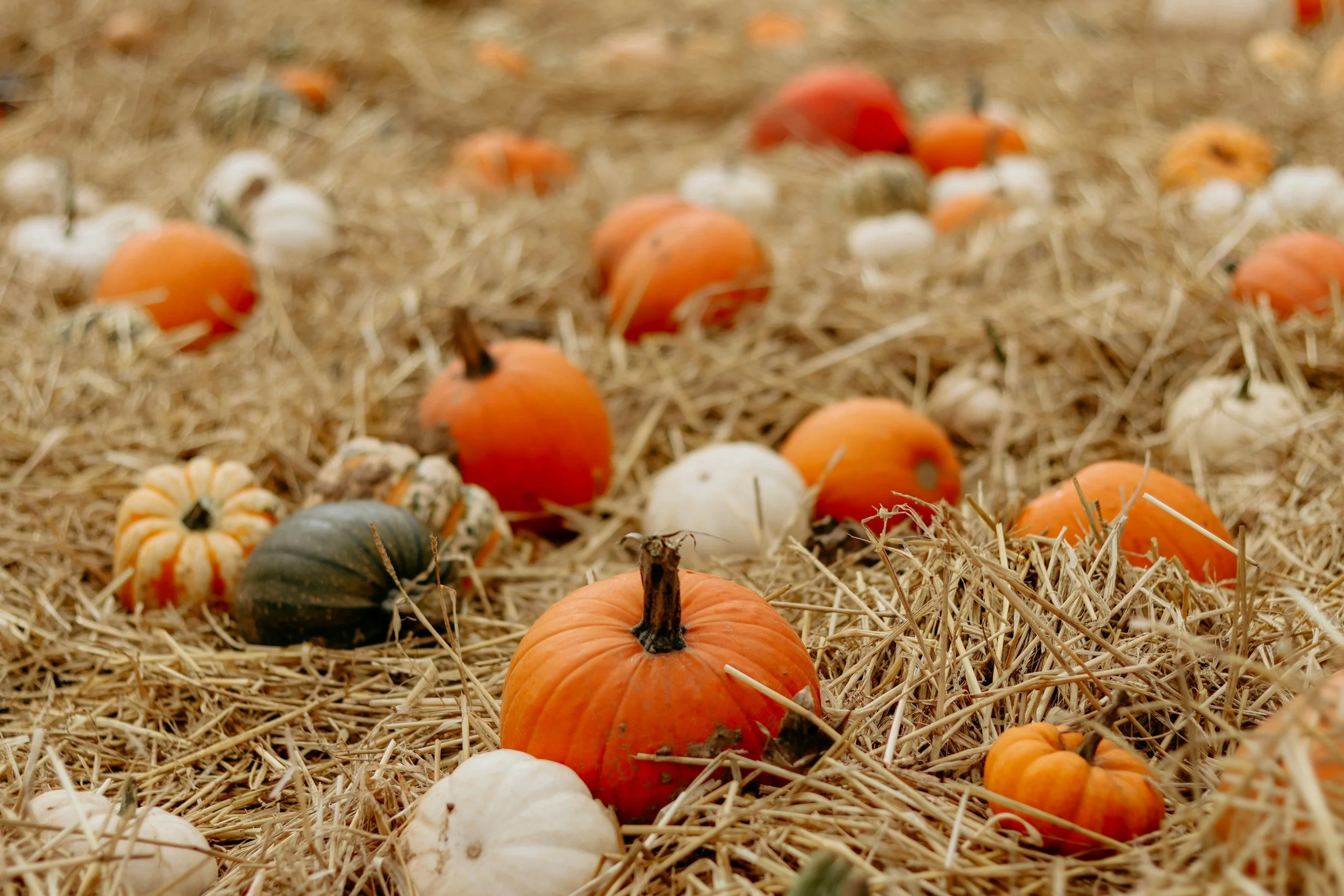
Lughnasadh was the festival of the first harvest — the grain cut, the first loaf baked, the year's initial accounting. Mabon is the festival of the second harvest: the orchard fruit, the late vegetables, the wine grapes, the hedgerow berries that have been ripening since August in the autumn sun. By the equinox, the apple trees are heavy with fruit that must be picked now or lost. The blackberries are at their peak — and, in English folk tradition, must not be picked after Michaelmas on September 29th, when the devil is said to have spat on them. The sloes are beginning to ripen, waiting for the first frost to sweeten them into the gin that will be decanted at Yule.
The second harvest is more mixed in character than the first. Lughnasadh's grain harvest was, in most years, a moment of shared relief — the staple food secured, the crisis of winter provisioning addressed. Mabon's harvest is more personal, more variable, more given to the particular conditions of each farm and garden and individual year. It is the harvest of whatever you specifically planted, in your specific ground, in the specific weather of this specific year. It is where the general hopes of spring become the particular results of autumn.
This is Mabon's particular emotional territory: the reckoning. What did you plant in spring, in hope? What grew? What didn't? What flourished beyond expectation and what failed despite your best care? The autumn equinox is the moment of honest accounting — not the anxious mid-year checking of progress, but the final, clear-eyed assessment of what the year actually produced. Not what you hoped it would be. What it is.
Persephone's Descent: The Myth That Holds the Season
No myth captures the essence of the autumn equinox more completely than the Greek story of Persephone — the daughter of Demeter, goddess of the grain, abducted by Hades and taken to the underworld, her mother's grief causing the earth to grow barren until her return. The story is, at its astronomical core, an explanation of the seasons: while Persephone is in the underworld, the earth is cold and unproductive; when she returns each spring, the earth flowers in welcome. But it is also, at its emotional core, a story about the acceptance of darkness.
The Homeric Hymn to Demeter — one of the oldest and most complete tellings — is careful to specify that Persephone's descent does not happen against her will entirely. She eats the pomegranate seeds. Six seeds, in most versions, binding her to the underworld for six months of the year. She makes a choice, even within constraint. Persephone, in the autumn equinox reading of her myth, is not only the victim of abduction. She is also the goddess who chooses, in some sense, to go — who takes the dark half of the year as her own domain, who becomes the Queen of the Dead as well as the daughter of the grain. Her descent is not only loss. It is transformation.
"Persephone goes into the dark and becomes something the spring-world version of herself could never have been. She comes back changed — not diminished, but deepened. This is what the autumn equinox offers to anyone willing to receive it."
The Eleusinian Mysteries — the most sacred and most secret religious rites of ancient Greece, celebrated at Eleusis near Athens in September, at the time of the autumn equinox — were built around the myth of Demeter and Persephone. Initiates underwent a nine-day preparation, culminating in a night ceremony in which something was revealed to them that could not be spoken and that, according to every ancient source, transformed their relationship to death. Cicero, initiated in 45 BCE, wrote that the Mysteries had given him not only a reason to live with greater joy but a way to face death without fear. The autumn equinox, in the Greek world, was the gateway to the deepest wisdom — the wisdom that comes from having gone, willingly and with open eyes, into the dark.
The Turning Trees: The World Making Its Colours
The most immediately visible expression of Mabon's reality is not any human ritual — it is the trees. The turning of the leaves in autumn is one of the most spectacular annual events in the temperate world, a display of colour so extravagant that it has attracted entire economies of tourism, entire vocabularies of aesthetic appreciation, entire traditions of deliberate travel to witness it. The Japanese practice of momijigari — literally, maple leaf hunting — the New England leaf peepers making their annual pilgrimage through Vermont and New Hampshire, the walkers in the English Lake District or the Trossachs or the Wicklow Mountains timing their visit to the peak of colour: all of them drawn by the same annual spectacle.
The chemistry of autumn colour is, in its way, as extraordinary as the colour itself. The reds and purples are produced by anthocyanins — pigments actually manufactured by the tree as the leaf dies, a final burst of biochemical production that serves as sunscreen for the tree's seeds and possibly as a signal to aphids that this tree's immune system is strong enough to produce these pigments and they should look elsewhere. The most spectacular autumn colours are not the colours of passive decay. They are the colours of active chemistry, of a living system doing something specific and purposeful in the act of letting go. The tree makes its beauty in the moment of release.
Walk into a forest in the third week of September when the turning has begun but is not yet complete, and you will walk through a world that is simultaneously two things: still green in the shadowed understory, on fire in the canopy where the light reaches. The oak leaves are just beginning to bronze at their edges. The field maple has gone entirely gold, and when the wind moves it, it shimmers like something alive with light rather than merely reflecting it. The beech above you is copper and amber and a brown so rich it is almost red. On the path, the first fallen leaves, still retaining their colour, curling at the edges. You crunch them underfoot and they smell of everything the year has been: warm and sweet and already beginning to be something else. Something underground. Something next year.
Wine, Cider, and the Ferment of the Season
The autumn equinox is, across the wine-growing world, one of the most labour-intensive and joyful moments of the agricultural year: the grape harvest, the vendange, the vendemmia. In France and Italy and Spain and Germany, the vineyards that have been tended all summer are now yielding their harvest — the grapes picked, sorted, crushed, their juice beginning the long fermentation that will transform it into wine. The timing of the grape harvest is one of the most consequential decisions in winemaking, made by examining the chemistry of the fruit, the state of the weather, the accumulated experience of the vineyard, the instinct of the grower. A day too early, a day too late, and the character of the vintage shifts.
In the Celtic and Anglo-Saxon world, the equivalent ferment was cider — the apple harvest of September and October pressed into juice that would work through the winter into the sour, potent, restorative drink of the spring. The wassailing of the apple trees — a ceremony of singing, making noise, and leaving offerings of cider-soaked toast in the branches to appease the spirit of the orchard and ensure next year's crop — was a midwinter custom in some regions, but the harvest from which the cider came was entirely of Mabon's season.
Fermentation itself carries the logic of Mabon in concentrated form. The grape or the apple is harvested — the summer's work collected — and then it is given over to a process of transformation that operates without further human intervention. The yeast does its work in the dark of the barrel or the vat, converting sweetness to alcohol, converting the fruit of summer into the warmth of winter. What goes in as juice comes out as something more complex, more enduring, more capable of bringing people together in the cold months ahead. The harvest is not an ending. It is the beginning of a transformation.
Michaelmas: The Dragon, the Archangel, and the Last Goose
In the Christian calendar, the autumn equinox is shadowed by the Feast of Michael and All Angels — Michaelmas — celebrated on September 29th, just days after the equinox. St Michael the Archangel, the warrior of heaven, the vanquisher of the dragon, the weigher of souls at the Last Judgment, was the Church's figure for the autumn threshold: the angel who stands at the boundary between the living world and the world of the dead, his scales balancing the weight of the soul, his sword bright against the darkness that presses in as the year declines.
The imagery of Michael's scales — justice and balance at the threshold of the dark — maps so directly onto the autumn equinox's astronomical reality that the Christianization feels less like an imposition than a translation. The same scales that appear in the heraldry of the archangel appear in the zodiacal sign of Libra, which governs the period around the autumn equinox. Balance is the dominant symbol of this moment in the year, recurring across traditions and cosmologies because it is written into the sky itself: for these few days, the scales of light and dark are level, and everything that will become unequal afterward is held, briefly, in perfect poise.
The Michaelmas goose — a fat bird fed on the stubble of the harvested fields, eaten at the Michaelmas feast — was one of the most enduring of English seasonal customs. Tenants paid their rents in geese. Employers gave their workers Michaelmas geese. The goose eaten at the feast was understood to bring prosperity for the coming year: if you ate goose on Michaelmas, you would not want for money until the next Michaelmas. The logic is Lughnasadh's: the harvest shared, the abundance honoured, the year's generosity acknowledged in the act of eating together.
Sukkot: The Harvest Festival of Shelters
In the Jewish calendar, the autumn harvest festival of Sukkot — falling between the 15th and the 22nd of Tishrei, typically in September or October — is one of the three great pilgrimage festivals of the year, the one most directly connected to the agricultural calendar. Sukkot means shelters or booths: for seven days, observant Jews eat and sleep in a temporary structure open to the sky, its roof made of branches and leaves through which the stars are visible, recalling the forty years the Israelites spent in the wilderness — and, in a deeper agricultural register, the temporary shelters the farm workers lived in during the harvest itself.
The sukkah — the temporary shelter — is decorated with the produce of the harvest: fruits and vegetables hung from the branches, the symbols of abundance made into the very walls and ceiling of the dwelling. To eat inside the sukkah is to eat inside the harvest, to be literally surrounded by what the year has produced, to sleep under the sky it grew under. The fragility of the structure is deliberate: the walls that move in the wind, the roof that lets in the rain, the starlight visible through the branches. This is not a sturdy house. It is a reminder that all shelter is provisional, that the abundance is a gift and not a permanent condition, that gratitude is the appropriate response to having it at all.
The four species — the etrog, the palm, the myrtle, and the willow — are brought together in the lulav ceremony of Sukkot and waved in all six directions: north, south, east, west, up, and down. The gesture is a declaration that the divine presence, and the harvest's blessing, permeates all of space. Not only the field, not only the direction of the sun, not only the good years — but all directions, all conditions, all of the world as it actually is.
The Practice of Letting Go
Contemporary observances of Mabon in neo-pagan and Wiccan traditions centre on two complementary practices: gratitude and release. Altars are dressed in the colours of the autumn harvest — deep reds, rusts, ambers, the gold of the turning leaves — and loaded with the fruits of the season: apples, pomegranates, the last grapes, hazelnuts, dried herbs, small gourds and squashes. The second harvest is honoured as Lughnasadh honoured the first: with attention, with ceremony, with the deliberate act of receiving what has been given.
But Mabon adds something that the earlier harvest festivals do not centre quite as directly: the ritual of release. What in the year has run its course? What was planted with hope but did not grow as hoped, and now needs to be composted rather than carried forward? What has been held too long — what grief, what resentment, what project past its natural end, what version of yourself that served you once and no longer does? The autumn equinox is the natural moment for this assessment, because the world around you is performing it constantly. The trees are not grieving their leaves. They are releasing them with extraordinary colour and composting them into next year's soil. The loss and the gift are the same act.
One of the most beautiful Mabon practices is the walk: going out into a deciduous landscape in the third or fourth week of September and simply paying attention. To the specific colour of the specific tree in front of you. To the quality of the light at this particular time of day. To the smell of the season — that distinctive autumn smell of leaf decay and cooling earth and woodsmoke from the first fires of the year. To what moves in you as the light angles and the leaves fall and the year turns visibly on its axis.
"The tree does not mourn its leaves. It colours them extravagantly, releases them completely, and puts everything it has into the ground it stands on. This is the Mabon practice: to let the year go with as much beauty as you can bring to the letting."
The Wheel Turns Toward Samhain
After Mabon, the wheel moves into its final, most inward quarter. The days shorten visibly now — not the imperceptible shortening of August, but a measurable, daily contraction that anyone paying attention will notice. The mornings are darker. The evenings arrive before dinner. The first frosts come, the first fires in hearths that have been cold since April. The birds that spent the summer filling the air with song begin to consolidate and flock and, in many cases, to leave. The world is contracting toward its centre.
In six weeks, Samhain will come — the great hinge of the dark half of the year, the festival of the thinning veil and the returning dead, the ancestor feast that closes the old year and opens the new one. Between Mabon and Samhain lies one of the most beautiful and most melancholy stretches of the year: the height of autumn colour, the last warm days, the harvest moon rising enormous and amber-orange over the stubble fields, the world at its most luminously transitional.
Mabon is the preparation for Samhain — the clearing of the year's accounts, the gathering of what has been grown and the releasing of what could not be, the deepening of gratitude into something sturdy enough to carry through the dark months ahead. You do not arrive at Samhain with your hands full. You arrive having already done the work of harvest, having already made the reckoning, having already let the leaves go with as much beauty and as much ceremony as you could bring to the letting.
The Year's Last Gift
Here is what Mabon ultimately offers, in its quiet and its amber light: the permission to stop accumulating and simply hold what you have. The entire spring and summer of the wheel has been devoted to growth, to production, to the urgent forward movement of the planting and the tending and the harvesting. Now, at the equinox, the momentum changes. The wheel tips into its inward arc, and what is asked of you is not effort but attention — the particular kind of attention that is only possible when you have stopped trying to add more, and can finally see clearly what is already in your hands.
The apple in the bowl on the Mabon altar. The last rose in the garden, still blooming, improbably, in the cold. The smell of the air at dusk when the season has just turned. The faces of the people gathered around the harvest table. The food on that table, which came from somewhere, which cost something, which someone grew and someone cooked and now everyone shares in the particular fellowship of the autumn meal — warm, unhurried, the evenings too short for lingering but too precious not to.
These are the gifts of Mabon: not the dramatic gifts of the festival peaks, not the fire of Beltane or the blaze of Litha or the wild generosity of Samhain's thinning veil, but the quieter gifts of the turning — the gifts that are only available to those who are paying close enough attention to receive them.
The wheel has turned. It will turn again. The darkness that gathers at Mabon will deepen through Samhain, reach its depth at Yule, and begin its long return — through Imbolc's first candle, through Ostara's crocus and its balanced day, through Beltane's fire and Litha's golden crown, through Lughnasadh's first loaf and back again to here: this amber threshold, this equal day, this moment of holding what the year has made and being, for one brief, balanced, grateful moment, exactly where you are.
The leaves are falling.
Let them fall beautifully.
The wheel knows the way home.