Lugh, Skill & Sacred Craft: The God of Everything and the Festival of Excellence
There is a question embedded in Lughnasadh that most people do not notice because they are focused on the harvest — on the grain, the bread, the abundance, the cost. The question is this: why is the harvest festival named for a god of skill?
Not a god of grain. Not a god of agriculture or weather or the turning of the seasons in any direct sense. Lugh — Lugh Lámhfhada, the Shining One, the master of all crafts — is not, primarily, a harvest deity. He is a craftsman deity, a warrior deity, a poet deity, a deity of the complete human being operating at maximum capacity. And yet Lughnasadh bears his name, was instituted by his hand, and was celebrated in his honor with the specific form of ceremony he chose — not a fire ritual, not a blood rite, but games. Athletic competitions. Contests of skill. A fair.
Understanding why Lugh chose this form — why skill, excellence, and competition are the correct way to honor the harvest — is the key to understanding both the god and the festival at their deepest level. Because the answer, when you find it, turns out to be the most sophisticated theology of labor and gratitude in the entire Celtic tradition.
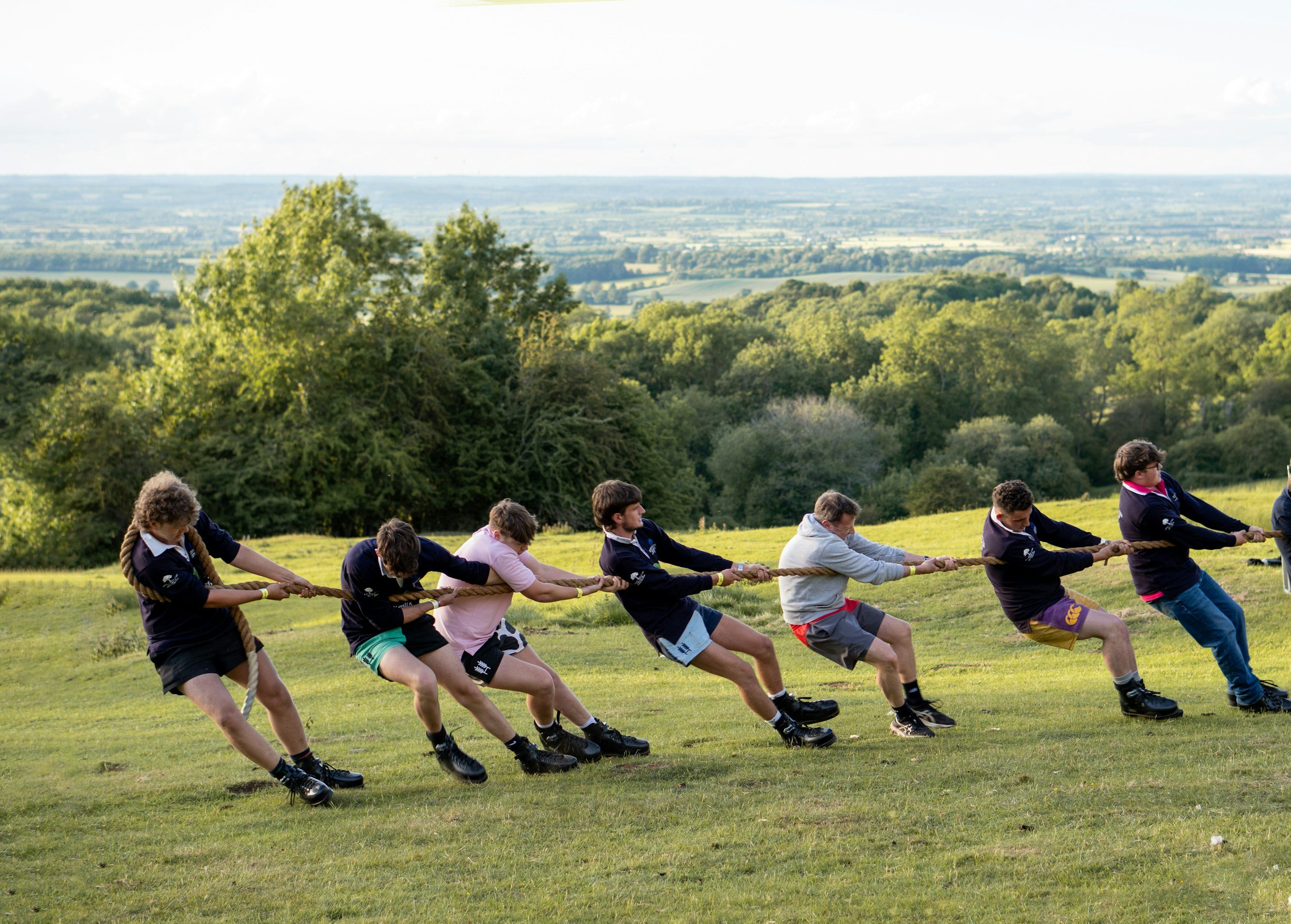
The Tailteann Games: Where Excellence Was Devotion
The Aonach Tailteann — the Fair of Tailteann, held at the hill of Tailteann in County Meath at Lughnasadh — was one of the great assemblies of ancient Ireland, documented in the mythological texts as an institution established by Lugh himself in honor of his foster mother Tailtiu. It was held annually at the beginning of August, lasting for weeks, and drew people from across Ireland and beyond.
The Tailteann Games were not simply athletic competitions in the modern sense. They were a sacred assembly — the aonach — in which athletic excellence, craft skill, and legal and social business were conducted simultaneously and understood as equally important. Athletes competed in running, jumping, throwing, wrestling, and chariot racing. Craftspeople displayed their work. Poets competed in composition and performance. Marriages were contracted at the fair — Tailteann marriages, temporary unions entered into for a year and a day that could be dissolved at the following year's fair if both parties agreed, a form of trial marriage documented in early Irish sources and connected specifically to this assembly. Legal disputes were settled. Trading was conducted. And all of it, from the foot race to the contract dispute to the poem competition, was understood as happening in Lugh's presence and in his honor.
"The Tailteann Games were not a distraction from the sacred work of the festival. They were the sacred work. To compete — in any form, at any skill — was to honor Lugh through the exercise of precisely the quality he embodied: the fullest possible expression of a human being doing what they did best."
This is the theology embedded in the fair's structure: excellence, in any domain, is sacred. The fastest runner and the finest silversmith and the most skilled poet were all participating in the same act of devotion — the offering of their highest capacity to the god who was himself the embodiment of highest capacity. You honored Lugh not by prostrating yourself before him but by being as good as you could possibly be at something that required genuine effort to master.
Picture the Aonach Tailteann at its height — somewhere in the early medieval period, when the historical record begins to give us glimpses of what the older traditions preserved. The hill at Tailteann is crowded in a way that it is at no other time of year. The chariot races are running on the flat ground to the north, the dust rising in a way you can see from a mile away. At the center of the assembly, a poets' contest is underway — the filid, the professional poets, each delivering their composition to a panel of judges who will determine whose command of the bardic forms is most complete. Around the edges, craftspeople have laid out their work: metalwork, leatherwork, weaving, carving. A swordsmith's blades catch the August light. A woman displays embroidery of such complexity that people have been stopping to study it for hours. None of this is commerce yet, or not only commerce. It is demonstration. It is the human capacity for excellence, on display, in August, in honor of the god who contains all of it simultaneously.
Lugh's Spear and the Technology of Mastery
Lugh's primary weapon — the Luin of Celtchar, in some accounts, or his own unnamed spear in others — was one of the four great treasures of the Tuatha Dé Danann: the Lia Fáil (the Stone of Destiny), the Sword of Nuada, the Cauldron of the Dagda, and Lugh's spear. The spear was described as so thirsty for blood that it had to be kept with its point in a cauldron of poisoned water to prevent it from killing independently. When battle came, the point was lifted from the cauldron and the spear flew on its own, unerring, returning to Lugh's hand after each cast.
The spear is a tool of skill before it is a weapon of war. To throw a spear accurately requires the mastery of physics, of body mechanics, of the specific variables of wind and distance and target movement that differ with every cast. Lugh's spear that flies unerringly is the metaphysical representation of skill taken to its absolute limit — the point at which the craftsman's knowledge is so complete, the practitioner's mastery so deep, that the tool performs without error. The spear that cannot miss is skill made supernatural. It is what mastery looks like when it has been taken all the way.
This is why Lugh's association with craft extends beyond any single domain. He is not the god of smithcraft or the god of poetry or the god of warfare — he is the god of mastery itself, the quality of excellence that crosses all domains and makes the thing that possesses it recognizable regardless of what it is applied to. The fastest runner and the finest silversmith share something that has no domain-specific name but that Lugh embodies completely: the full expression of a human capacity, developed to its highest point.
The Sacred Crafts of Lughnasadh: What Gets Made in August
The craft traditions associated specifically with Lughnasadh are rooted in the material reality of early August — what the season makes available, what the harvest creates as byproduct, what the specific moment of the year calls for.
Basketry and Weaving: The harvest required containers — baskets for carrying grain, rush mats for drying it, bags for storing seed corn. The rushes and grasses used for these practical objects were at their best in late summer, fully grown, dried by the summer heat to the perfect flexibility for weaving. The baskets made at Lughnasadh were working objects, essential to the harvest operation, but their making was also a craft — the specific skill of weaving that required practice to do well, that distinguished the person who had learned properly from the person who had not.
Herbalism and Preservation: August was the peak of the herbal harvest that had begun at Litha. The herbs cut and dried now would provide medicine, flavor, and ritual material through the winter. The skill of knowing which herbs to cut and when, how to dry them without losing their potency, how to combine them into preparations that would address specific conditions — this was craft knowledge of the highest practical importance, the kind of knowledge that took years to develop and that the community depended on.
The Harvest Knot: A specifically Lughnasadh craft, documented most fully in the Irish tradition but present across the British Isles — the harvest knot was a small decorative piece woven from fresh grain stalks, given by a young man to a young woman at the harvest or the fair as a token of interest. More complex than a simple gift, the harvest knot required skill to make properly — the stalks had to be split to the right width, the weaving tight enough to hold but not so tight it broke the stalks, the finished piece balanced and symmetrical. You could tell how skilled the maker was by the knot they produced. A beautifully made harvest knot was a demonstration of the same quality that Lugh honored at Tailteann: the willingness to learn something difficult and do it as well as possible.
"The harvest knot was courtship and craft combined. To give one was to say: I have taken the time to learn something difficult in order to give you something beautiful. This is a form of devotion — to the person, to the season, to the god who honored both."
Mastery as Spiritual Practice: The Lughnasadh Teaching
✦ ✦ ✦
The deepest teaching of Lugh's festival — the one that the Tailteann Games embodied and that the harvest knot expressed in miniature — is that skill developed fully and applied with complete attention is itself a form of devotion. Not metaphorically. Devotion in the technical sense: the offering of the highest available quality of the self to something beyond the self.
In a culture where craft skill was the primary means of survival — where the quality of the smith's work determined whether the plough broke in the field, where the quality of the weaver's cloth determined whether the family was warm in winter, where the quality of the healer's knowledge determined who survived the illness — excellence was not an aesthetic preference. It was a moral obligation. The person who did their craft carelessly, who offered less than their best capacity, was not merely performing poorly. They were failing the community that depended on their best.
Lugh as the god of all skills simultaneously is the mythological expression of this understanding: all crafts are equally sacred because all crafts are equally necessary, and what makes them sacred is not their subject matter but the quality of attention they are performed with. The runner who runs as fast as they can and the baker who bakes as well as they can and the poet who writes as truly as they can are all doing the same thing at the level that matters: bringing their full capacity into contact with the task in front of them, leaving nothing in reserve, offering everything.
This is what Lughnasadh honors. This is why it is named for Lugh rather than for the grain or the harvest or the earth. The grain grows and is cut according to laws older than any god. What Lugh represents — what deserves its own festival, its own games, its own elaborate ceremony of recognition — is the human capacity for excellence, which is not automatic, which requires cultivation, which is a choice made again and again over years of practice, and which, when it is expressed fully, is one of the most beautiful things in the world.
Whatever you do well: Lughnasadh is its festival. Bring your best work.
Lugh is watching. And he knows the difference.