Harvest, Apples & Autumn Feasts: The Sacred Fruit and the Feast at the Year's Edge
Cut an apple through its equator — not from stem to base the way most people cut it, but across the middle, through its widest point — and look at what is revealed in the cross-section.
A five-pointed star. Perfect, symmetrical, the seeds arranged in a pentagram inside the fruit's pale flesh, surrounded by the thin halo of its core. This is not something anyone put there. It is the apple's own internal architecture, the geometry of its seed arrangement, present in every apple that has ever existed and visible to anyone who knows to look for it. The apple carries its own symbol inside it, waiting to be discovered by the person who knows how to cut.
This is why the apple is Mabon's fruit. Not because someone assigned it to the autumn equinox in a modern correspondence chart. Because the apple reveals its star at exactly the moment in the year when the pentagram's symbolism — the five-pointed figure of the elements in balance, of the human form in balance, of the turning year at its balance point — is most resonant. The apple announces its own sacred geometry at harvest. The harvest reveals it. You only have to know how to look.
Avalon: The Apple Island at the Edge of the World
The Celtic Otherworld has many names and many locations — the Tír na nÓg of Irish mythology, the Land of Youth beyond the western sea; the Annwn of Welsh tradition, the underworld kingdom of Arawn; the various islands of the blessed that appear in the immrama, the voyage tales of early Irish literature. But one of its most resonant names is also its most botanical: Avalon, from the Proto-Celtic abal or the Old Welsh abal, both meaning apple.
Avalon is the Island of Apples. The Otherworld, at its most poetically expressed, is a place where apples grow perpetually — not in seasons, not subject to the frost and the harvest and the bare winter branches, but always, simultaneously in blossom and in fruit, the tree in every stage of its life cycle at once. This is the Otherworld's relationship to time: not sequential but simultaneous, outside the turning wheel that governs everything in the mortal world. The apple that grows in Avalon is the apple of immortality — the food of the gods, the fruit that sustains without diminishing, the harvest that never ends because it is never truly consumed.
"Avalon is not a paradise invented to comfort the dying. It is a specific mythological statement about the apple's relationship to time: that the fruit which dies each autumn in the mortal world exists in eternal simultaneity in the Otherworld. The apple that you pick in September is the mortal expression of a fruit that, somewhere beyond the western sea, has never stopped being ripe."
The apple of Iðunn in Norse mythology carries the same essential meaning in a different mythological frame. Iðunn — the goddess whose name may mean "ever young" — kept in her keeping a supply of apples that maintained the youth and vitality of the Aesir gods. When Loki, in one of his less amusing transgressions, allowed Iðunn and her apples to be taken to the realm of the giant Þjazi, the gods immediately began to age — their hair whitening, their strength failing, their divine vitality draining away with every day the apples were absent. The apple that sustains the gods is not metaphorical nutrition. It is the specific food of immortality, and its loss is the literal beginning of death.
At Mabon, to bring apples to the altar or the feast table is to bring this entire mythology into the room — consciously or not. The apple of the autumn harvest is the mortal apple, the one that exists in the turning year and will be gone by winter. But it carries within it the memory of Avalon, the echo of Iðunn's orchard, the five-pointed star that belongs to the same symbolic family as the wheel of the year itself.
The Orchard and the Wassail: Negotiating with Trees
One of the most specifically apple-centered of the British folk traditions — and one whose roots are considerably older than its earliest documentation — is the practice of wassailing the orchard, most commonly associated with the period between Christmas and Epiphany in the contemporary folk revival but whose deep logic belongs to the autumn harvest and the negotiation between the community and its food sources that Mabon represents.
Wassailing — from the Anglo-Saxon wæs hæil, "be in good health" — was, at its agricultural core, a ritual of relationship maintenance between the orchard and the people who depended on it. The community would gather in the apple orchard, typically after dark, carrying lanterns and making as much noise as possible — drums, pots and pans, guns fired into the branches. Cider — the product of the previous harvest — was poured over the roots of the oldest and most productive tree. Toast soaked in cider was placed in the tree's branches for the robins, understood as the tree's good spirits. Songs were sung directly to the tree: not about the tree, but to it, addressing it as an entity with interests and needs and the capacity to choose whether to produce or withhold.
Picture an orchard in Somerset sometime in the eighteenth century on a cold January night — but the logic belongs to any harvest moment. The trees are bare and dark. The community has gathered with everything that makes noise. Lanterns swing between the branches. Someone is carrying a large wassail bowl of cider, its surface still steaming slightly in the cold air. The oldest man in the community — or the biggest man, depending on the local tradition — approaches the oldest tree. He dips the toast in the cider and places it in the highest fork he can reach. He pours cider at the base of the trunk, onto the roots, into the cold earth. Then he begins the song. The rest join him. The noise goes up. The tree stands in the torchlight receiving all of it — the song, the cider, the toast, the attention of the entire community directed at it with complete seriousness. In spring, the blossoms will come or they will not. But they have asked. They have given what they had. The negotiation has been conducted in good faith.
The wassail tradition makes explicit what the harvest practices of Lughnasadh implied: the relationship between the human community and the natural world that sustains it is a relationship, with obligations running in both directions. You tend the orchard. You feed the tree with what it produced. You sing to it. You acknowledge it as something with its own interests, its own vitality, its own choice in the matter of whether to give again next year. And in return — you hope. You observe. You watch the spring blossoms with the attention of someone who has done everything that can be done and is now waiting on a response.
The Autumn Feast: What Was on the Mabon Table
The specific foods of the Mabon feast were not chosen for their symbolic resonance alone — they were the foods that the second harvest made available, the foods that the cellar and the orchard and the field offered at the exact moment of the autumn equinox. Understanding what was actually being eaten at the harvest feast grounds the festival in its material reality.
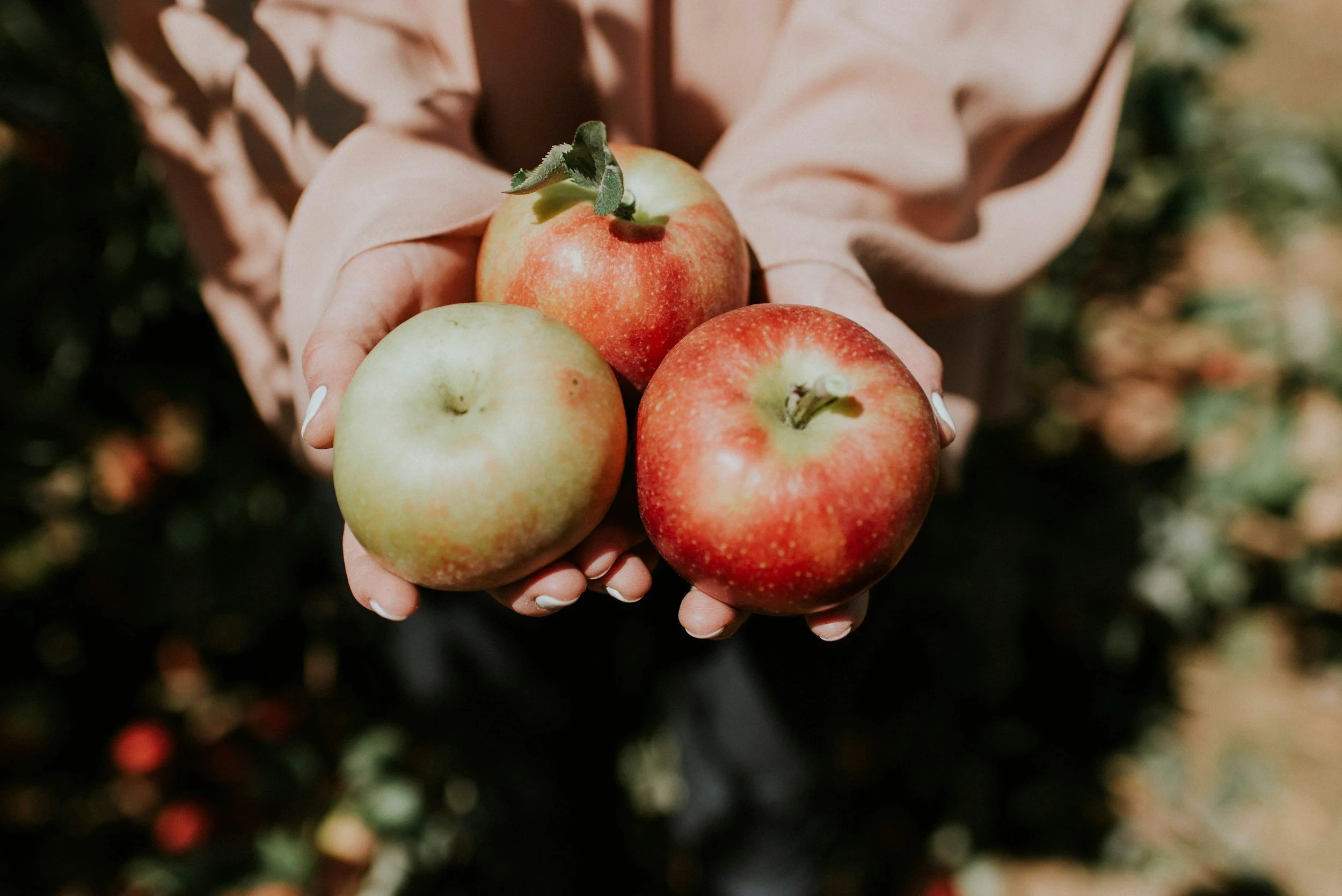
Apples and pear were the primary fruit of the season — the orchard's main harvest, picked now before the frosts that would soften and spoil them. They were eaten fresh, pressed into cider and perry, dried in rings for winter storage, made into preserves and butters and vinegar. The apple's versatility made it the harvest's most processed fruit: a community with a good apple harvest and the skill to process it had something that would sustain flavor and nutrition through the bleakest months.
Root vegetables — turnip, parsnip, carrot, celeriac — reached their best flavor after the first light frosts, the cold converting some of their starch to sugar and giving them a sweetness they lacked in summer. The autumn feast was the first meal in which these roots featured as primary ingredients rather than supplements, their harvest complete, their storage in the root cellar begun.
Nuts — hazel, chestnut, walnut — fell in September and October, their harvest a window of intense activity between the time they were ripe and the time the squirrels found them all. Hazelnuts in particular carried both practical value (high fat, high protein, long-storing) and sacred significance in Celtic tradition: the nine hazels of wisdom, whose nuts fell into the sacred well, whose wisdom-containing kernels were the food of the salmon of knowledge. To gather hazelnuts at Mabon was to gather wisdom along with food, the sacred and the nutritional inseparable.
Ale and cider — brewed from the grain of Lughnasadh and the apples of Mabon respectively — were the harvest's alchemical products, the foods that had been transformed by fermentation into something that would last through winter in ways that the original ingredients would not. To drink the ale at the Mabon feast was to drink the summer's stored sunshine, transformed and preserved.
"The Mabon feast was not a celebration of abundance in the abstract. It was a specific meal made from specific things that had been grown in specific conditions in a specific year. Every dish on the table was a story about what the season had been — what the weather had allowed, what the soil had produced, what the labor of the community had made possible. To eat the feast with attention was to receive the year's full report."
Cider: The Alchemy of the Autumn Harvest
✦ ✦ ✦
Cider — the fermented juice of apples — is Mabon's most specifically characteristic drink, and its production was one of the most significant events of the autumn harvest calendar in the cider-making regions of Britain, France, and the broader Northern European tradition.
The cider press was community infrastructure: too large and too expensive for any single household to own, it was shared, moved from farm to farm through the harvest weeks, its arrival at each orchard an occasion for communal labor and celebration. The pressing of apples required many hands — collecting, cutting, scrubbing, feeding the press, collecting the juice — and generated, almost as a byproduct, the kind of collective work experience that built community in ways that individual labor could not.
The juice pressed in September would spend the winter fermenting slowly in its barrels, the wild yeasts present on the apple skins converting the fruit's sugar to alcohol in a process that required no intervention beyond time and patience. By spring, what had been apple juice was cider — transformed, clarified, sharpened. The winter had done the work. The long dark had been the fermentation vessel.
This is the alchemy that makes cider specifically appropriate to Mabon. It is the harvest's product that requires the dark to become what it will be. The juice pressed at the equinox will not be ready until the light returns. The autumn gives what it gives, and then the winter makes it useful. Some transformations require the dark. Some things can only become what they are meant to be by going through the cold and coming out the other side.
The cider barrel knows this. So does the year.