Rhododendron: The Flower That Won a War With Honey
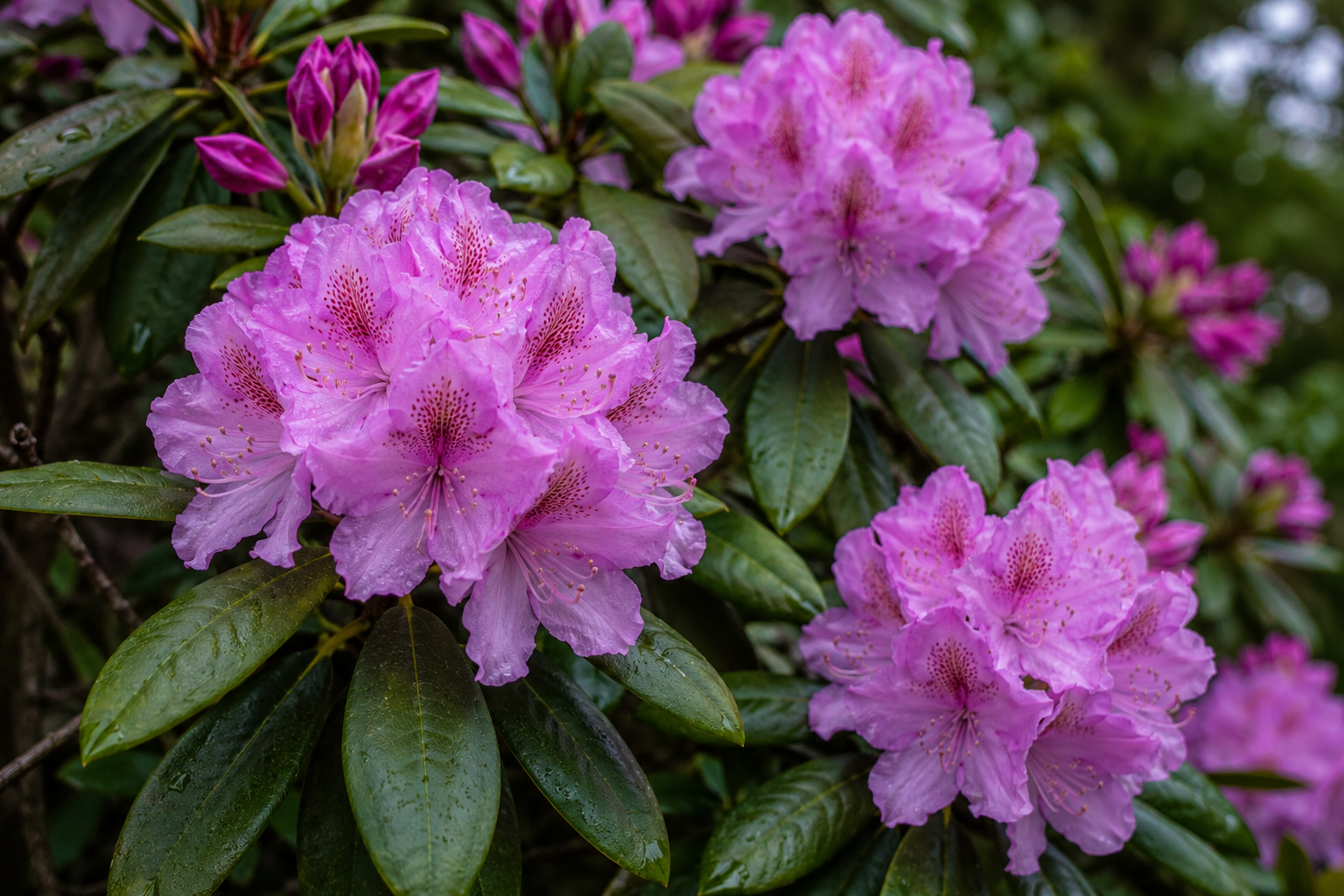
Rhododendron is a garden favorite across the Pacific Northwest and far beyond — dense, glossy-leaved, bursting each spring into enormous clusters of pink, purple, red, or white blooms. It's also, in certain species, the source of one of the strangest and most genuinely effective biological weapons recorded in ancient military history: a honey so toxic it was used to defeat an invading Roman army without a single sword drawn until the enemy was already too disoriented to stand.
Nearly every part of a toxic rhododendron — leaves, stems, flowers, pollen, and especially nectar — carries the compound responsible. The plant doesn't need to be eaten directly to be dangerous. It can poison through an intermediary as ordinary as a jar of honey.
A Toxin That Doesn't Wait for the Plant to Be Eaten
The compounds responsible, collectively called grayanotoxins, are a family of neurotoxins produced by rhododendrons and several of their close relatives in the heather family. They work by interfering with sodium channels in cell membranes, locking them into prolonged activity rather than letting them reset normally — a mechanism that produces dizziness, dangerously low blood pressure, and disrupted heart rhythm in anyone who ingests enough.
What makes rhododendron's danger unusual within this archive is how indirect the exposure can be. Bees that forage on the nectar of toxic rhododendron species — most notably Rhododendron ponticum and Rhododendron luteum, native to the Black Sea region of Turkey and parts of Nepal's Himalayan foothills — produce a honey that carries the same toxins straight through into the final product. This "mad honey," as it's been called for over two thousand years, is darker and redder than typical honey, with a faintly bitter edge, and remains genuinely dangerous to consume even today.
An Army Brought Down by Breakfast
The earliest detailed account of mad honey poisoning comes from the Greek military commander and historian Xenophon, describing an incident in 401 BCE during the famous retreat of the Ten Thousand near Trabzon, on the Black Sea coast. His soldiers discovered an extraordinary number of beehives and ate freely from the combs. According to his own account, those who'd eaten only a little behaved like ordinary drunks; those who'd eaten heavily looked like madmen, and some appeared close to death — vomiting, unable to stand, completely incapacitated. Remarkably, nearly all of them recovered within a day, with no lasting harm beyond a thoroughly miserable night.
What happened roughly three centuries later, in 65 BCE, was far more deliberate, and considerably bloodier. According to the geographer and historian Strabo, King Mithridates VI of Pontus — a ruler with a well-documented personal fascination with poisons — ordered toxic honeycombs deliberately placed along a road his forces knew the advancing Roman army, under the command of Pompey the Great, would travel. The Roman soldiers, encountering what looked like an abandoned, almost gifted stockpile of honey, ate it freely. As the toxin took hold and the column collapsed into disorientation, vomiting, and helplessness, Mithridates's waiting forces attacked and slaughtered the incapacitated Romans where they lay. It stands as one of history's earliest and most successful documented uses of a plant-derived compound as a calculated weapon of war — chemistry repurposed as ambush, with no blade needed until the enemy could no longer stand to defend themselves.
Still Harvested, Still Genuinely Dangerous
Mad honey hasn't disappeared into pure historical curiosity. It's still deliberately produced and consumed today, primarily in Turkey's Black Sea region and in Nepal's Himalayan highlands, where local honey hunters have maintained the practice across generations, often at considerable physical risk simply in the harvesting itself given the terrain involved. In small, carefully measured amounts, it's sometimes used in regional traditional medicine and consumed recreationally for its mildly intoxicating effect.
The danger has never gone away with familiarity, though. Toxin concentration varies unpredictably between batches, and there's no reliably safe consumption threshold — accounts suggest a teaspoon might produce only dizziness and vomiting, while two or more teaspoons risk genuine cardiac arrest. Modern food safety agencies in most countries prohibit its commercial sale for exactly this reason, and online sellers occasionally mislabel ordinary honey as "mad honey" for novelty value, muddying an already genuinely risky product with outright fraud.
A Toxin That Filters Its Own Pollinators
There's a quietly fascinating ecological theory behind why rhododendrons evolved a toxic nectar in the first place: it may function as a kind of natural filter, screening out less effective or less loyal pollinators while reserving the nectar reward specifically for bumblebees, which appear able to tolerate the toxin far better than many other species. Research on other bee species has found grayanotoxin exposure causing paralysis and disrupted behavior in some, while leaving certain bumblebee species largely unaffected — suggesting the plant may have shaped its own pollination partnerships through toxicity, in much the same selective, partner-specific way seen in several other entries throughout this archive.
Quick Answers
Is my garden rhododendron actually dangerous? Most ornamental rhododendron and azalea varieties contain some level of grayanotoxin and should be considered toxic if ingested, particularly to pets and children, though the specific potency varies significantly by species and hybrid.
Is mad honey illegal? Its commercial sale for human consumption is prohibited or heavily restricted in most countries due to its unpredictable toxicity, though it's still produced and consumed within traditional practice in parts of Turkey and Nepal.
Can mad honey actually kill you? Yes, in sufficient quantity — symptoms can progress from dizziness and vomiting to dangerously low blood pressure and serious heart rhythm disturbances, and there's no universally safe dose.
Did mad honey poisoning really help win a real ancient battle? Yes — according to the historian Strabo, King Mithridates VI deliberately placed toxic honeycombs along a Roman army's route in 65 BCE, and his forces attacked the incapacitated soldiers once the poison took effect.
Are all rhododendron species toxic? Toxicity varies by species — Rhododendron ponticum and Rhododendron luteum are specifically associated with the most potent mad honey, but grayanotoxins are found broadly across the genus and the wider heather family.
Why don't bees get sick from toxic rhododendron nectar? Some bee species, particularly certain bumblebees, appear to tolerate grayanotoxins far better than others, leading to a theory that the toxin may help the plant filter out less effective pollinators in favor of its most reliable partners.