Lily of the Valley: Mary's Tears, and a Poison Beneath the Bells
Lily of the valley has been handed to brides, woven into royal bouquets, and named the national flower of an entire country — and every part of it is toxic enough to stop a heart. Its small, white, bell-shaped flowers and famously sweet fragrance have made it one of the most beloved spring blooms in the Northern Hemisphere, almost entirely divorced, in the popular imagination, from the genuine cardiac danger sitting quietly inside every stem.
It isn't even a true lily — botanically, it belongs to the same family as asparagus, not the lily family its common name suggests. Few plants in this archive carry such a wide gap between their gentle, sentimental reputation and their actual chemistry.
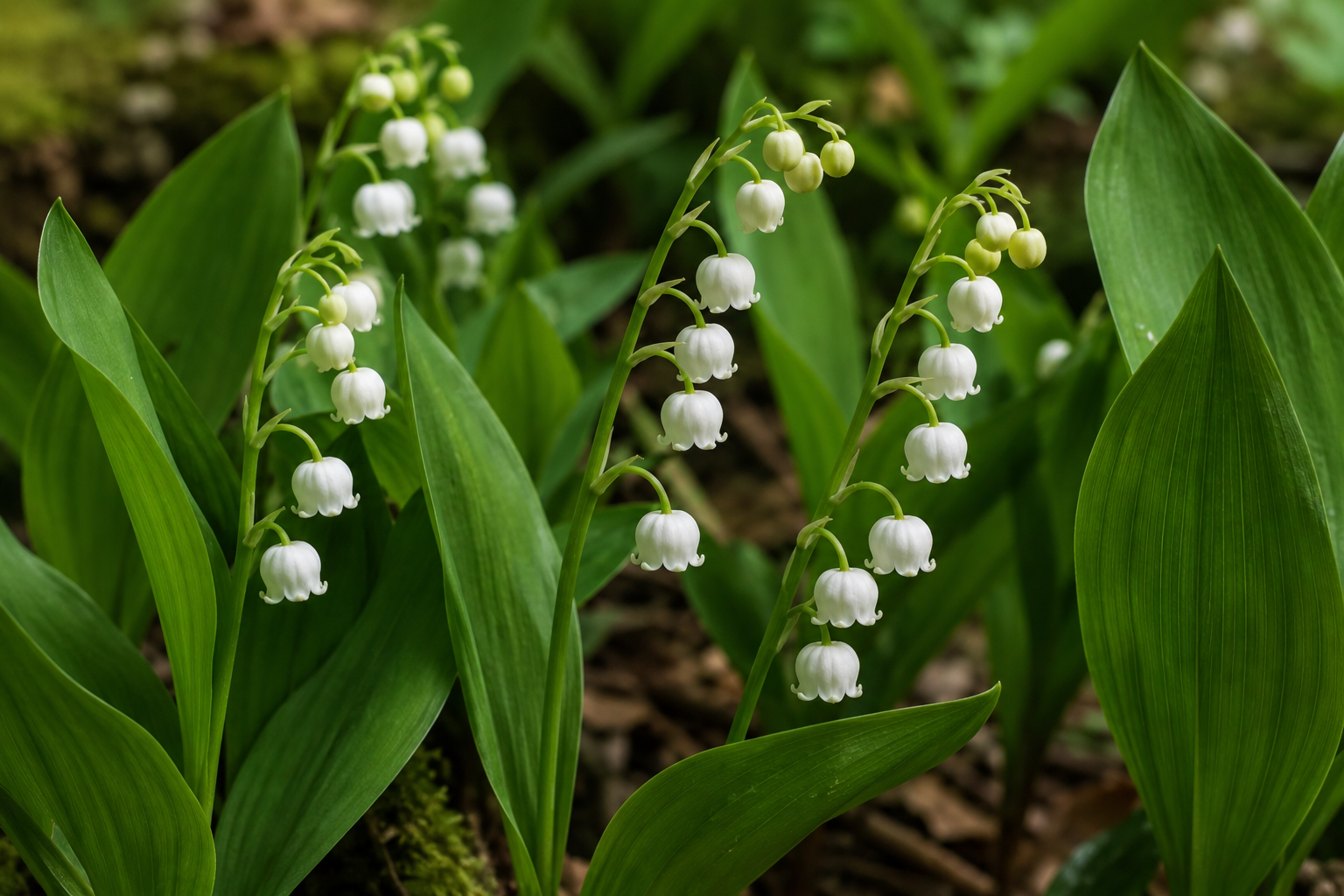
Mary's Tears
The most enduring legend attached to lily of the valley is explicitly Christian, and explicitly sorrowful: according to tradition, the flowers sprang up from the ground where the Virgin Mary's tears fell as she wept at the foot of the cross during Christ's crucifixion. This origin gave the plant one of its most widespread folk names — Our Lady's Tears, or Mary's Tears — and cemented its symbolic association with purity, humility, and grief transformed into something gentle and enduring.
A related, somewhat older Christian tradition tells nearly the same story with a different weeping woman at its center: in this version, the flowers grew from Eve's tears as she and Adam were expelled from the Garden of Eden — sorrow at the loss of paradise, rather than sorrow at the foot of the cross, but the same basic image of grief made permanent in delicate white blossoms. The plant appears more than a dozen times in the Bible, most concentrated in the Song of Solomon, cementing its long literary association with purity and devotion well beyond folklore alone.
A Flower Grown for Gods and Muses
Christian legend isn't the only mythology claiming this plant. In Greek tradition, Apollo — god of healing, music, archery, and truth — is credited with creating lily of the valley specifically as a soft ground cover, planted so his nine muses could walk through the forest without injuring their feet. It's a notably gentle origin story for a plant this toxic: not a weapon, not a curse, but a kindness extended to protect something delicate.
Germanic and Norse tradition took the flower in a related but distinct direction, associating it with Ostara, the goddess connected to spring and renewal, for whom the flower's brief, fragrant bloom each year became a symbol of nature's rebirth after winter. Celtic folklore added a more protective layer still, holding that the plant could ward off evil spirits — a use echoed in later folk practice of planting it near the home specifically as a kind of living spiritual barrier.
A Holiday Built Around a Flower
Few toxic plants in this archive have an entire modern public holiday attached to them, but lily of the valley does. In France, May 1st is celebrated as la fête du muguet — the festival of the lily of the valley — a tradition reportedly going back to King Charles IX, who regarded the flower as a bringer of good luck and began the custom of gifting sprigs of it each spring. The tradition persists today, with the flower sold and exchanged across France every May Day as a simple wish for happiness and good fortune.
Finland holds the plant in comparably high regard, having formally named it the country's national flower. Between French civic tradition, Finnish national symbolism, Victorian-era flower language (where it specifically meant "return to happiness"), and its frequent inclusion in royal and high-profile wedding bouquets, lily of the valley occupies a strange cultural position: one of the most widely celebrated, sentimentally adored flowers in the Western world, built entirely around a plant capable of causing a dangerous heart arrhythmia if eaten.
What's Actually Hiding in Those Bells
The toxicity comes from cardiac glycosides, a chemical family already familiar from this archive's entry on foxglove — compounds that interfere directly with the heart's electrical rhythm. Every part of the plant carries these compounds, including, notably, the water in a vase that's held cut lily of the valley stems, which can become contaminated enough to pose a risk if a child or pet drinks it.
Symptoms of poisoning include nausea, vomiting, abdominal pain, and an irregular or dangerously altered heartbeat, with severity depending on how much was ingested. Despite this real danger, the flower's fame as a perfume note has remained largely undimmed — its scent is one of the most sought-after in fragrance history, though because of how much raw plant material true extraction would require, most "lily of the valley" perfumes today are built from synthetic recreations of the scent rather than the actual flower.
Quick Answers
Is lily of the valley actually a lily? No — despite the name, it belongs to the asparagus family (Asparagaceae) rather than the true lily family, making the common name something of a botanical misnomer.
Is lily of the valley dangerous to pets? Yes — it's toxic to dogs, cats, and other animals as well as humans, and ingestion of any part of the plant, including water from a vase holding cut stems, can cause serious symptoms.
What does lily of the valley poisoning look like? Symptoms typically include nausea, vomiting, abdominal pain, and an irregular or dangerously altered heart rhythm, with severity depending on the amount ingested.
Why is it associated with the Virgin Mary? Christian legend holds that the flowers sprouted from the ground where Mary's tears fell at the foot of the cross during the crucifixion, giving rise to the common name "Our Lady's Tears" or "Mary's Tears."
Why does France celebrate a holiday around this flower? May 1st in France is celebrated as the festival of the lily of the valley, a tradition dating back to King Charles IX, who considered the flower a symbol of good luck and began the custom of gifting it each spring.
Is lily of the valley used in real perfume? Its scent is highly prized in perfumery, but because extracting enough natural fragrance from the actual flower is impractical at scale, most modern perfumes use synthetic recreations of the scent rather than true plant extract.