Laburnum: The Golden Chain Tree That Terrified a Generation of British Parents
Laburnum doesn't lurk in shaded woodland or hide along a riverbank. It hangs directly over garden paths and pergolas across Britain and Europe each spring, draped in long, cascading chains of brilliant yellow flowers — deliberately planted, trained, and admired for exactly that golden curtain effect. It's also, by some accounts, the second most poisonous tree commonly found in British gardens, narrowly outranked only by yew. For a tree this visible and this beloved, that's a genuinely uncomfortable combination.
Its seed pods are the real source of the trouble — and they happen to look remarkably, dangerously similar to ordinary garden peas.
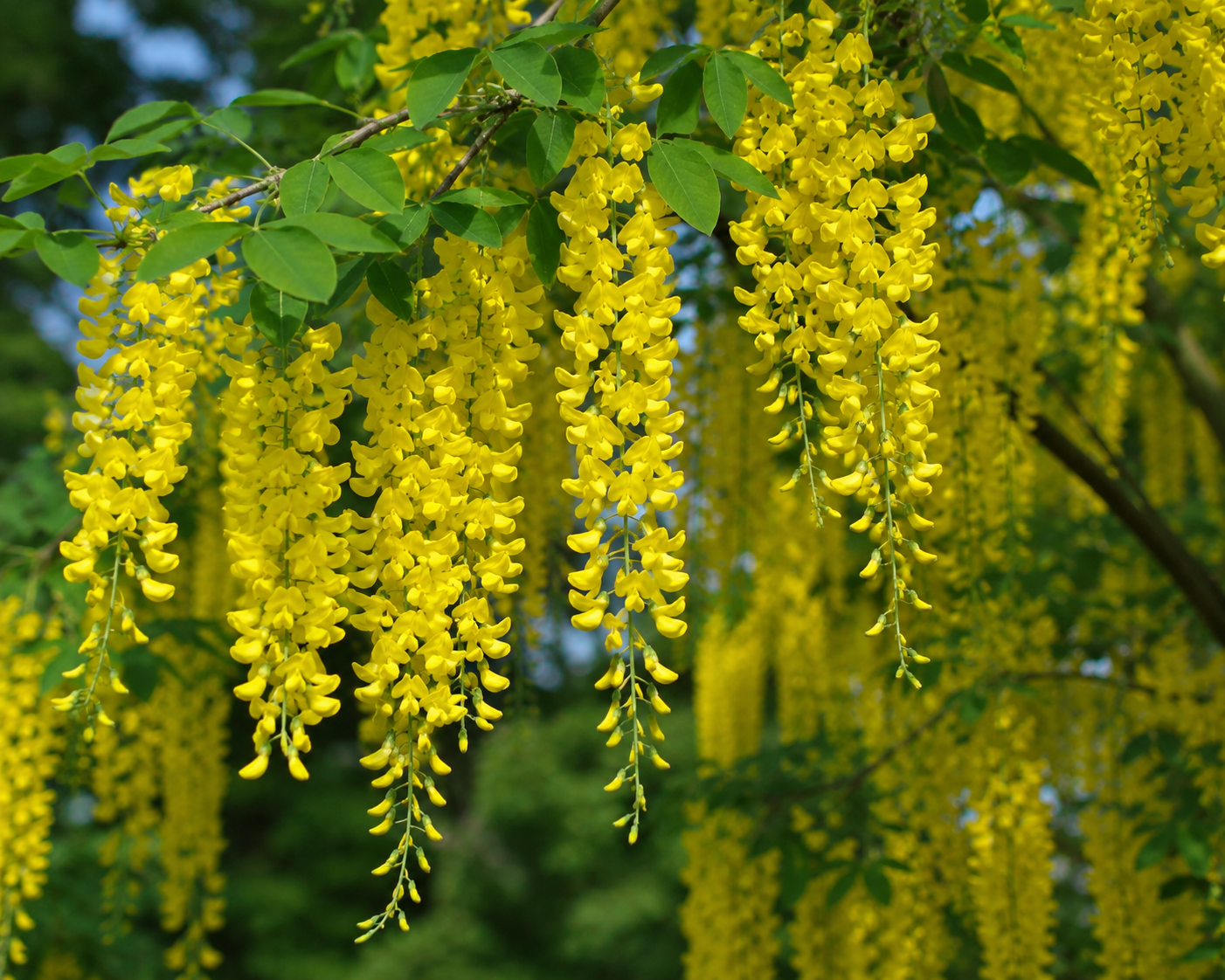
A Pea Family Member With a Cruel Disguise
Laburnum belongs to the pea family, and its dangling seed pods make that family resemblance impossible to miss — which is precisely the problem. To a curious child, a laburnum pod looks close enough to something edible that the visual warning signs other toxic plants rely on simply aren't there. The toxin responsible, an alkaloid called cytisine, runs through every part of the tree — bark, leaves, flowers, and most concentrated of all, the seed pods — and can produce headaches, nausea, vomiting, frothing at the mouth, convulsions, and unequally dilated pupils in a serious poisoning.
Despite this fearsome reputation, actual fatalities from laburnum poisoning are very rare. The gap between the tree's reputation and its real-world body count turns out to be one of the more interesting parts of its story.
The Decade Britain Panicked About Its Own Gardens
Laburnum's modern reputation was shaped less by ancient mythology than by a very specific, very modern wave of public anxiety. Through the 1970s, British hospitals recorded roughly three thousand admissions a year attributed to laburnum poisoning — overwhelmingly children who'd been playing with or eating the pea-pod-like seed pods. A significant number of these admissions turned out to be precautionary rather than confirmed poisonings: a child seen near a laburnum tree, rushed to hospital out of justified parental fear, and observed rather than treated for any serious toxic reaction.
The panic had real, lasting consequences regardless of how many cases were genuinely severe. Worried parents across Britain cut down laburnum trees from their own gardens in significant numbers, and a lingering cultural suspicion of the tree persisted for decades afterward. The anxiety wasn't purely historical, either — as recently as 2007, fifteen children were hospitalized after a primary school playground extension brought students into contact with overhanging laburnum branches, evidence that the underlying hazard, even if rarely fatal, was never entirely imagined.
A Strange, Specific Piece of Folk Superstition
Laburnum's folklore is thinner than many entries in this archive, but what exists carries a genuinely melancholy specificity. According to British folk tradition, laburnum and lilac were both believed to "mourn" if another tree of their own kind was cut down nearby — and out of that grief, the surviving tree was said to refuse to bloom the following year. It's an oddly tender piece of superstition to attach to one of the more dangerous trees in the British garden, treating it less like a hazard to be feared and more like something capable of its own quiet sorrow.
A separate, far more practical piece of folk warning held that laburnum's toxicity was potent enough to harm more than just the person who ate it directly — old advice cautioned against planting it where its hanging branches might drop material into a fishpond below, on the belief that the toxin could kill the fish inside.
A Tree With an Unexpected Literary and Pop-Culture Trail
Laburnum's golden cascade has made a quieter but genuine mark on literature and fiction well beyond garden folklore. J.R.R. Tolkien is believed to have drawn inspiration from laburnum's golden, drooping form when conceiving Laurelin, one of the two mythical trees of light in The Silmarillion. Virginia Woolf wrote laburnum directly into her own memory and fiction, recalling its golden glow during a particularly heavy moment in her childhood memoir, and weaving the tree into the emotional landscape of at least one of her novels.
The tree's toxic reputation has also made it a recurring, almost wry plot device in British mystery and genre fiction — invoked specifically because of how ordinary and beautiful it looks while harboring real danger. A poisoner in a television mystery series chooses laburnum specifically for being "such a pretty tree — and so many of them," a line that captures the tree's whole contradiction in a single observation: hiding in plain sight, precisely because nobody suspects the thing they planted on purpose.
Wood Worth More Than Its Danger Suggests
Beyond its toxicity, laburnum's dense, fine-grained wood has a genuine practical history entirely separate from poison. It was historically used in cabinet making and, notably, in the construction of Great Highland bagpipes, before tastes shifted toward imported tropical hardwoods. It's a strange kind of legacy for a tree mostly remembered today for what it can do if eaten — equally capable of producing music as it is of producing a 1970s hospital admission statistic.
Quick Answers
Are laburnum seed pods really dangerous to children? Yes — they closely resemble pea pods and contain cytisine, a toxic alkaloid that can cause vomiting, convulsions, and other serious symptoms if eaten, though actual fatalities remain rare.
Is laburnum more dangerous than other common garden plants? It's frequently cited as one of the most toxic common garden trees in Britain, often ranked just behind yew, though modern experts generally consider widespread fear of it somewhat overstated relative to its rare fatality rate.
Can you touch laburnum safely? Casual contact poses lower risk than ingestion, though the toxin can be absorbed through skin in some cases, so washing hands after handling pods or plant material is a reasonable precaution.
Why did laburnum cause a panic in the 1970s specifically? A wave of hospital admissions, many precautionary rather than confirmed serious poisonings, led to widespread British media coverage and public anxiety, prompting many parents to remove the trees from their own gardens.
Is laburnum dangerous to pets and livestock? Yes — it's toxic to horses and cattle as well as humans, and grazing animals have been poisoned by consuming the foliage or pods.
Did laburnum really inspire a tree in Tolkien's mythology? It's widely believed to have influenced Laurelin, one of the two great trees of light in The Silmarillion, based on its golden, cascading floral form.