Poison Hemlock: The Cup That Killed Socrates
Every part of poison hemlock is toxic, but its place in history was sealed by a single recorded death: in 399 BCE, the Athenian philosopher Socrates was sentenced to death by his own city and given a cup of hemlock to drink as the method of execution. He is, by a wide margin, the most famous person ever killed by a plant, and over two thousand years later, his name and this plant's are still inseparable.
It's not the same plant as western water hemlock, the North American species covered elsewhere in this archive — poison hemlock is the Old World original, native to the Mediterranean and Europe, and the specific plant responsible for one of history's most quoted deaths. Both plants are violently toxic. Only one of them has a philosopher attached to its reputation.
A Name Built From a Symptom
Poison hemlock's scientific genus name, Conium, comes from the Greek word koneion, meaning "to whirl" — a direct reference to the vertigo and dizziness the plant produces as one of its first, most disorienting symptoms. The ancient Greeks weren't being poetic. They were describing exactly what happened to someone who'd ingested it, in language specific enough to function as a diagnosis.
The plant carries an enormous list of folk names accumulated across the languages and regions it eventually spread to — poison parsley, devil's flower, gypsy flower, and the genuinely vivid "break-your-mother's-heart" among them. Few plants in this archive have inspired quite so many ways of saying the same warning.
What Happened to Socrates, In Specific Detail
The ancient accounts of Socrates's death — most famously recorded by his student Plato — describe a process that was neither quick nor gentle, despite later popular imagination sometimes treating hemlock as a clean, peaceful way to die. After drinking the prepared poison, Socrates reportedly walked around as instructed by his executioner, and the paralysis began at his feet, climbing steadily upward through his body. He remained lucid and able to speak for some time even as the paralysis ascended, continuing to discuss philosophy with the students gathered around him until it reached his chest and the breathing muscles gave out entirely.
That ascending pattern — paralysis climbing methodically from the extremities toward the chest, with the mind often remaining clear and aware almost the entire time — is precisely how modern toxicology describes coniine poisoning today. The active toxin doesn't sedate or confuse the way many of this archive's other poisons do. It paralyzes a fully conscious person from the outside in, ending in respiratory failure once the diaphragm itself stops responding.
Socrates wasn't an isolated case. Athenian records indicate hemlock was the standard method used for state executions of condemned prisoners more broadly, and ancient sources name several other historical and political figures — including the statesman Theramenes and the general Phocion — among those put to death the same way. Socrates simply became, by far, the most remembered.
The Poison That Mimics Dinner
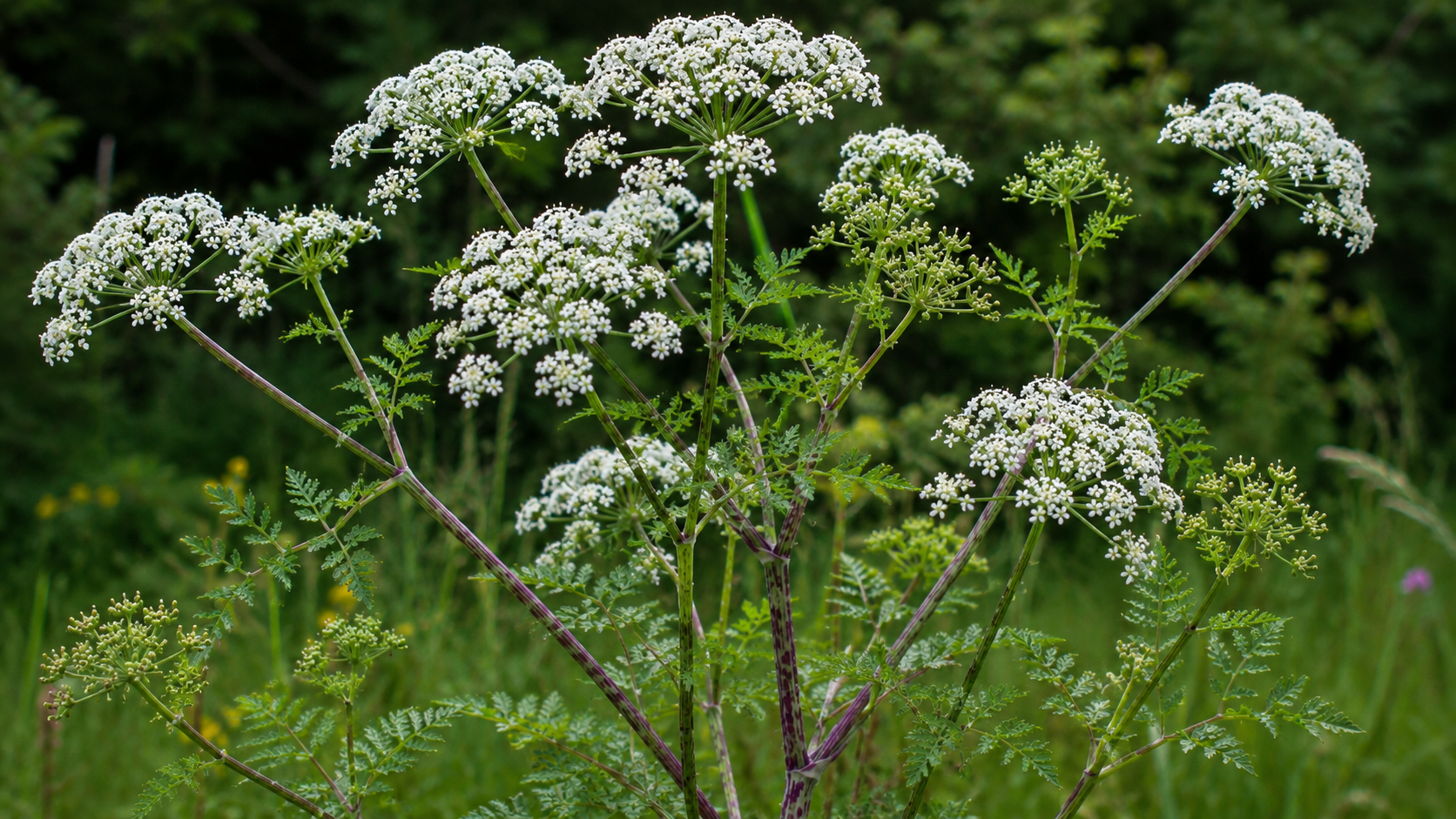
Like its North American cousin, poison hemlock belongs to the carrot family, and its feathery, fern-like leaves and clusters of small white flowers bear a real, dangerous resemblance to several genuinely edible relatives — wild carrot and wild parsnip among them. The most reliable way to distinguish it: poison hemlock's stem is smooth and hairless with distinctive purple blotching, while wild carrot's stem is hairy and lacks the purple mottling. Water hemlock, its even more violently toxic cousin, can be told apart by its cluster of fleshy taproots at the base, a feature poison hemlock doesn't share.
These distinctions matter because poison hemlock has spread, sometimes aggressively, well beyond its original Mediterranean and European range. It's now considered an invasive weed across large parts of North America, Australia, and New Zealand, frequently found along roadsides, ditches, and the edges of cultivated fields — meaning a plant responsible for one of antiquity's most famous deaths is now, in many regions, simply background scenery to anyone walking past a drainage ditch.
A Plant Even Other Plants Reject
European folklore attached a strange, almost petty piece of superstition to hemlock specifically: German tradition held that the plant harbored a kind of botanical hatred, refusing to grow near other plants considered more likable or virtuous — rue being the specific example most often cited. It's a small, oddly personality-driven detail for a plant otherwise discussed mostly in terms of pure lethality, as if even folklore couldn't resist giving hemlock something close to a grudge.
In broader witchcraft tradition, hemlock earned names like "Warlock's Weed" and the genuinely unsettling "Devil's Porridge," tied to witches' brews believed capable of inducing convulsions or facilitating communication with the dead. Greek mythology placed poisonous plants generally, hemlock included, under the domain of Hecate and her daughters Circe and Medea — the same mythological household that claims so much of the rest of this archive's witch's garden.
Medicine in Careful, Narrow Doses
Despite — or perhaps because of — its lethal reputation, hemlock has a documented, if extremely cautious, history in traditional medicine, used in tightly controlled small doses to treat muscle spasms and pain. There's also a striking, less expected historical footnote: in high mountain regions of Georgia (the country, not the U.S. state), hemlock leaves were reportedly used as a spring food source after long winters — but only after careful preparation involving multiple changes of cooking water, a labor-intensive process clearly developed by people who understood exactly how unforgiving a mistake with this plant could be.
This is, in other words, a plant whose lethality was never really in question to the people who lived alongside it. The danger wasn't a secret waiting to be discovered. It was a known, respected hazard that people worked carefully around for thousands of years, sometimes successfully, sometimes — as Athens's condemned prisoners knew firsthand — not at all.
Quick Answers
Is poison hemlock the same as water hemlock? No — they're different, only distantly related plants. Poison hemlock (Conium maculatum) is native to Europe and the Mediterranean and is the plant historically linked to Socrates's execution; water hemlock (Cicuta species) is native to North America and is generally considered even more acutely toxic.
How did Socrates actually die from hemlock? According to ancient accounts, paralysis began in his feet and climbed steadily upward through his body while he remained conscious and lucid, ending in death once the paralysis reached his diaphragm and breathing stopped.
Is poison hemlock dangerous to just touch? Yes, to a degree — the toxic sap can be absorbed through skin contact, and burning the plant releases toxins into the smoke, so protective clothing and gloves are recommended when handling or removing it.
How can you tell poison hemlock apart from wild carrot? Poison hemlock has a smooth, hairless stem with distinctive purple blotching, while wild carrot's stem is hairy and lacks that purple mottling — a key visual distinction for anyone foraging in the same family of plants.
Is poison hemlock still found growing wild today? Yes — it's spread well beyond its native Mediterranean and European range and is now considered an invasive weed across much of North America, Australia, and New Zealand, commonly found along roadsides and in ditches.
Was hemlock poisoning considered a painless way to die in ancient Greece? Not really — while it didn't involve the violence of other execution methods, ancient accounts describe a slow, conscious ascending paralysis rather than a swift or painless death.