Wheel of the Year
The Turning of Seasons, The Breathing of the World
Time, once upon a quieter age, was not measured in numbers.
It was felt.
In the length of shadows. In the stubborn frost that refused to leave the ground. In the sudden riot of green that arrived without asking permission. In the slow decay of leaves returning to soil, as all things eventually must.
The Wheel of the Year is not a rigid calendar—it is a rhythm. A cycle of light and dark, growth and decline, life and death, endlessly turning. It has been shaped and reshaped across cultures, traditions, and modern interpretations, but at its core remains something deeply human:
A need to understand where we are in the story of the world.
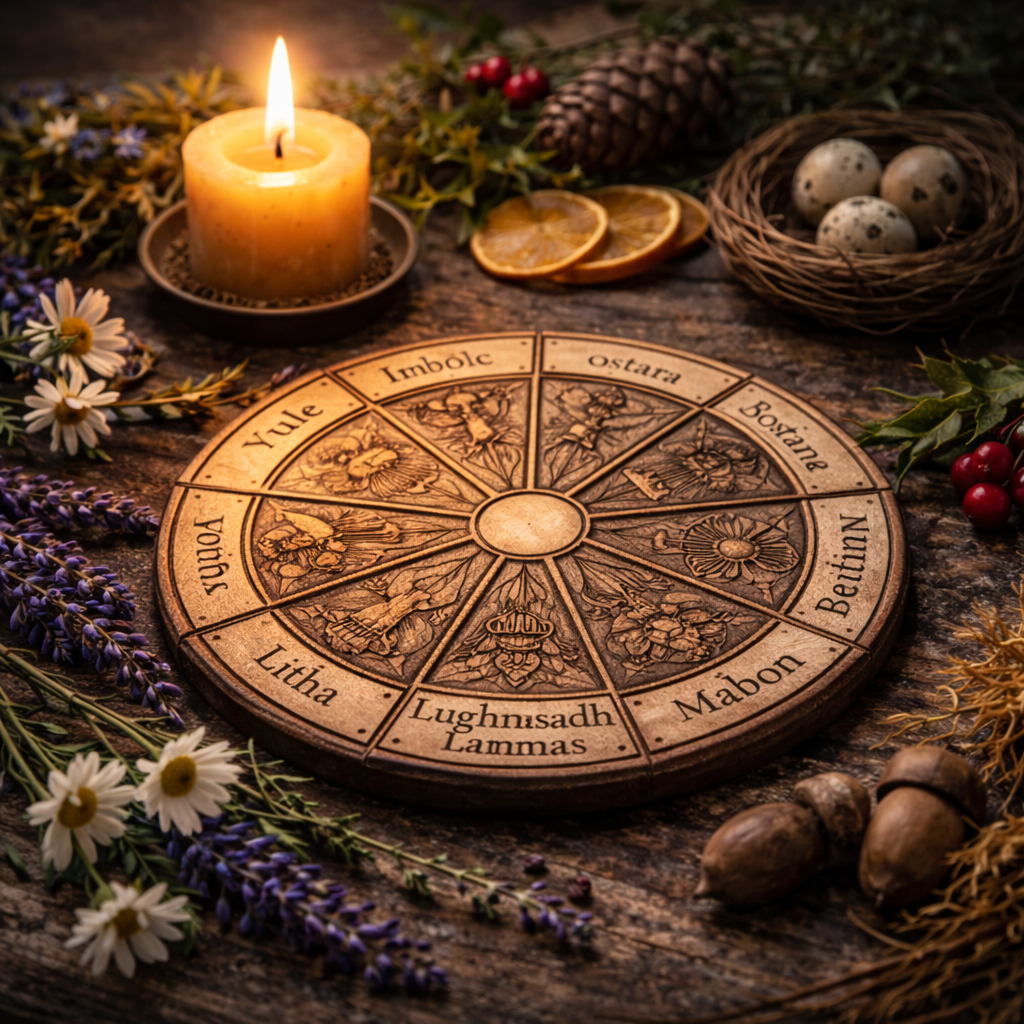
✧ The Eight Festivals
The Sacred Markers Along the Turning Path
These festivals divide the year into thresholds—moments where something shifts, whether in the land, the light, or the human spirit.
❄️ Yule (Winter Solstice)
The Longest Night, The Return of Light
At the darkest point of the year, something small and defiant occurs: the light begins to return.
Yule traditions center on endurance, warmth, and the quiet promise that darkness is not permanent. Fires are lit. Evergreen branches are brought indoors. Feasts are shared against the cold.
It is not a celebration of abundance—but of survival.
🕯️ Imbolc
The First Stirring Beneath the Frost
Winter loosens its grip, just slightly.
Imbolc is a festival of subtle beginnings—of lambing season, of milk returning, of the first fragile signs that life is preparing to rise again. It is often associated with purification, renewal, and quiet preparation.
Nothing is fully alive yet.
But something is waking.
🌸 Ostara (Spring Equinox)
Balance, Bloom, and the Unfolding World
Day and night stand equal for a fleeting moment.
Ostara marks the true arrival of spring—fertility, growth, and movement. Eggs, hares, and flowers appear as symbols of life multiplying, often faster than it can be contained.
Where Imbolc whispers, Ostara laughs.
🔥 Beltane
Fire, Desire, and the Height of Life’s Urge
If Ostara is growth, Beltane is overflow.
This is a festival of fire and vitality, historically marked by bonfires, dancing, and rituals celebrating fertility and connection. The boundary between worlds is said to thin—not with fear, but with invitation.
Life does not ask permission here.
It takes root everywhere.
☀️ Litha (Summer Solstice)
The Longest Day, The Height of Power
The sun reaches its peak—and pauses.
Litha celebrates abundance, light, and the full expression of life. Crops grow strong, days stretch endlessly, and everything seems to hum with energy.
But even here, at the height, the wheel begins its quiet turn toward decline.
The longest day is also the beginning of shortening light.
🌾 Lughnasadh / Lammas
The First Harvest, The Cost of Sustenance
The fields begin to give back what was planted.
Lughnasadh marks the first harvest—a time of gratitude, labor, and recognition that survival requires sacrifice. Grain is cut. Bread is baked. Effort becomes sustenance.
This is not just abundance.
It is earned.
🍂 Mabon (Autumn Equinox)
Balance Returns, The World Begins to Rest
Once again, day and night meet as equals.
Mabon is a time of reflection, gratitude, and preparation. The final harvests are gathered, and the world begins its descent into quiet. Leaves fall. Light softens.
The cycle is not ending.
It is folding inward.
🕯️ Samhain
The Threshold Between Worlds
This is the hinge of the year.
Samhain marks the end of the harvest and the beginning of the darker half. It is traditionally associated with ancestors, spirits, and the thinning of the veil between worlds.
It is not simply about death.
It is about memory.
And the understanding that what is gone is not always gone.
✧ The Solar Pillars
The Architecture of Light and Darkness
Beneath the festivals lies a deeper structure—the astronomical events that shape them.
☀️ Winter Solstice
The shortest day and longest night. A turning point where light begins its slow return.
🌗 Spring Equinox
Day and night in perfect balance. The world awakens in full.
🔆 Summer Solstice
The longest day. The peak of solar power and life’s expansion.
🍁 Autumn Equinox
Balance restored once more. A gentle descent into darkness begins.
These moments are not inventions—they are observations. Anchors in the sky that guided agricultural societies, spiritual traditions, and the human sense of time itself.
✧ The Lunar Cycle
The Closer, Quieter Clock
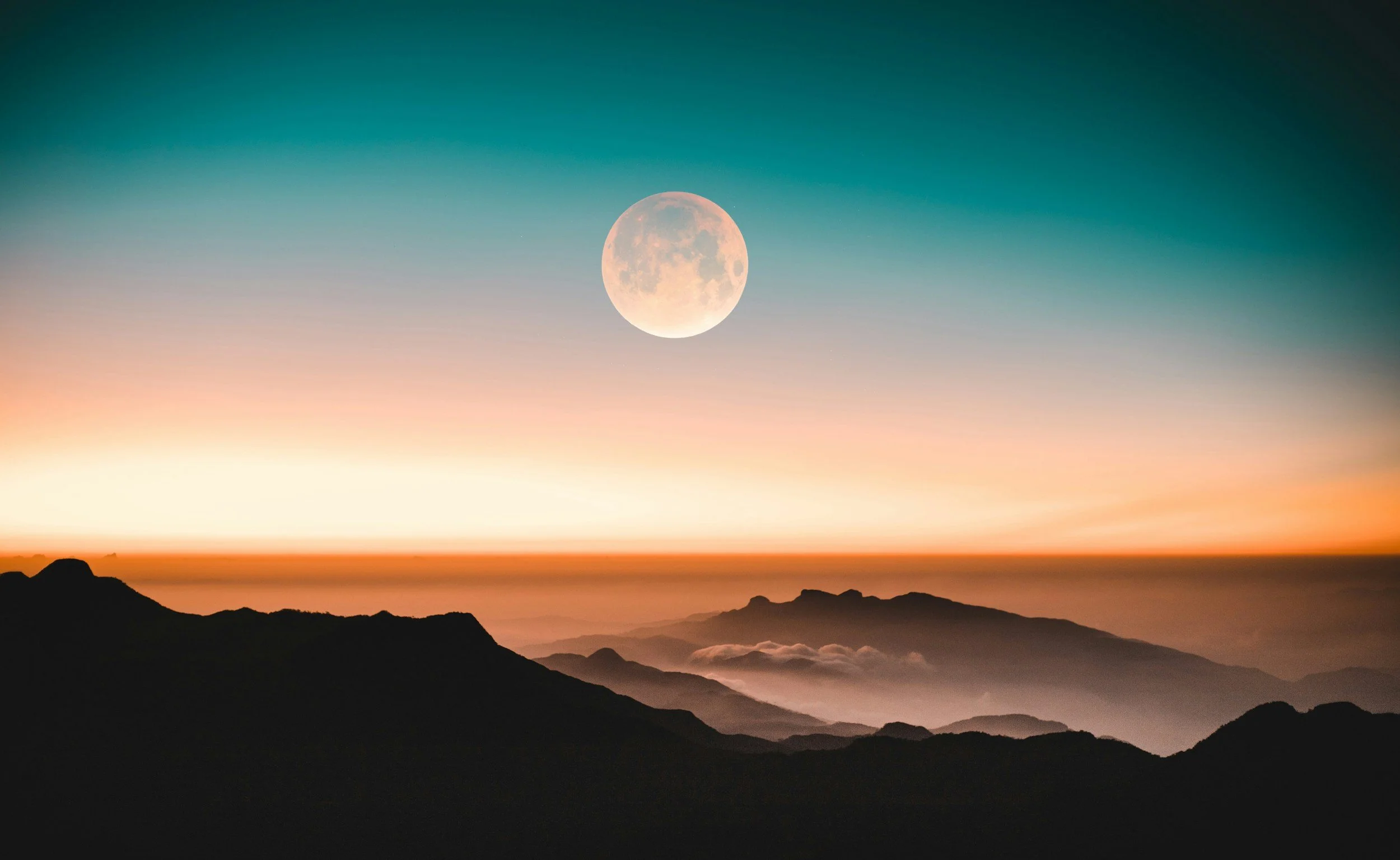
If the sun governs the grand arc of the year, the moon keeps more intimate time.
🌑 New Moon
A beginning hidden in darkness. A time of intention, stillness, and unseen growth.
🌕 Full Moon
Illumination. Completion. The height of visibility and energy.
🔵 Blue Moon
A rare second full moon within a single calendar month—often treated as a moment of amplification or anomaly.
🩸 Blood Moon
A lunar eclipse, where the moon takes on a red hue. Historically viewed with awe, fear, or reverence across cultures.
The moon does not move the seasons—but it moves us. Tides, rhythms, cycles of attention and rest.
It is the quieter clock, but no less powerful.
✧ The Wheel Turns
The Wheel of the Year is not something to be followed perfectly.
It is something to be noticed.
You do not need to celebrate every festival, mark every moon, or memorize every correspondence. The deeper purpose is simpler—and far older:
To remember that you are part of a living cycle.
That there is a time to begin.
A time to grow.
A time to harvest.
And a time to let things go.
And no matter where you stand on the wheel right now—
It is already turning.