The Fae at Beltane: When the Other Court Rides and the World Forgets Its Edges
Beltane and Samhain are twins.
Not identical twins — nothing about these two festivals is identical — but twin thresholds, standing across the wheel of the year from each other, each marking a moment when the membrane between the living world and the Otherworld becomes dangerously, wonderfully permeable. Where Samhain is the dark threshold — the dead returning, the cold descending, the veil thinning in the direction of winter — Beltane is the bright threshold. The living world at its most alive. The earth at its most present, most exuberant, most fully occupied with the business of existing. And the fae, the Aos Sí, the supernatural beings of the Celtic Otherworld — more active at Beltane than at any other point in the year except Samhain, but active in a register that is entirely their own.
The fae of Beltane are not the fae of Samhain. At Samhain, the Aos Sí emerge from the open sídhe in a kind of sovereignty, claiming their passage through the human world as a right the season grants them. They are powerful and indifferent and not particularly interested in what the humans around them think about their movement. At Beltane, the fae are something more complex: they are drawn to the festival, attracted by the energy of it, delighted and dangerous in equal measure, and far more interested in the humans than the Samhain hosts ever were. Beltane is when the fae come to the party. And their invitation was not extended.
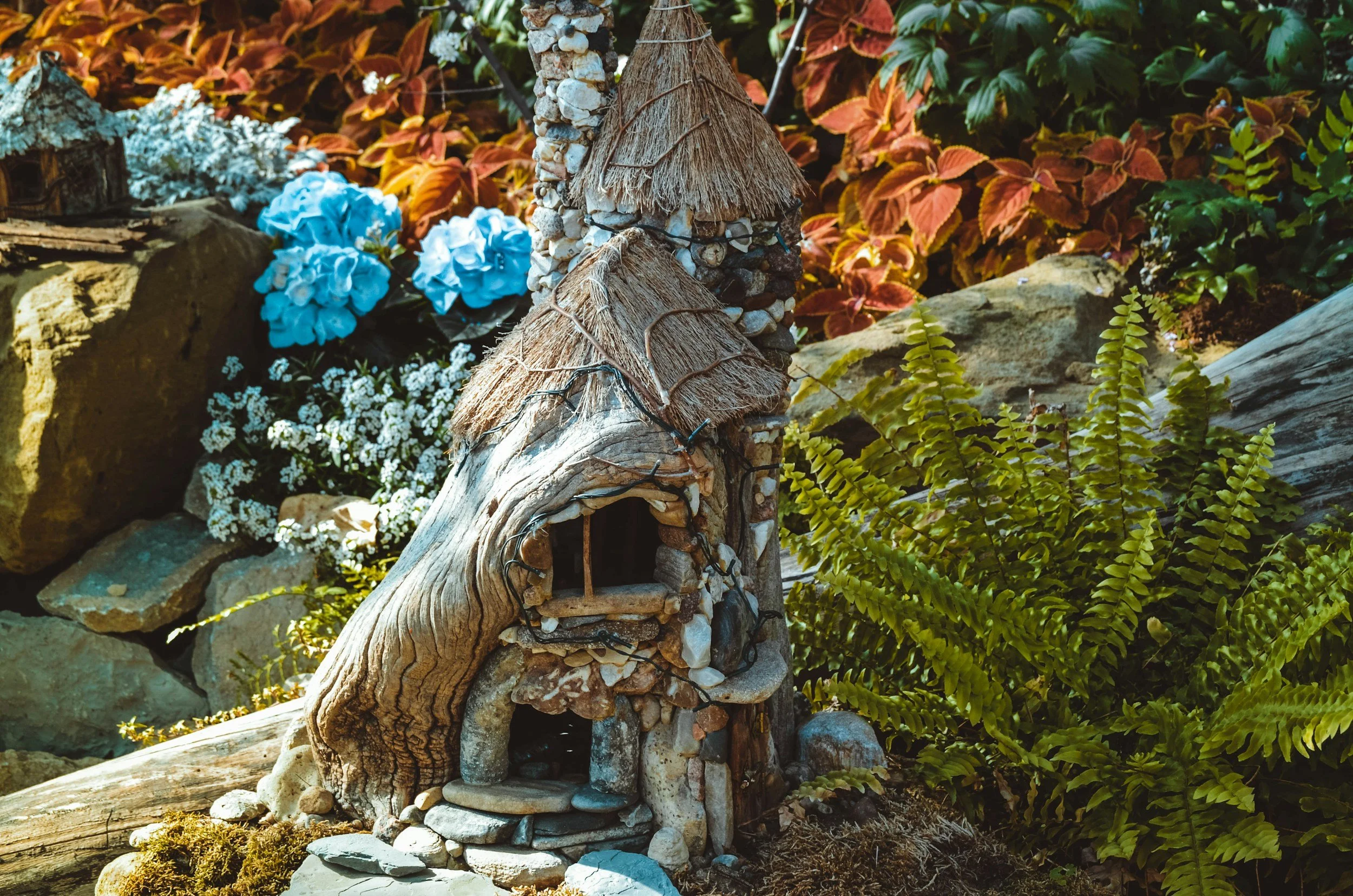
The Sídhe Open: What Beltane Unlocks
In Irish tradition, the sídhe — the fairy mounds, the passage tombs and ancient earthworks scattered across the Irish landscape that were understood as doorways into the Otherworld — were particularly active at the two great threshold festivals of Samhain and Beltane. At these moments, the mounds were lit from within; music could be heard from beneath the earth; and the Otherworld pressed close enough to the surface that the boundary between it and the human world was navigable in both directions.
The Irish mythological texts are explicit about this. The great supernatural battles of early Irish mythology — the conflicts between the Tuatha Dé Danann and the forces that opposed them — are frequently set at Beltane. The first Battle of Mag Tuired, in which the Tuatha Dé Danann arrived in Ireland and established their claim to the land, is said to have taken place on Beltane. The connections between this mythological calendar and the actual festival observance are not coincidental: Beltane was understood as a moment of cosmic significance, a time when the great stories of the world's formation were closest to the surface and when the beings who had participated in those stories were most present and most active.
"The mounds did not open because the festival happened. The festival happened because the mounds opened. Beltane was organized around an astronomical and supernatural reality — the annual moment when the Otherworld leaned closest — not the other way around."
The specific dangers associated with the fae at Beltane were different from those associated with them at Samhain. Samhain brought the restless dead, the Sluagh, the Wild Hunt — forces associated with cold, with death, with the dissolution of the living world into the dark. Beltane brought something else: the fae at the height of their power and beauty, moving through a world that was itself at the height of its beauty, and precisely because of this, more dangerous than the winter hosts in certain ways. The thing that destroys you in winter is obviously dangerous. The thing that destroys you in May is smiling.
The Fairy Rade: The Court Rides at May
One of the most striking and most consistently documented supernatural phenomena associated with Beltane in Scottish and Irish folklore was the Fairy Rade — the riding-out of the fairy court on May Eve, a procession of supernatural beings moving through the landscape with ceremony and splendor that was understood as both magnificent and perilous to witness.
The Scottish ballad tradition preserves this image with extraordinary vividness. In the ballad of Thomas the Rhymer — set on May Eve in the earliest versions — Thomas encounters the Fairy Queen riding out across the Eildon Hills, her horse hung with silver bells, her retinue stretched behind her. She takes him with her into the Otherworld, where he spends what feels like a day but is seven years, and he returns unable to speak anything but truth — his tongue given to him by the Queen as a gift and a curse indistinguishable.
In Tam Lin — another Scottish ballad whose roots appear genuinely ancient, whatever their specific written form — the fairy court rides out at Halloween in some versions and Beltane in others. The court processes through the landscape in a specific order: a black horse, a brown horse, a white horse, and Tam Lin riding the white. The knowledge of this procession, its route and its timing and the color of the horse, is what allows Janet to rescue him — information is the weapon. To know what the fae will do, when, and in what form is the only reliable protection against them.
Picture the road through the Eildon Hills on the eve of May, sometime in the thirteenth century of the common era, though the story it carries is older. The light has that particular quality it gets at the absolute end of twilight — not dark but no longer quite light either, the sky a deep purple-blue above and the road below it the color of pewter. The sound comes first: bells, too many bells for any ordinary rider, ringing in a rhythm that is almost but not quite music. Then the light — the procession catches the last of the sky's light and throws it back in silver, and the man standing at the edge of the road understands, in the way that the body understands before the mind does, that he should not be here. He should not be watching. He should be home, behind his threshold, with his fire lit and his door locked. But he is here. And the procession has seen him.
The Fairy Rade was not something you went looking for. It was something you were unlucky enough to encounter. The traditional protective advice — the same across dozens of sources from different centuries and regions — was consistent: do not be outside on May Eve if you can avoid it; if you must be outside, stay on the road; if you leave the road, you are no longer in the world's protection; if you hear bells or music or laughter that seems to come from no identifiable source, do not follow it; and above all, do not speak to anything that approaches you that you cannot account for by ordinary means.
Stolen by the Fae: Beltane's Specific Dangers
The fae of Beltane were associated with specific categories of theft that appear repeatedly across Irish and Scottish folklore and that reflect the particular quality of the festival — its associations with beauty, with youth, with the abundance that spring had made possible.
The theft of new babies was a Beltane danger. Infants born close to the festival, or mothers who had given birth in the weeks before it, were considered particularly vulnerable to the substitution of a changeling — a fairy child, or a piece of enchanted wood given the appearance of a child, left in the place of the human baby. The new child represented exactly what the fae coveted at Beltane: youth at the moment of maximum potential, human life at its most fresh and unmeasured. The protection of a new baby at Beltane involved specific and careful measures — iron placed in the cradle, a piece of the father's clothing laid over the child, a fire kept burning in the room through the night, and the constant attendance of a waking adult.
Young women were also considered at particular risk, especially those who were unusually beautiful or who had been recently married. The Fairy Queen's need for human companions — servants, nurses for fairy children, musicians, lovers — was a persistent feature of Beltane folklore, and the danger was understood as real. Young women were warned not to venture out alone on May Eve, not to follow music or lights into the fields, not to accept food or drink from any source they could not identify with certainty.
"The fae do not take what is ugly or broken. They take what is beautiful and whole and full of potential. This is the specific cruelty of the Beltane fae: they want what you have precisely because it is most worth having. The festival at its brightest is the moment of greatest danger."
Young men were not immune. The tradition of the human man taken by the Fairy Queen — Tam Lin, Thomas the Rhymer, and numerous folk heroes across the British and Irish tradition — constitutes its own substantial category of Beltane supernatural encounter. The Fairy Queen's attention was not always unwelcome; Thomas the Rhymer does not appear to resist his abduction strenuously, and the gifts he receives — true speech, prophetic vision, seven years of experience in a world more beautiful than this one — are genuinely extraordinary. But the cost is real. Thomas returns changed. Tam Lin must be rescued at great danger to the person who loves him. No one who enters the Otherworld at Beltane comes back exactly the person they were.
Fairy Paths and the Topography of Danger
The fae of the Celtic tradition did not move randomly. They moved along specific routes — fairy paths in the English translation of the Irish bóithre sí — invisible roads through the landscape that had been established by the Otherworld's traffic over centuries or millennia and that retained a supernatural charge regardless of what the human world built on top of them.
Building a house on a fairy path was understood as genuinely dangerous — not metaphorically, not superstitiously, but with the specific practical concern that the inhabitants of that house would experience ongoing interference from the beings whose route now ran through their walls. Accounts of houses built on fairy paths describe doors that would not stay closed, animals that refused to enter, lights seen passing through walls at night, and a persistent unease that no ordinary explanation could account for. The solution was architectural: a house built on a fairy path could be made habitable by ensuring that the front door and the back door were aligned in the direction of the path, so that the fairy traffic could pass through without obstruction.
At Beltane, the fairy paths were at their most active. The combination of the festival's liminal energy and the specific movement of the fairy court through the landscape on May Eve meant that the paths were occupied, trafficked, carrying the full weight of Otherworldly passage. To stand on a fairy path on Beltane night was to stand in the middle of a road — one whose traffic you could not see, that would not stop for you, and that had no particular interest in your welfare.
The Irish tradition of building at right angles to the fairy path — or of leaving gaps in walls and buildings to allow the path's passage — is documented into the twentieth century. The Clare County Council in Ireland reportedly rerouted a road in 1999 rather than disturb a fairy thorn tree standing in its planned path. Whether this was genuine belief or the preservation of cultural practice, the behavior is identical in its effect: the recognition that the topography of the human world is shared with something else, and that at Beltane that something else is particularly present.
Protection Against the Fae: The Specific Measures
✦ ✦ ✦
What is striking about the folk protective traditions associated with the Beltane fae is how specific they are — not general good luck charms but targeted countermeasures against precisely identified categories of supernatural danger.
Iron was the primary defense, as at Samhain, but its Beltane application had its own particular forms. A horseshoe hung above the door — specifically a found horseshoe, not a purchased one, the element of chance giving it additional power — was the most common household protection. An iron nail driven into the lintel of the cowshed protected the cattle from fairy interference at the moment of their Beltane movement to summer pastures. Iron carried on the person — a key in the pocket, a knife at the belt — provided personal protection against being led astray or taken.
The rowan was the other great Beltane protector, its red berries and bitter smell understood as offensive to the fae in ways that made them turn aside. Rowan branches were tied above the doors of cowsheds and woven into the tails of cattle before the Beltane drive. A rowan stake driven into the ground at the entrance to the field provided a barrier. In the Scottish tradition, rowan was tied with red thread — the color of life — to amplify its power specifically at Beltane, when the fae's power was at its seasonal peak and ordinary protection might require augmentation.
Yellow flowers hold a particular place in Beltane protection that is specific to this festival and not shared with the other sabbats. Primroses scattered on the threshold, hung above the door in bunches, strewn on the windowsills — yellow flowers in sufficient quantity created a barrier against fairy entry. The precise logic is unclear from the historical sources, though the association of yellow with the returning sun, with fire, with the specific golden quality of early May light, suggests a connection between the protective power of yellow and the festival's solar character. You repel the creatures of the Otherworld with the most specific possible emblem of the world they do not fully inhabit: the color of sunlight made material.
The court has ridden out. The bells have faded. The road through the Eildon Hills is empty again, or appears to be.
But Beltane is not over until dawn, and dawn is still hours away.
Stay on the road. Keep the iron close. Do not follow the music.
The world will still be here in the morning, if you are careful.