The March Hare: Madness, Moon Magic, and Spring Folklore
Every spring, the fields begin to stir.
The frost retreats into the shadows, the soil softens, and the quiet winter landscape suddenly fills with motion. Birds return. Flowers break through the earth.
And somewhere in the tall grass, a hare begins to behave like a creature that has completely lost its mind.
They chase each other in frantic circles. They leap into the air for no apparent reason. They stand upright like watchful spirits and then bolt away at impossible speed.
For centuries, people observing this strange seasonal frenzy came to a simple conclusion:
The hare had gone mad.
From this behavior emerged one of the most famous sayings in the English language — “mad as a March hare.”
But beneath the humor of the phrase lies a deeper layer of folklore, one tied to spring fertility, lunar symbolism, and ancient seasonal magic.
Why Hares Behave So Strangely in March
The madness of the March hare is not entirely imaginary.
During early spring, European hares enter their breeding season. Males pursue females across open fields in chaotic chases, often covering great distances in sudden bursts of speed.
One of the most curious behaviors involves two hares standing upright and boxing each other with their front paws.
For a long time, people believed this was two males fighting over territory.
Modern research revealed something even stranger: in many cases, the female hare is striking the male to reject an overly persistent suitor.
To a medieval farmer watching from the edge of a field, however, this entire spectacle must have looked like pure chaos.
Animals leaping, fighting, racing through the grass for no clear reason.
If ever there was a creature possessed by the wild energy of spring, it was the hare.
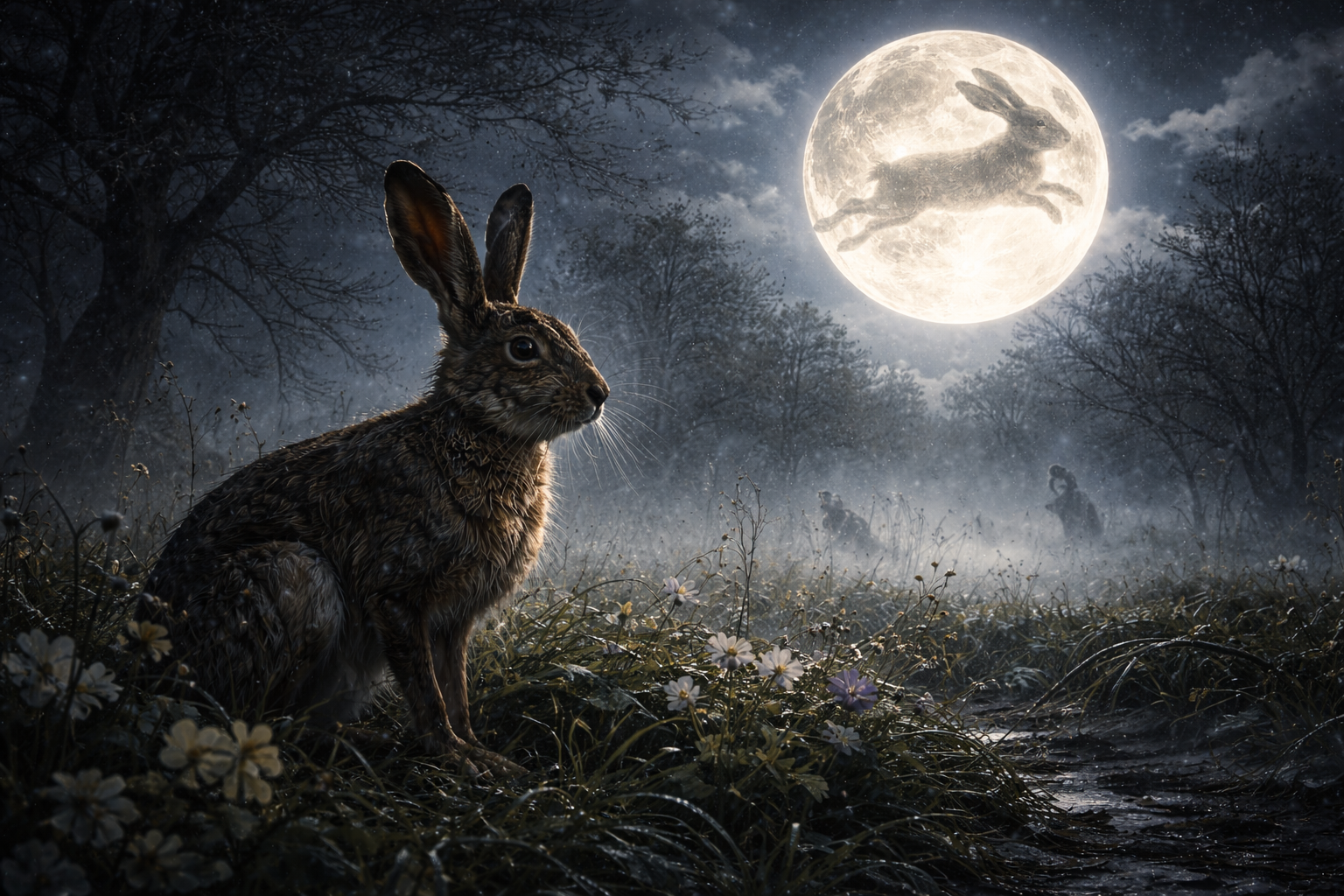
The Hare and the Moon
The hare’s reputation for mystery does not come only from its behavior.
Across many cultures, the animal is deeply connected to the moon.
In parts of Europe, people believed they could see the outline of a hare in the dark patterns on the lunar surface. Similar traditions appear across Asia and the Americas, suggesting a long-standing human fascination with this image.
In Chinese mythology, the famous Moon Rabbit is said to accompany the goddess Chang'e, endlessly grinding herbs to create an elixir of immortality.
Because lunar cycles govern tides, animal behavior, and many agricultural rhythms, the hare became linked to fertility, intuition, and the hidden influence of the moon.
In folklore, creatures tied to the moon often possess an air of magic — appearing suddenly, moving unpredictably, and vanishing just as quickly.
The hare fits that description perfectly.
Hares, Witches, and Shape-Shifting
The strange nature of hares led to another belief that appears again and again in European folklore:
Witches could transform into them.
Stories from England, Scotland, and Ireland frequently describe hunters chasing a hare across the countryside only to discover that the animal escapes impossibly fast.
Later, a local woman would be found injured or exhausted — suggesting she had taken the form of the animal to travel unseen.
In some traditions, witches in hare form were said to steal milk from cows or slip through fields at night to cast spells on crops.
Whether these tales were born from superstition or simple attempts to explain the hare’s elusive nature, they helped cement the animal’s reputation as a creature connected to the supernatural.
Not quite ordinary.
Not entirely trustworthy.
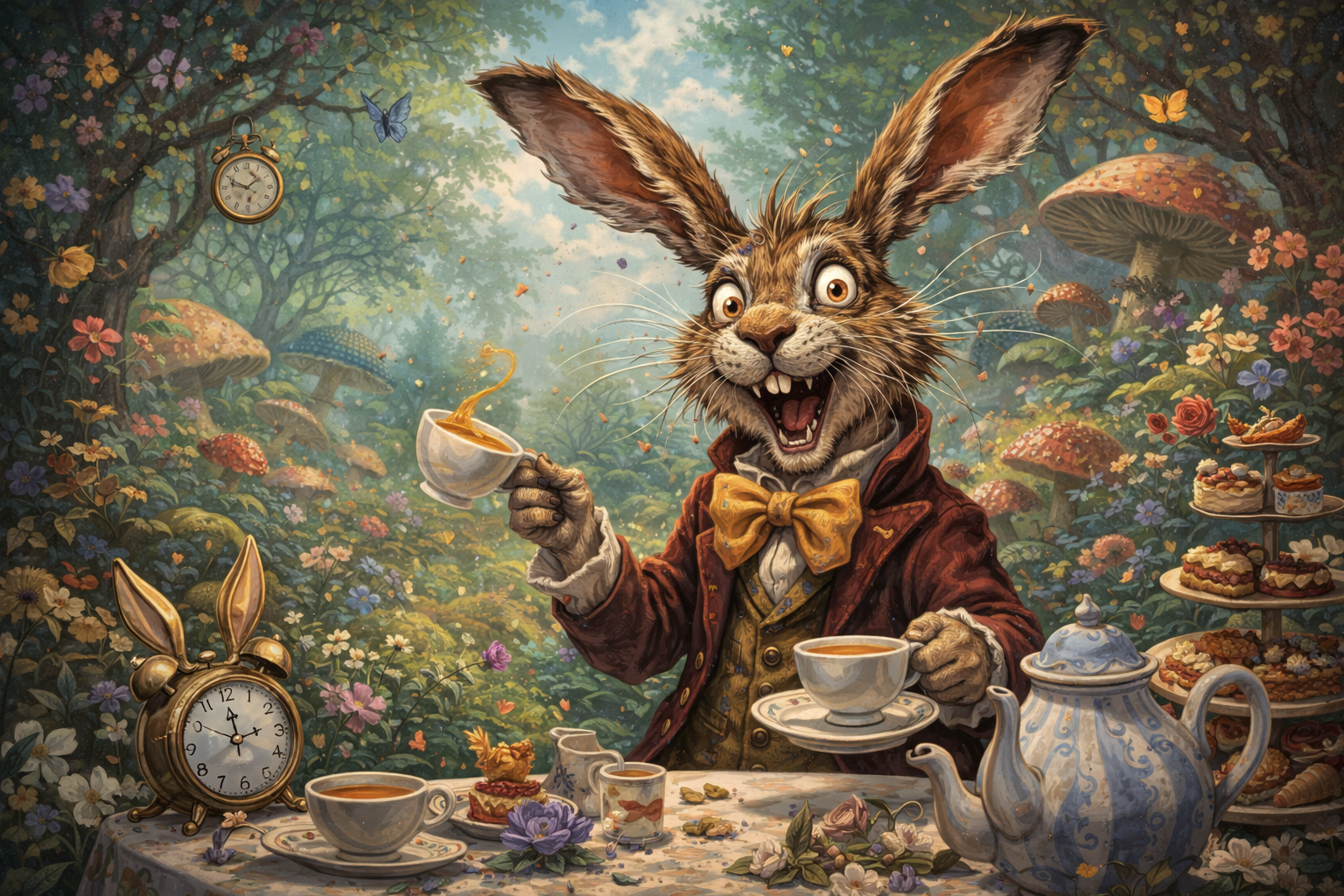
The Hare and the Spirit of Spring
Despite its darker associations, the hare remains one of the most powerful symbols of renewal and fertility.
Its explosive breeding cycle made it a natural emblem of the returning life of spring.
This connection likely influenced the later folklore of the spring hare delivering eggs, a tradition that eventually evolved into the modern Easter Bunny.
Even stripped of its mystical origins, the symbolism remains.
The hare appears precisely when the world begins to wake again.
When seeds push through the soil.
When animals return from winter’s silence.
When the balance between darkness and light finally shifts.
Madness as a Sign of Life
The madness of the March hare may not be madness at all.
It may simply be the visible eruption of life returning to the land.
After months of cold and stillness, the world suddenly bursts into motion.
Creatures chase each other across fields. Plants race toward the sun. Rivers swell with melting snow.
Nature itself seems briefly unhinged.
The hare, dancing through the grass in wild spring leaps, becomes the perfect messenger of that moment.
Not a symbol of insanity.
But a living reminder that when the seasons turn, the world itself goes a little mad.
And from that chaos, life begins again.