The Undine Grimoires Archive: Mythology, Folklore, Paranormal Legends, and Haunted History
You may notice a rather long collection of topics above this line.
Those are the corridors of the Undine Grimoires archive — mythology, folklore, haunted places, strange encounters, ancient religions, lost civilizations, and the many darker curiosities that surround them.
If any of those subjects catch your interest, you may want to bookmark this little archive. New entries are added regularly as the library grows.
Before you leave… might as well read what we have to say below.
There are places in folklore where every road seems to meet.
A traveler walks through a forest and finds a crossroads where offerings sit quietly in the dirt. A scholar opens a crumbling manuscript and realizes the same symbol appears in cultures separated by oceans. A ghost story told in a roadside diner echoes something recorded in a monastery centuries ago.
The strange thing about the supernatural is not that it exists in one place.
It exists everywhere.
Across continents, across centuries, across religions and mythologies, the same patterns appear again and again: spirits that linger after death, creatures that slip between worlds, sacred plants used for healing or harm, forgotten cities swallowed by time, and stories that refuse to die no matter how many generations pass.
This archive was created to explore those patterns.
Not as a collection of random curiosities, but as a map of the uncanny—a place where folklore, mythology, anthropology, horror, and historical mystery all sit beside one another like books on the same shelf.
What follows is a glimpse into the many rooms of that archive.

Thresholds of Death, Spirit, and Transformation
Many traditions begin their supernatural stories with the same question: what happens when the boundary between worlds grows thin?
Across cultures we find tales of the afterlife, spirits who linger among the living, and rituals meant to communicate with the dead. Certain places—especially crossroads—appear again and again as meeting points between the human world and something older.
Other stories speak of the uncanny double, a shadow self or spiritual twin that mirrors a living person. Fire becomes sacred in many traditions, used in rites of purification, protection, and sacrifice. Harvest rituals remind us that survival has always been tied to cycles of life, death, and renewal.
More unsettling traditions speak of possession—moments when a spirit, god, or unknown force moves through a human body. And within myth and horror alike we encounter the archetype often called the monstrous feminine, figures who blur the boundary between creation and destruction.
These themes appear across folklore, religion, and storytelling traditions around the world.
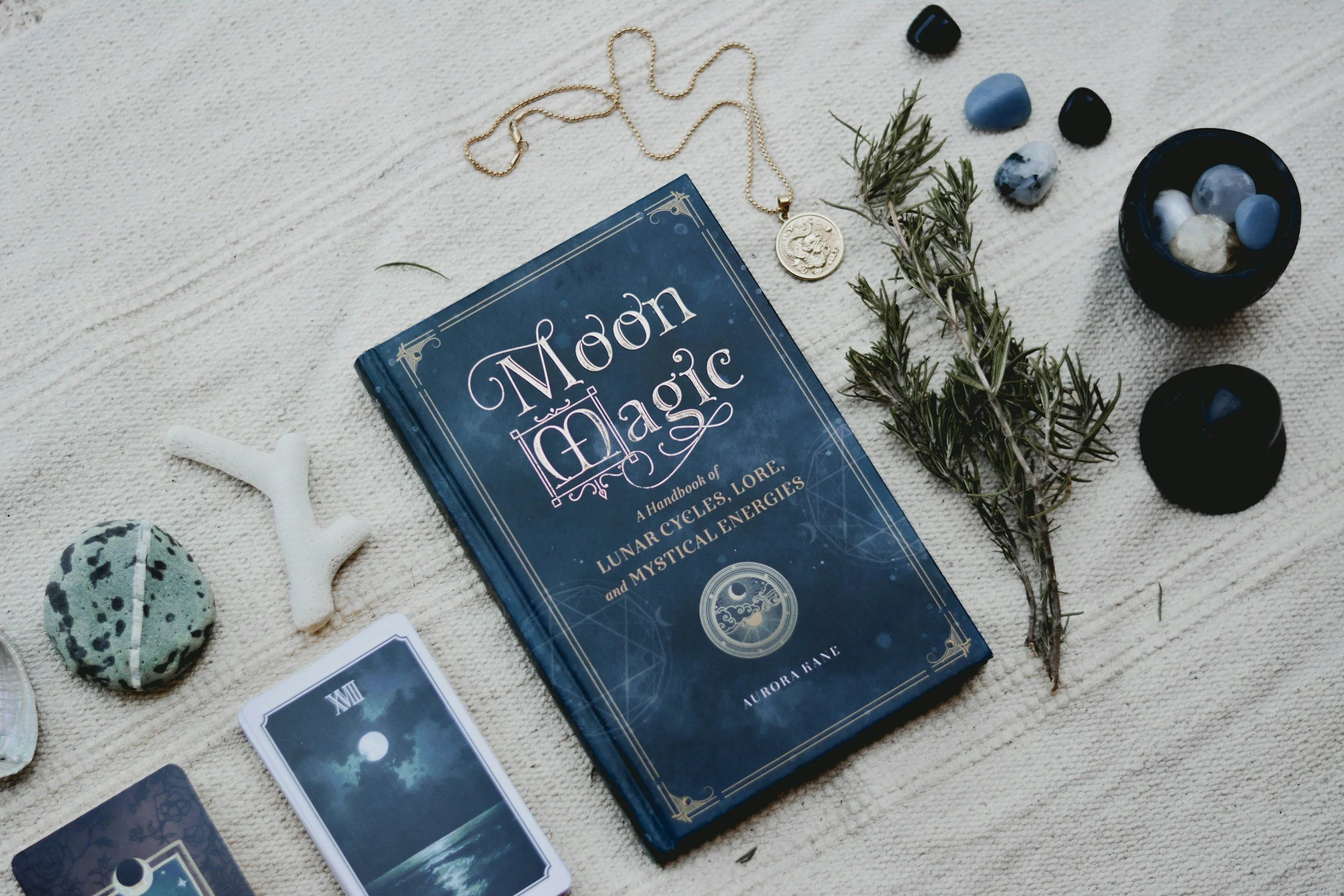
The Natural World as a Cabinet of Power
Long before laboratories and modern pharmacology, the natural world itself served as humanity’s first library of medicine and magic.
Crystals and gemstones have been used in ritual and symbolism across cultures, each stone carrying associations of protection, healing, or transformation. Herbs and flowers fill ancient grimoires and medical texts alike, sometimes as remedies, sometimes as poisons.
Resins, woods, and oils have burned in temples for thousands of years, releasing scents believed to attract spirits or purify sacred spaces.
Yet the natural world is not always gentle. Some plants belong to a darker botanical tradition—toxic herbs used carefully in ritual, medicine, or cautionary folklore.
And alongside these physical tools appear methods of seeking knowledge beyond the visible world: tarot cards, reflective scrying surfaces, and the ancient practice of palmistry.
Together they form a cabinet of natural curiosities that has fascinated humans for millennia.
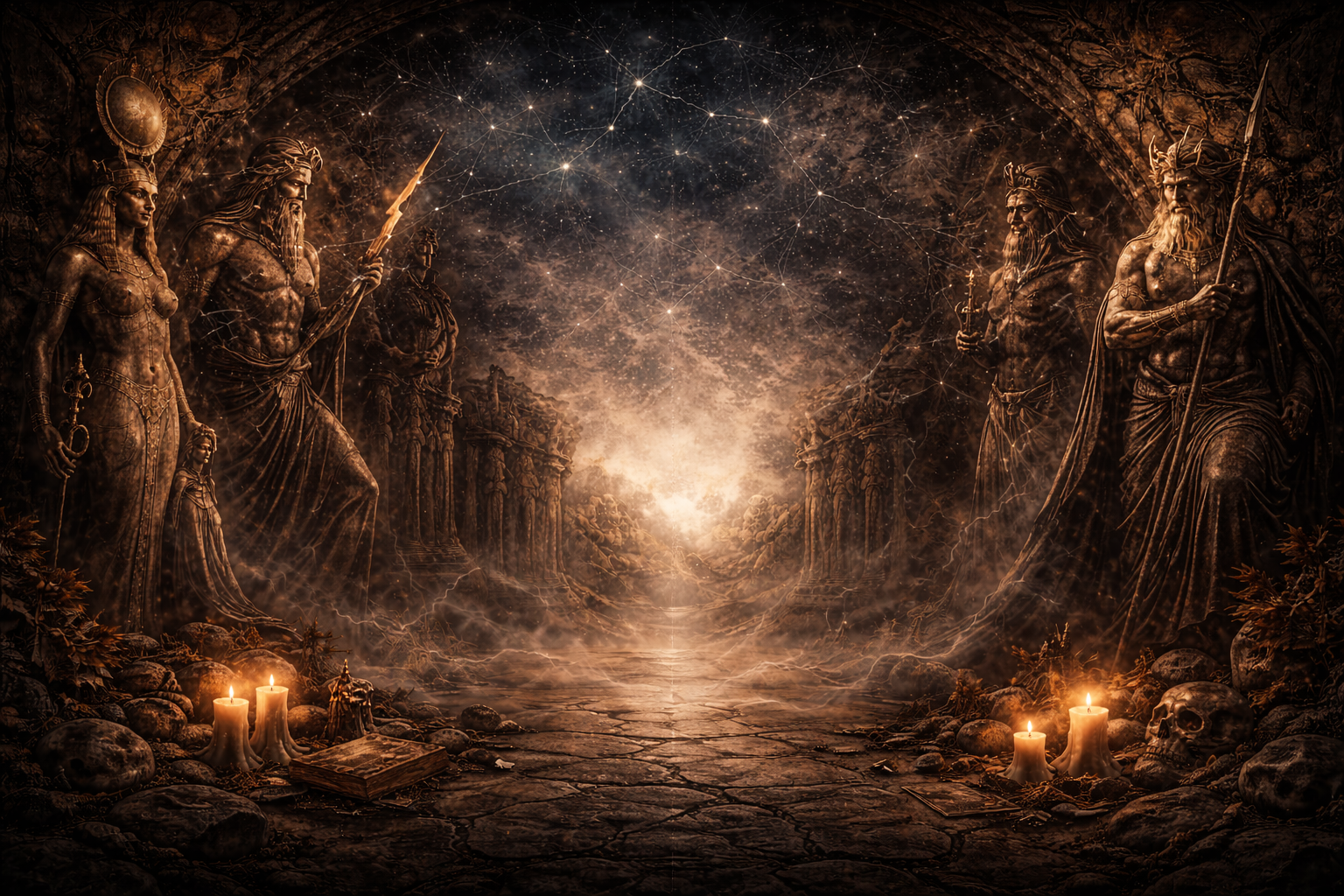
The Gods and Creatures of Myth
No culture tells its stories without populating them with gods, spirits, and creatures that shape the fabric of its worldview.
The mythologies of the Norse, Celts, Greeks, Egyptians, Slavic peoples, and the ancient civilizations of Mesopotamia each offer their own pantheons and cosmologies. Across the oceans we encounter the gods and mythic beings of the Aztec and Mayan worlds, while many scholars explore the shared patterns that link traditions across cultures.
Other traditions remain living religious practices today, such as Yoruba and Ifá spirituality, Vodou, Santería, Shinto, Taoist folk religion, and forms of Siberian shamanism.
Each contains its own sacred stories, spirits, and ritual systems.
Some traditions are best approached with deep respect and careful study, particularly when they belong to Indigenous cultures whose beliefs have often been misunderstood or misrepresented.
Together they remind us that mythology is not merely entertainment—it is the language through which cultures explain the universe.
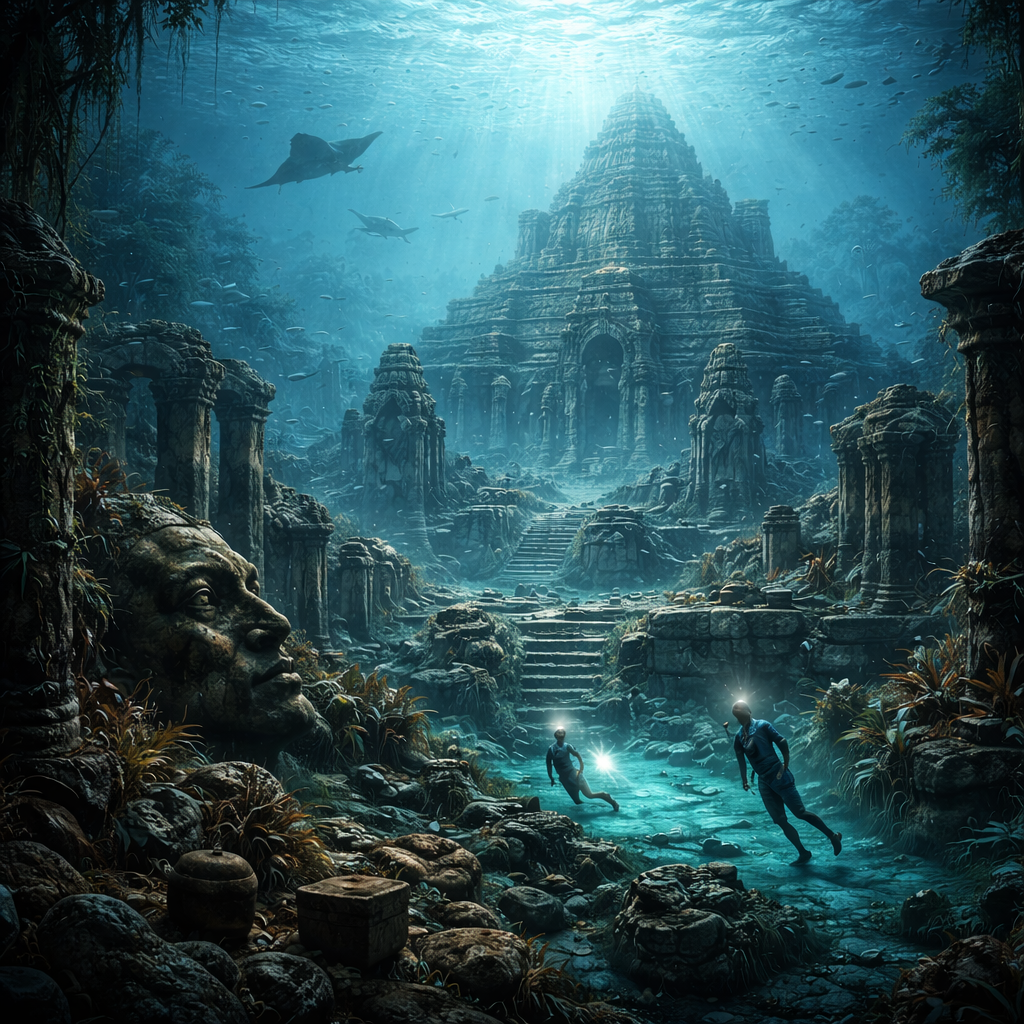
Lost Worlds and Legendary Realms
Human history is filled with whispers of places that may never have existed—or perhaps existed long ago and vanished beneath time.
Legends of Atlantis have fascinated writers and explorers for centuries. The Bermuda Triangle remains one of the most famous maritime mysteries in modern folklore. In Norse cosmology, the great world tree Yggdrasil connects multiple realms of existence, while Irish mythology speaks of Tír na nÓg, a land of eternal youth hidden beyond mortal sight.
Some of these places belong to mythology. Others blur the line between legend and possible history.
All of them remind us that humans have always imagined worlds beyond the one we can easily see.
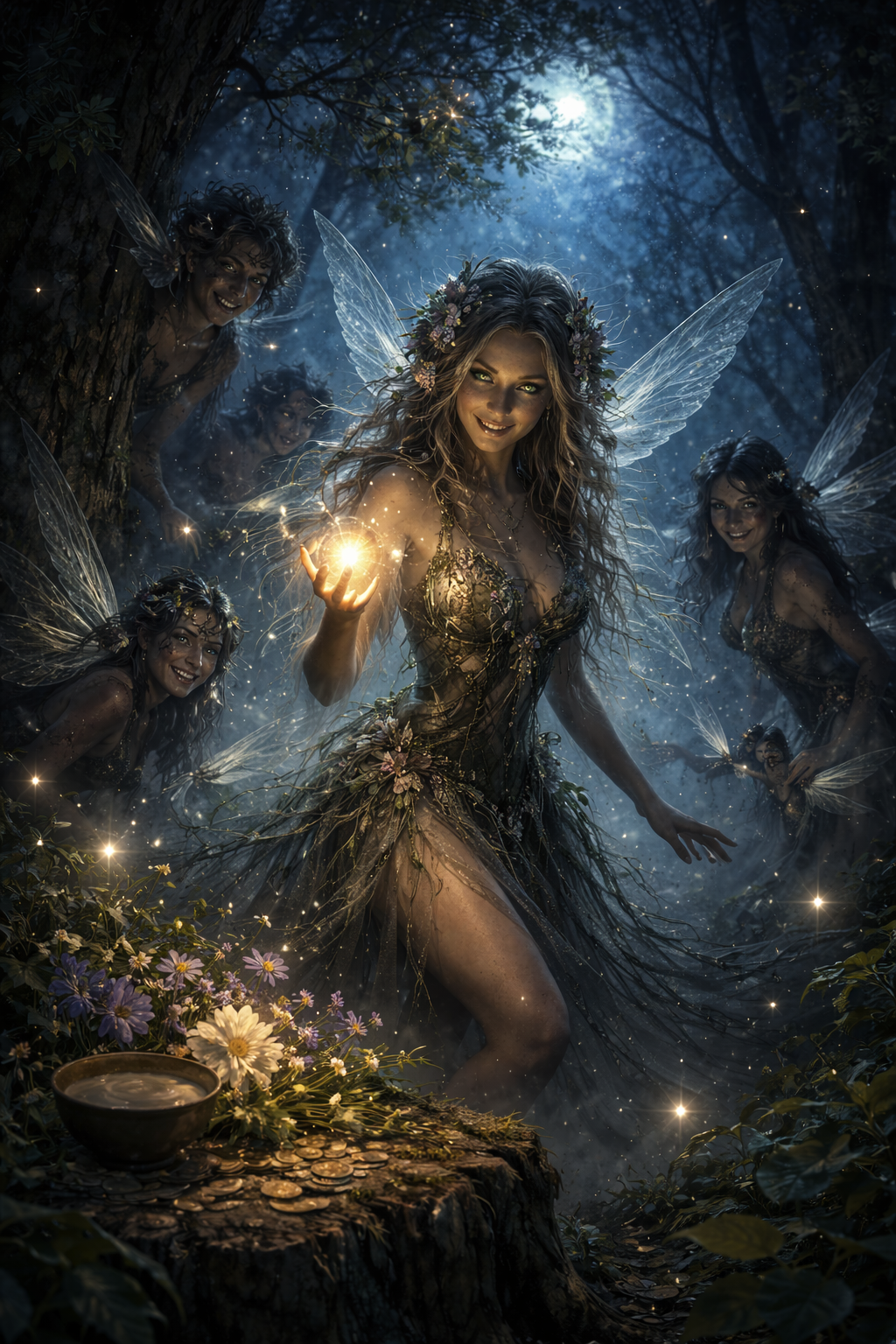
The Persistence of Folklore
Not all legends belong to ancient times.
Urban legends, fairy tales, and supernatural encounters continue to evolve with each generation. Some emerge from roadside ghost stories or haunted objects passed down through families. Others appear in modern settings—universities, highways, abandoned buildings, and internet forums.
Certain legends center on cryptids and unknown creatures, while others recount strange disappearances or ritual games rumored to open doors to the supernatural.
The stories change, but the pattern remains the same: humans continue to tell tales that explore fear, mystery, and the possibility that the world holds more than we understand.
These stories can be traced across centuries, from 19th-century folklore to the digital legends that spread through social media today.

Haunted Places and Those Who Investigate Them
Ghost stories often attach themselves to physical places.
Hotels, hospitals, prisons, castles, cemeteries, schools, abandoned factories, and lonely highways have all earned reputations as haunted locations. Some of these stories are local legends; others are documented historical cases studied by investigators.
Over time, paranormal research has evolved from early investigators documenting unexplained phenomena to television personalities and online teams exploring haunted sites for modern audiences.
Whether approached skeptically or with belief, the investigation of haunted places remains a powerful part of contemporary folklore.
Horror as Cultural Reflection
Horror stories—whether told in film, literature, or oral tradition—often reveal deeper cultural fears.
Gothic horror explores decay, secrets, and haunted aristocratic spaces. Folk horror draws from rural traditions and ancient beliefs. Psychological horror examines the fragility of the human mind, while monster stories externalize fears through creatures and supernatural forces.
Other subgenres push the boundaries further: survival horror, body horror, and slasher narratives all explore different anxieties about vulnerability and violence.
Regional traditions add their own unique textures, from Asian supernatural cinema to Latin American ghost folklore, European folk horror traditions, and emerging voices in African horror storytelling.
Through horror, societies explore the shadows that linger beneath everyday life.
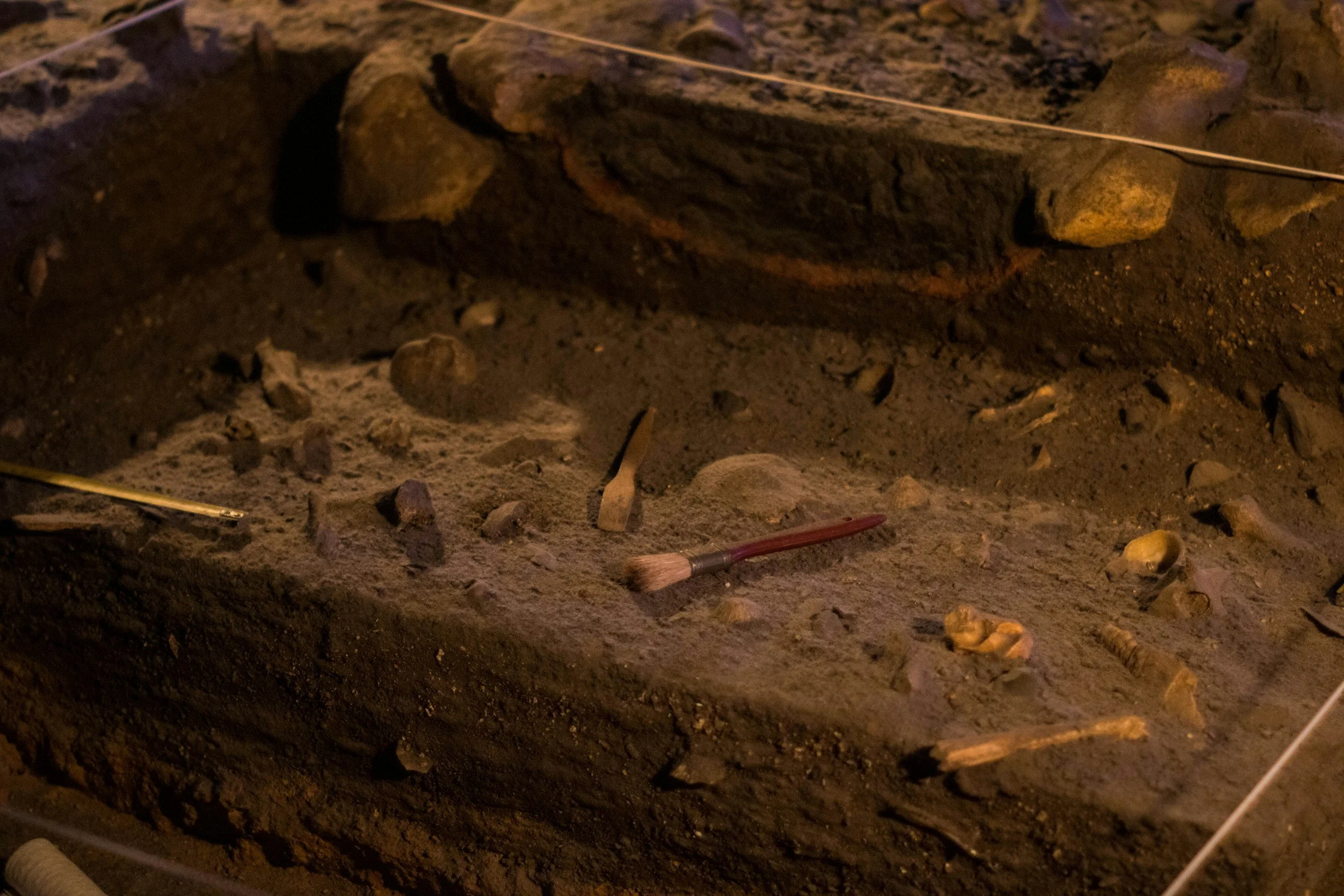
Civilizations Beneath Time
Some mysteries belong not to ghosts or monsters, but to history itself.
Archaeologists continue to uncover confirmed ancient civilizations whose achievements were once forgotten beneath centuries of dust. Meanwhile, stories persist of sunken cities and lost cultures that may or may not have existed.
Between archaeology and myth lies a fascinating gray zone: civilizations remembered through legend, debated by scholars, and imagined by storytellers.
These stories remind us that the past is rarely as simple as a textbook suggests.
A Living Archive
The purpose of this archive is not to prove or disprove every supernatural claim.
Instead, it serves as a place to explore how humans across time have attempted to understand the unknown.
Ghost stories, mythologies, ritual practices, horror literature, archaeological mysteries, and cultural traditions all belong to the same vast conversation about the nature of reality and imagination.
Some of these stories are ancient. Others were born only yesterday.
But all of them reveal something essential about the human mind: we are creatures who search constantly for meaning in the shadows.
And sometimes, if we look closely enough, the shadows begin to answer back.
How to Use This Archive
Within the archive you will find indexes for mythological beings, deities, urban legends, haunted locations, and supernatural encounters from around the world. Articles are organized by theme, region, and tradition, allowing readers to wander the archive much like explorers moving through an old library.
Some paths lead into ancient mythologies.
Others wander through haunted hotels, forgotten civilizations, and the darker corners of folklore.
Wherever you begin, the goal remains the same:
To explore the strange stories humanity has always told about the world just beyond the lantern’s light.