Dark Creatures of Ostara: Spirits and Folklore of the Spring Equinox
Spring is often painted in gentle colors.
Blossoms. Eggs. Rabbits in green fields.
But folklore rarely stays that tidy.
For most of human history, the turning of the seasons was not simply a cheerful celebration of flowers and sunshine. The spring equinox was a threshold — a moment when the world tipped from darkness toward light. And thresholds, as every old story reminds us, are dangerous places.
When the balance between night and day shifts, strange things are said to stir.
In village legends and whispered traditions, the arrival of spring did not only wake seeds beneath the soil. It also stirred spirits, restless dead, and creatures that preferred to move in the uncertain twilight between winter’s end and summer’s beginning.
The Equinox as a Doorway
The spring equinox marks one of the year’s great turning points.
For a brief moment, daylight and darkness stand in perfect balance before the sun begins its long climb into the bright half of the year.
In folklore, such moments were often believed to thin the boundary between worlds.
Just as the veil is said to weaken during Samhain, some traditions suggest that seasonal transitions — especially the equinoxes — allow unseen forces to move more freely through the world.
Not all of those forces are particularly friendly.
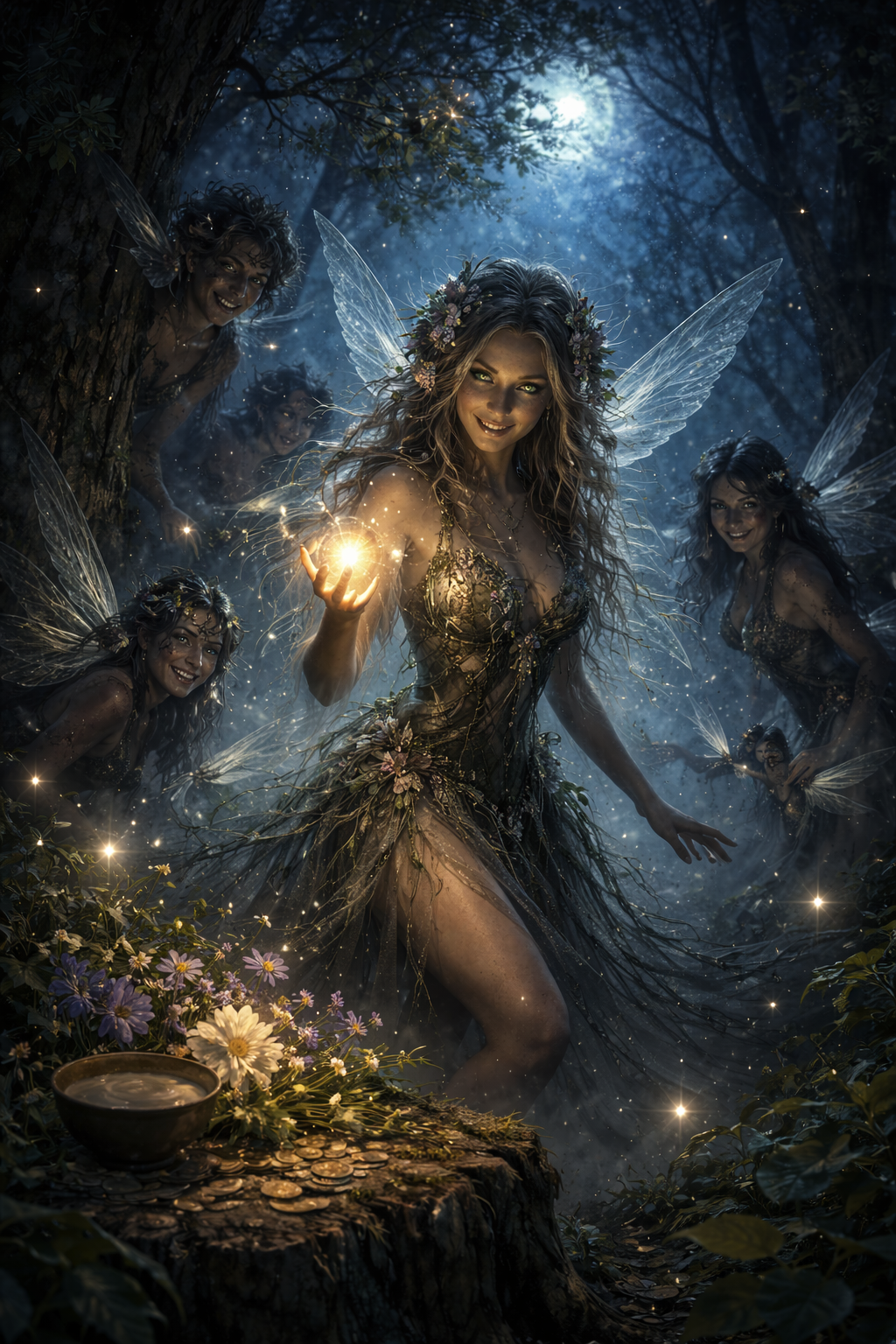
Mischievous Spring Fae
In many parts of Europe, the arrival of spring was believed to awaken the fae, the unpredictable spirits of the natural world.
Unlike the friendly fairies of children’s books, traditional folklore described these beings as dangerous, mischievous, and often hostile to humans.
During early spring, people sometimes blamed strange events on restless fae:
tools mysteriously moved overnight
livestock behaving strangely
travelers becoming lost in familiar forests
These stories reflect an old belief that nature itself becomes unstable when the seasons change.
As winter loosens its grip, the wild spirits of the land are said to stir.
The Restless Dead of Spring
Some traditions held that spirits of the dead were especially active during seasonal transitions.
As the earth thawed and burial grounds softened, villagers occasionally feared that restless spirits might rise alongside the returning life of the land.
In parts of Eastern Europe, old tales warned that spirits who died during winter could wander the countryside until spring rituals were performed to guide them back to the other world.
These ghostly wanderers were not always malicious — but they were believed to be unsettled, caught between the old season and the new.
The Black Dog of the Changing Seasons
Across the British Isles, one of the most chilling figures of folklore appears during stormy nights and seasonal transitions: the spectral black dog.
Stories of these creatures describe enormous dark hounds with glowing eyes that roam lonely roads or churchyards.
One of the most famous examples is Black Shuck, a terrifying apparition said to appear before disasters or deaths.
While sightings were reported year-round, some legends claim that spectral hounds were especially active during stormy equinox weather — when lightning, wind, and sudden darkness swept across the countryside.
The symbolism is clear.
As winter dies and spring is born, something old is leaving the world.
And sometimes it does not go quietly.
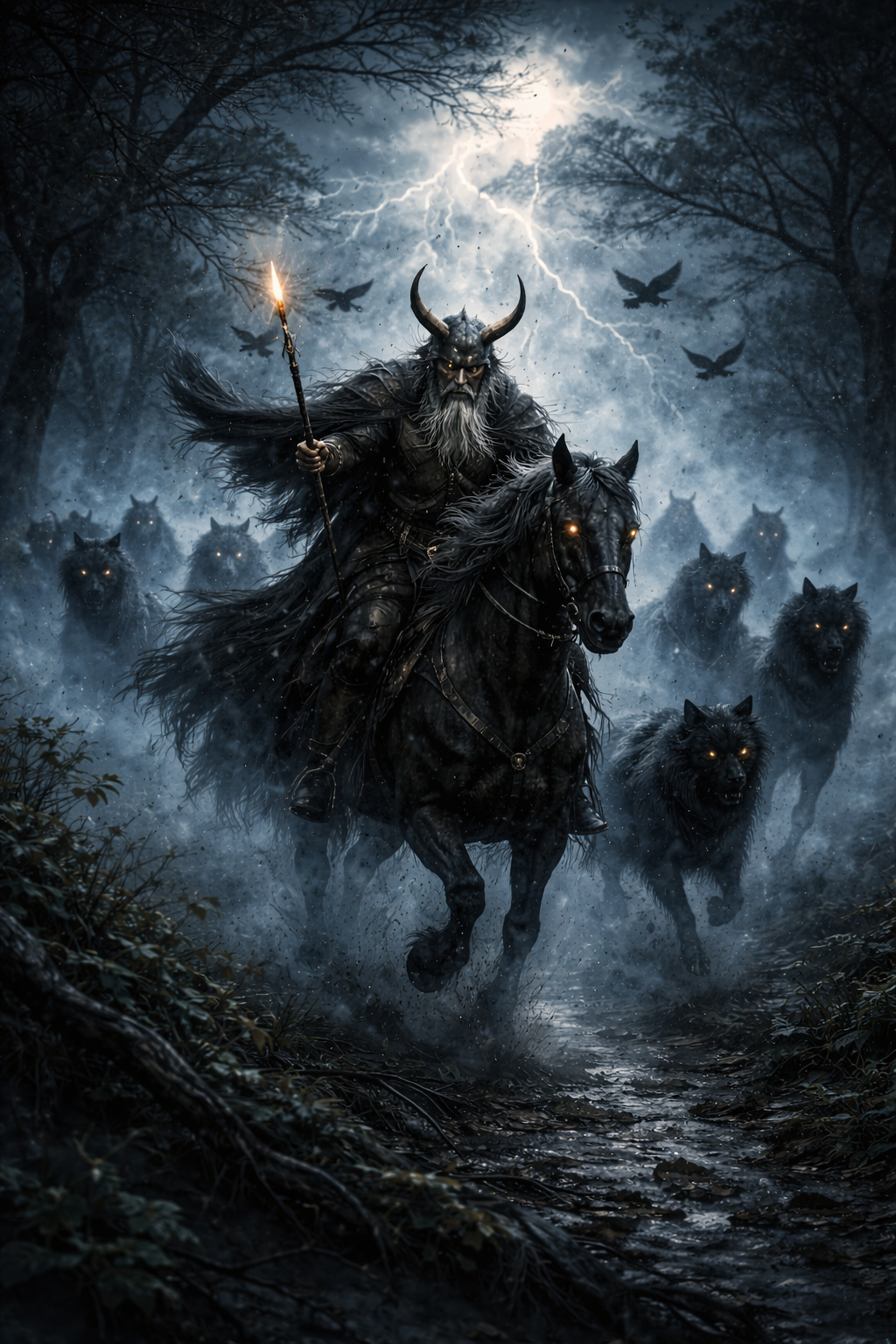
The Wild Hunt and Spring Storms
In Northern European folklore, violent seasonal storms were sometimes blamed on the passage of the Wild Hunt.
The Wild Hunt is described as a ghostly cavalcade of spirits racing across the sky, often led by supernatural hunters, gods, or ancient kings.
While the Hunt is most commonly associated with winter nights, some traditions claim it can also appear during the violent storms of early spring.
To witness the Hunt was considered a terrible omen.
Those who saw the riders were said to risk being:
swept away into the spirit world
cursed with madness
or marked for misfortune
Seasonal storms, after all, can feel like the sky itself is being torn open.
Nature’s Uneasy Awakening
Spring is not always gentle.
The season brings floods from melting snow, sudden storms, and unpredictable weather. Crops can fail just as easily as they can flourish.
Early communities understood this truth well.
While spring promised life and abundance, it also carried uncertainty. The same forces waking the earth could just as easily unleash chaos.
Folklore reflected that tension.
Spirits of the wild stirred. Ghosts wandered. Supernatural hunters rode the skies.
The world itself seemed restless.
Light Rising from Darkness
Yet the darker stories of spring rarely end in despair.
The return of light always wins.
Day by day, the sun grows stronger. Storms pass. Fields bloom.
Creatures that once lurked in shadow retreat as warmth spreads across the land.
In this way, the folklore of spring carries a quiet lesson.
Before renewal can arrive, the old season must loosen its grip. The darkness must shift. The balance must break.
And in that brief moment — when the scales of light and dark hang perfectly even — the world remembers how fragile that balance truly is.
Then the sun rises again.
And the earth begins to bloom.