The Winchester Mystery House: The Widow, the Myth, and the Ghosts
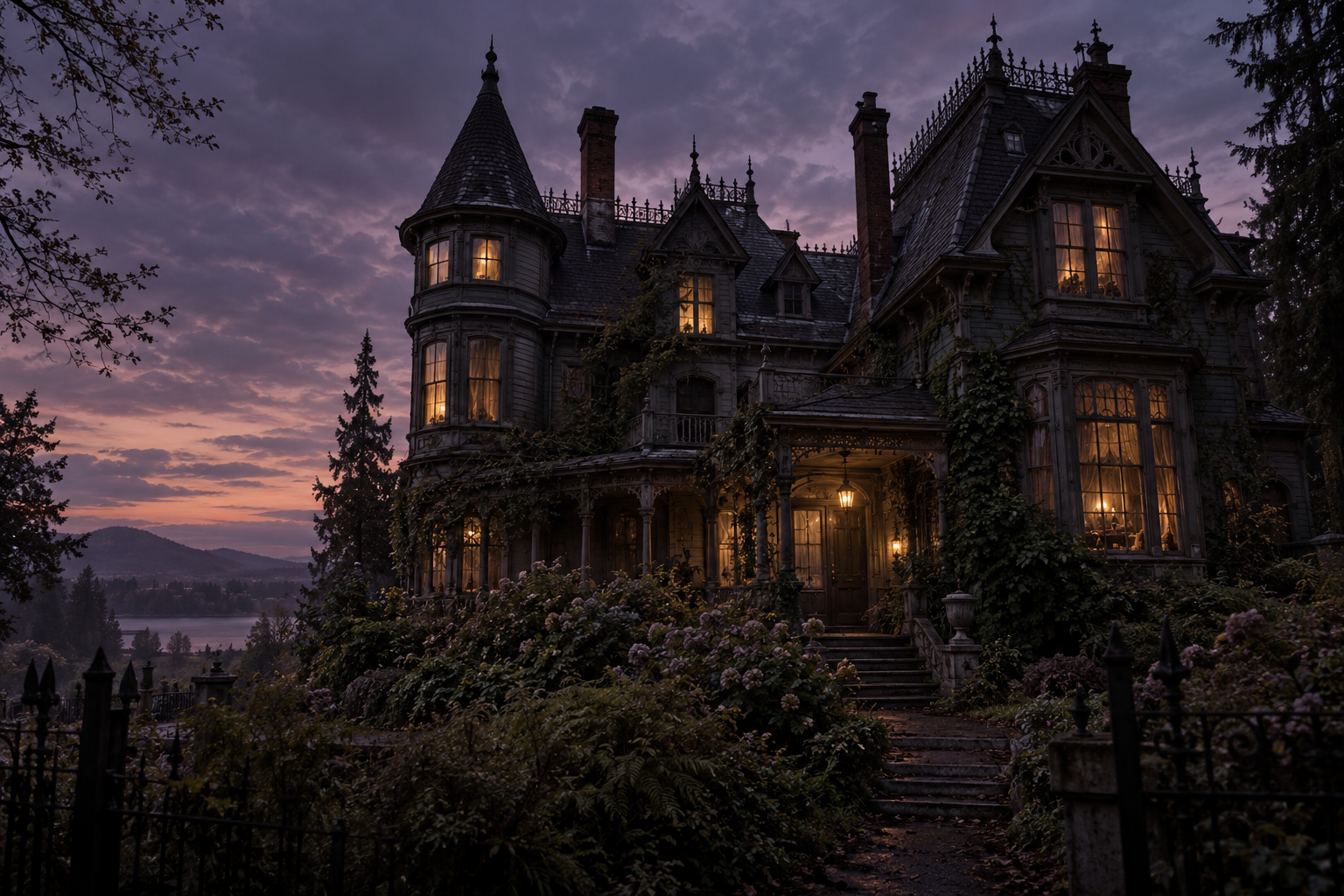
Every haunted-house documentary eventually gets to San Jose. A grieving heiress, guided by a medium, building an impossible mansion nonstop for thirty-eight years so the ghosts of everyone killed by her family's rifles can never catch up with her — stairs that go nowhere, doors that open onto walls, a séance room she visited every night. It's the best true-crime-shaped ghost story in America. Almost none of it happened the way it's told.
What Actually Happened
Sarah Lockwood Pardee Winchester was, by any account, a genuinely remarkable woman — fluent in four languages by twelve, educated at Yale's Young Ladies Collegiate Institute, married into the Winchester Repeating Arms fortune in 1862. Her losses were real and brutal: her infant daughter Annie died shortly after birth in 1866, and by around 1881 she'd lost her mother, her father-in-law, and her husband William to tuberculosis, all in close succession. What she inherited was staggering — roughly 777 shares of Winchester Repeating Arms, close to half the company, plus holdings elsewhere, adding up to a fortune some estimate at over $20 million in period dollars.
She moved to California around 1884 and bought an unfinished eight-room farmhouse she named Llanada Villa. Construction ran, on and off, until her death in 1922 — thirty-eight years, not the unbroken thirty-eight years of legend. It regularly stopped. The house that resulted was genuinely strange: 160 rooms, 2,000 doors, 10,000 windows, 47 stairways, a stairway that leads into a ceiling. But the explanations for the weirdness are architectural, not occult. That famous stairway-to-nowhere was upper floors boarded off after 1906 earthquake damage. The notorious door that opens onto a two-story drop was a construction entrance built for a pulley system, not a trap. Sarah was also, by multiple accounts, an actual innovator — early gas lighting and indoor plumbing, a working intercom system, drainage engineering for her greenhouses, and a laundry-tub design with a built-in soap tray that later patent litigation over a rival's design ended up citing her as the true original inventor of. She paid her construction crews generously through economic downturns specifically to keep their families afloat, and at her death left $1,325,000 to build a tuberculosis center in Connecticut in her husband's name.
Where the Legend Comes From
The medium-and-séance story has a specific, traceable birthplace: an 1895 newspaper piece — sometimes credited to the San Jose Evening News, sometimes the San Francisco Chronicle, depending on the source — headlined something to the effect of "A woman who thinks she will die when her house is built." That's the whole seed. Linguist Karen Stollznow, who has researched the case directly, states plainly that "Sarah's reputed interest in spiritualism and séances is unsubstantiated by direct evidence" and argues she was likely conflated with other spiritualist-adjacent figures of the era, since séance culture was genuinely widespread at the time and easy to project onto any eccentric, secluded widow. When Sarah died in 1922, the newspapers had a field day — headlines branding the place a "spirit house" ran with rumor because rumor sold papers, and no one involved needed it to be true. What's actually documented about her seclusion points to rheumatoid arthritis and a strong preference for privacy after repeated loss, not a fear of vengeful spirits. There's no record of a séance room. There's no record of a medium giving her architectural instructions. There's a lonely, wealthy, chronically ill woman who kept renovating a house without a master plan, in an era that was primed to read any unmarried woman's private behavior as either scandalous or supernatural.
The Hauntings
Set the biography aside — the house has run as a working haunted attraction since it opened to the public in 1923, and the ghost stories have had a full century to accumulate their own tradition, independent of whether Sarah herself believed in any of it.
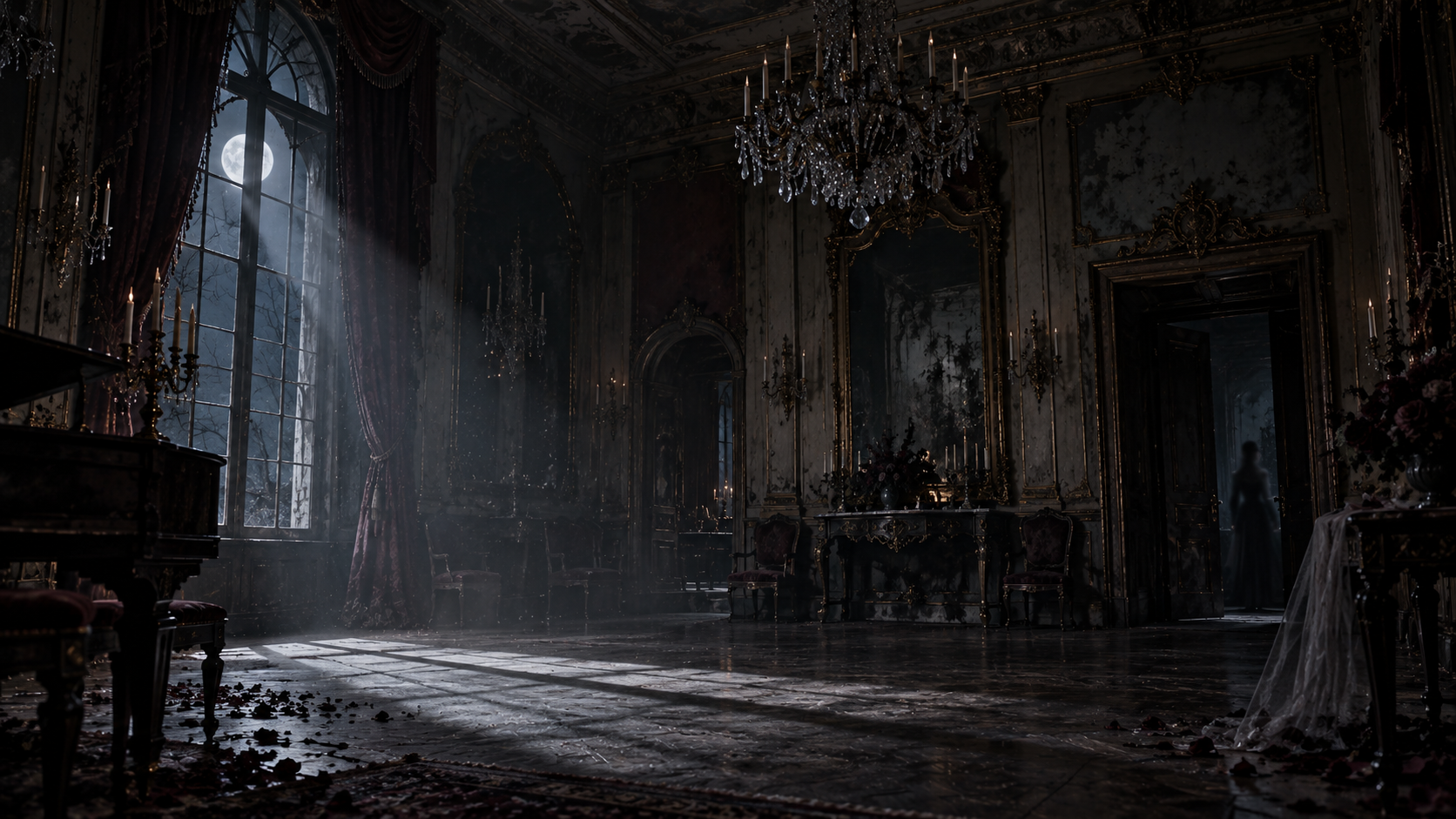
The most named figure is a spectral worker visitors and staff call the "Wheelbarrow Ghost," sometimes nicknamed Clyde, associated with the basement and the grand ballroom and tied to the ash-hauling and fireplace work that would've been constant during decades of active construction. Beyond him, the reports run standard but persistent: footsteps in rooms visitors believe are empty, doors slamming shut on their own, cold spots and sudden temperature drops, the sense of being watched or lightly touched, and — oddly specific — unexplained cooking smells with no kitchen source nearby. Current staff have gone on record with their own experiences; the attraction's executive director has described windows slamming shut and doors slowly swinging open with no one near them. Local historians who've spent time in the house are careful to frame all of this as "reports and traditions, not laboratory-grade proof" — and it's worth noting the house was functionally designed, however unintentionally, to disorient: a floor plan with no coherent logic is exactly the kind of space where pareidolia and plain anxiety do a lot of the haunting's work on their own.
Keep going:Whispers Between Worlds: The Haunting History and Modern Mystery of Ghosts · Forbidden Destinations: A Journey Through the World's Most Haunted Locations
The Short Version
Sarah Winchester: real grief, real fortune, real architectural talent, no documented séance room. The nonstop-building-to-appease-ghosts story: traced to a single 1895 rumor column, inflated by opportunistic obituary coverage in 1922. The stairs to nowhere and the door to a two-story drop: earthquake damage and a construction pulley system, not a trap for spirits. The ghosts people report today: a century-old, independently accumulated tourist tradition that doesn't need Sarah's cooperation to keep going.
If you liked this haunted place:Yorktown Memorial Hospital: Where the Living and the Dead Converge
Sources consulted: History.com ("Why People Believe California's Winchester House Is Haunted," citing linguist Karen Stollznow); University of Wyoming Firearms Research Center ("Haunted by the Past: The Real Story of Sarah Winchester"); BeyondHaunted.com (California — Winchester Mystery House); Winchester Mystery House official history.