Portland's Shanghai Tunnels: The Hauntings and the History
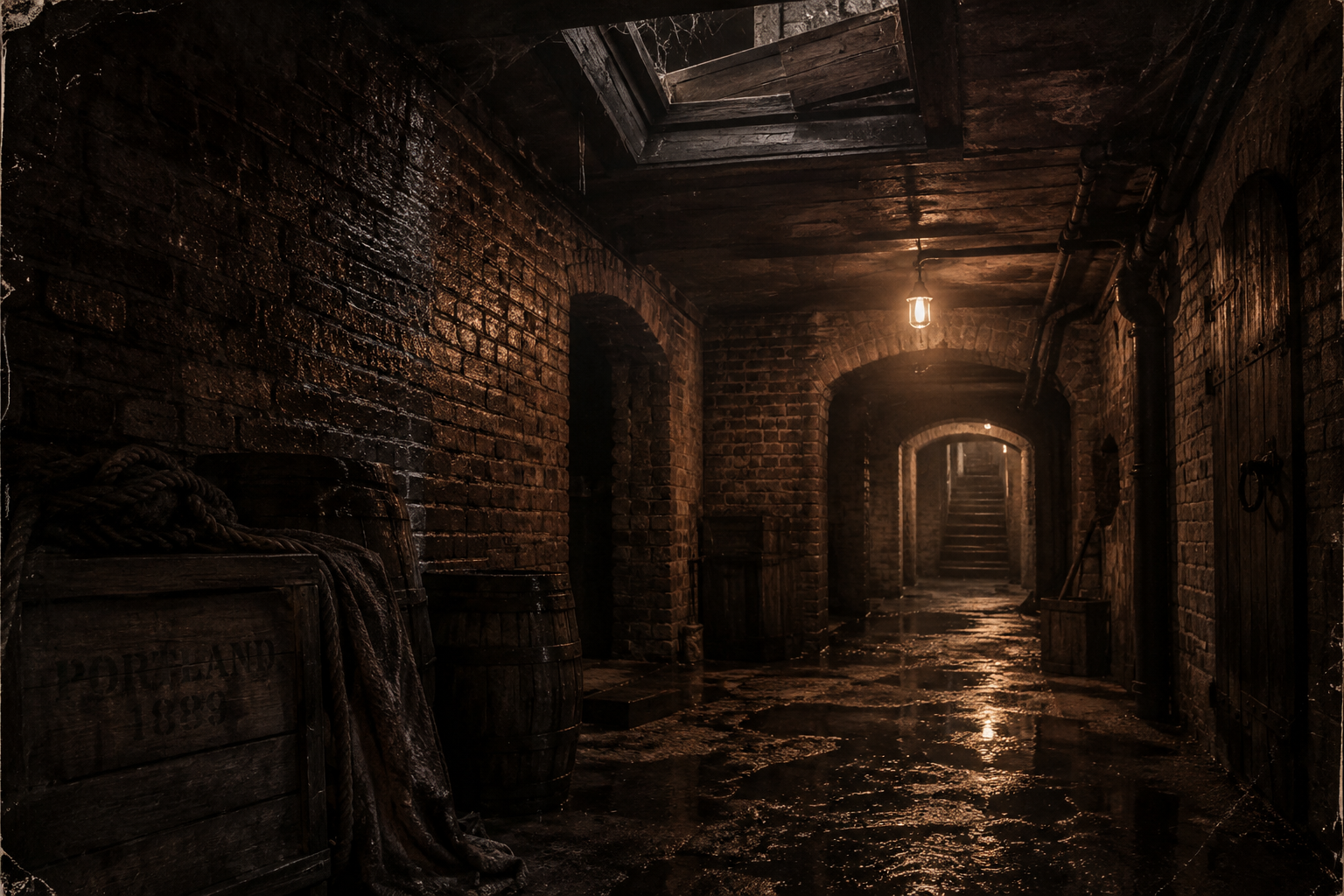
Walk through Old Town Portland today and a tour guide will happily walk you into a basement, point at the brick, and tell you men were dragged through here unconscious, dropped through trapdoors, and sold to ship captains by the dozen. It's a good story. It has been told so many times, so confidently, that most people who've heard of the Shanghai Tunnels assume it's simply Portland history. It isn't — not the way it's usually sold. But the true version underneath it is stranger for being real, and worth knowing on its own terms.
What Actually Happened
Shanghaiing was real. In the second half of the 19th century, Pacific ports — San Francisco chief among them, Portland close behind — ran on sailors who deserted constantly. Ships needed full crews to leave port, captains paid recruiters called "crimps" a fee per head, and crimps were not particular about consent. Men were gotten drunk, drugged, beaten unconscious, or simply lied to, then delivered aboard outbound ships and woken up at sea, contracted into a voyage they never agreed to. Portland's importance as a wheat-exporting port in the late 1800s made it a real node in this trade — the men doing the shanghaiing there weren't inventing anything, they were running a well-established West Coast racket. The practice tapered off and effectively ended by World War I, as steamships needed far smaller crews and maritime labor law caught up with the abuses.
The tunnels themselves are also real — Old Town's Chinatown-adjacent blocks really do have a network of basement passages connecting hotels, taverns, and buildings to what was once the waterfront. But historians who've actually gone looking for the connection — shanghaiing routed through this specific tunnel network — have not found it. The tunnels' well-documented purpose was moving goods from the docks into building basements without clogging the streets above, and later, functioning as discreet access for gambling dens and brothels during Prohibition and beyond. Useful, illicit in places, genuinely part of the city's underworld infrastructure — but built for freight and vice, not kidnapping.

Where the Legend Comes From
The specific claim — a coordinated underground network built and used to drag victims from bars straight to the docks — traces to a fairly late and identifiable source. Oregon writer Stewart Holbrook published colorful, loosely sourced pieces on Portland's waterfront underworld in the Oregonian in the 1930s, some of dubious attribution even at the time. Decades later, in 1979, a man named Michael P. Jones began running paid tours through his Cascade Geographic Society, claiming to have been exploring the tunnels since 1969 and building the version of the story tourists hear today. That's the lineage: a romanticized newspaper writer, then a tour operator with a financial stake in the story being as dramatic as possible, four decades removed from the period they're describing. Historians of the Old Town district are consistent on this point — shanghaiing happened, crimping happened, but no one has produced evidence tying it to this tunnel system specifically. The tour is walking you through real basements with a fictional narrative laid over them.
The Hauntings
Set the history aside — this is also, separately, one of Portland's most consistently reported haunted locations, and the ghost stories don't bother with the historians' caveats.
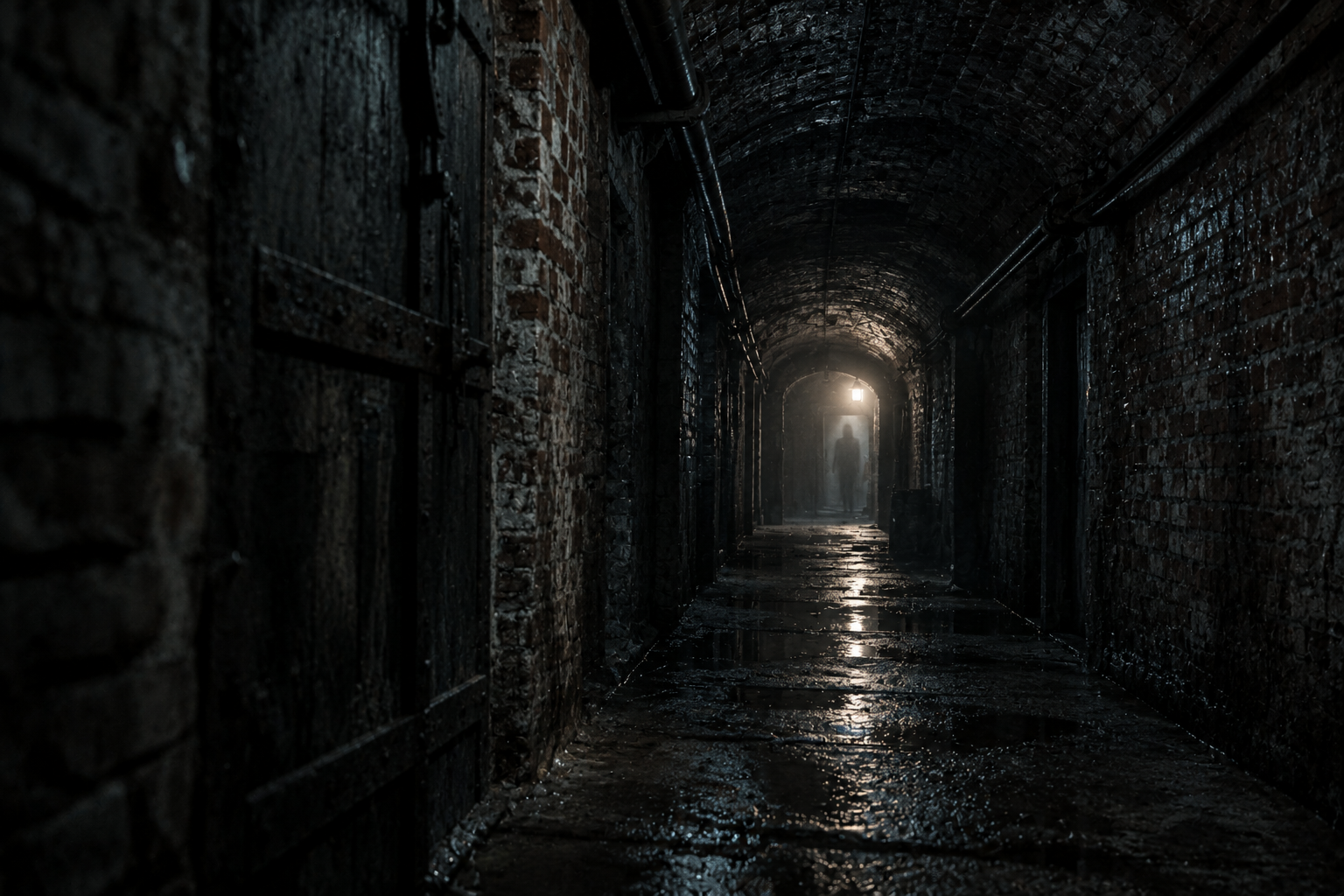
The most named presence is a spirit tour guides and visitors call Sam — an Asian man reportedly seen walking through the tunnels, blamed for switching off the lights in bar basements and moving small objects. One guide has described hearing a disembodied voice calling the name "Sam" over and over, echoing through the passage with no source. Beyond Sam, visitors report the standard vocabulary of a haunted space turned up a notch: goosebumps and the sense of being watched, a hand or fingers pressed briefly against a shoulder with no one there, quick shadow-shapes at the edge of vision. There are also more aggressive accounts — something that tugs at a shirt or pulls hair, and at least one report of a visitor knocked to the ground preceded by childlike whistling in the dark. The tunnels are also said to hold old holding cells from the prostitution trade and trapdoors still visible in a few bar floors, which the tours lean on hard for atmosphere whether or not they're original.
None of this is verifiable in the way the shanghaiing history is. It's oral tour tradition, repeated and elaborated for twenty-plus years by an industry that benefits from the story staying scary. But dismissing it outright misses the point a little — a basement that's genuinely old, genuinely connected to a documented history of exploitation and vice, doesn't need invented tunnels to feel wrong to stand in. The fear is doing something true even where the facts underneath it aren't.
Keep going:Whispers Between Worlds: The Haunting History and Modern Mystery of Ghosts · Forbidden Destinations: A Journey Through the World's Most Haunted Locations
The Short Version
Shanghaiing: real, well-documented, ended by WWI.
The tunnels: real, but built for freight and back-room vice, not kidnapping.
The network tying the two together: a story assembled in the late 20th century by a newspaperman with a flair for drama and a tour guide with a business to run.
The ghosts: unverifiable and completely beside the point of whether you'll feel your neck prickle down there anyway.
If you liked this haunted place:Yorktown Memorial Hospital: Where the Living and the Dead Converge
Sources consulted: Oregon Encyclopedia ("Shanghaiing in Portland and the Shanghai Tunnels Myth," Richard Engeman); Wikipedia, "Shanghai tunnels"; Portland Ghosts ("The Shanghai Tunnels")