Hoia Baciu Forest: The Forest That Watches Back
There are forests that feel old.
There are forests that feel sacred.
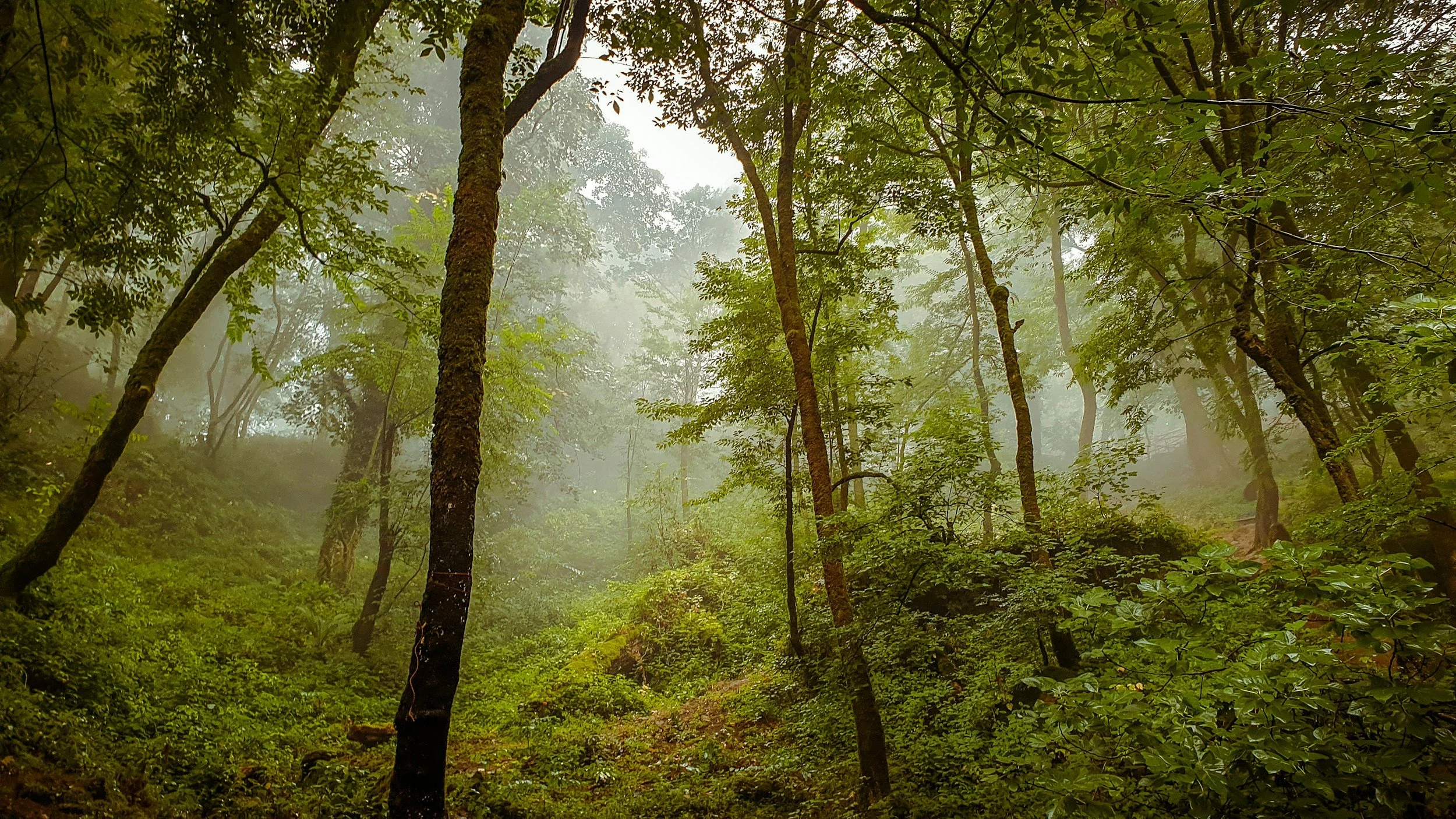
And then there are forests like Hoia Baciu — places that feel actively aware of your presence, as though the trees themselves are holding their breath while you walk beneath them.
Located near the city of Cluj-Napoca, the forest has become one of the most infamous paranormal locations in the world. Visitors report disembodied voices, nausea, sudden anxiety, electronic malfunctions, apparitions, burns, scratches, missing time, and the persistent sensation of being watched.
Locals once avoided the forest entirely.
Now tourists enter it carrying EMF readers and GoPros like modern offerings to an ancient thing that does not care.
Which, historically speaking, is usually how horror movies begin.
Origins of the Legend
The forest takes its name from a shepherd named Baciu, who allegedly disappeared within the woods alongside a flock of approximately 200 sheep.
Neither the shepherd nor the animals were ever found.
Romanian folklore surrounding the area predates the disappearance itself, however. The forest has long been associated with tales of spirits, restless dead, and entities said to lure travelers away from marked paths.
Several local traditions describe the woods as a “thin place” — a location where the boundary between worlds weakens.
Given the number of people who later claimed reality itself behaved incorrectly inside the forest, one begins to understand why.
The Clearing
At the center of Hoia Baciu lies perhaps its most infamous feature:
A strangely barren circular clearing where vegetation struggles to grow.
Soil studies have reportedly failed to identify a conventional explanation for the absence of plant life, though theories range from fungal imbalance to underground radiation anomalies. Paranormal researchers, naturally, took one look at the circle and collectively said:
“Excellent. Let’s stand in it at midnight.”
Witnesses entering the clearing frequently report dizziness, disorientation, static-like sensations in the air, headaches, sudden fear responses, and feelings of lost time.
Some photographs taken within the clearing have allegedly captured unexplained lights, shadows, or humanoid forms not visible to the naked eye.
Conveniently blurry, of course.
The supernatural remains committed to terrible camera etiquette.
The 1968 Photograph
One of the most widely discussed incidents connected to the forest occurred in 1968 when military technician Emil Barnea reportedly photographed a disc-shaped object hovering above the treeline while on an outing with friends.
The image became internationally known after being circulated as possible UFO evidence during the Cold War era.
Skeptics argue the object may have been photographic manipulation, lens artifacting, or a conventional aerial phenomenon misidentified under unusual conditions.
Believers point out that Hoia Baciu already possessed a reputation for strange activity long before the photograph emerged.
Either way, adding “possible UFO encounter” to an already haunted forest is the paranormal equivalent of throwing gasoline directly into a candlelit ritual circle.
Reported Phenomena
Common Witness Claims
Sudden nausea or migraines
Feelings of intense dread
Disembodied whispers or laughter
Electronic failures and battery drain
Scratches appearing on skin without cause
Apparitions between trees
Missing time episodes
Unexplained lights or fog formations
Sensation of being followed
Distorted perception of sound and distance
Several visitors have described the unsettling feeling that the forest reacts to attention itself — as though acknowledging those who arrive expecting to witness something.
Which is an unfortunate personality trait for a forest to develop.
Folklore & Cultural Context
Romanian folklore is deeply intertwined with beliefs surrounding spirits, curses, revenants, protective rituals, and dangerous wilderness spaces. Forests traditionally occupy an unstable place within Eastern European storytelling — not merely natural environments, but thresholds.
Places where rules loosen.
Places where names matter.
Places where one might return changed.
Or fail to return at all.
While modern paranormal tourism often frames Hoia Baciu through the lens of UFOs and ghost hunting, local traditions treat the forest with something closer to wary respect.
Not everything strange is meant to be challenged.
Some things are simply meant to be avoided after sunset like a sensible person.
Working Hypotheses
Several theories attempt to explain the phenomena surrounding Hoia Baciu:
Psychological suggestion amplified by reputation
Infrasound causing anxiety and disorientation
Geological or magnetic anomalies
Environmental toxins or fungal effects
Folkloric exaggeration evolving into mass expectation
Genuine paranormal activity
None fully account for the consistency of certain witness reports across decades.
Particularly the recurring descriptions of:
being watched,
hearing one’s name called,
and losing track of time.
Three details that appear with unnerving frequency in places humans instinctively label wrong.
Analyst’s Note
Most haunted locations feel like stages.
Hoia Baciu feels territorial.
People speak about the forest as though it observes them back — not metaphorically, but literally. Even skeptical investigators often describe an oppressive awareness within the treeline, a sensation that the woods are not empty despite the absence of visible movement.
Forests are already ancient places in the human imagination.
They fed us.
They hid us.
They buried us.
And somewhere deep in the older parts of the mind, long before electricity and asphalt convinced us we were clever, humans learned an important survival instinct:
If the forest suddenly goes quiet, leave.