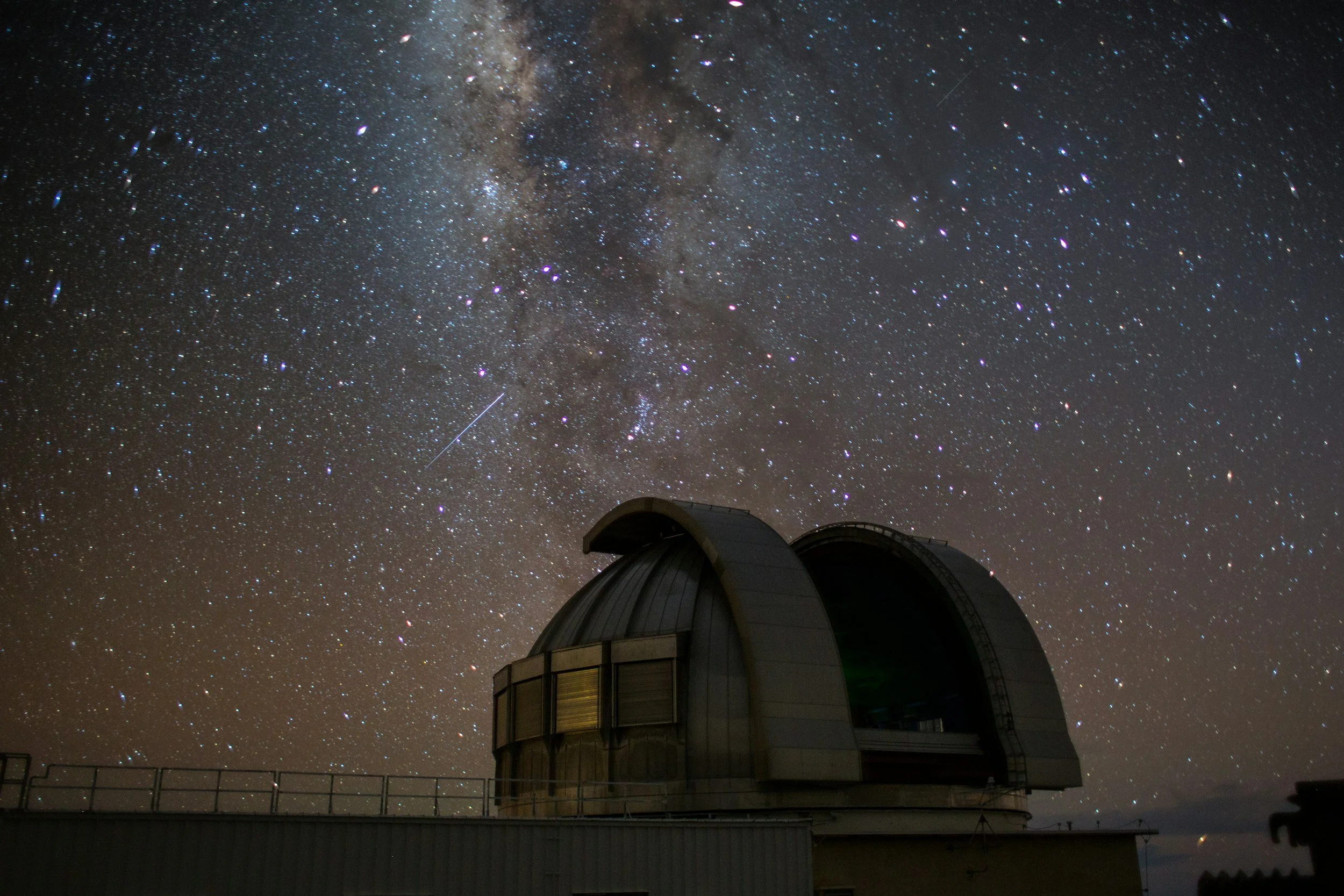
ALL CELESTIAL FOLKLORE
Before the stars became charts and measurements, they were omens. Ancient people looked upward and saw gods, prophecies, monsters, wandering spirits, and signs of catastrophe written across the night sky. Eclipses terrified entire kingdoms. Comets were blamed for plague and war. Even the moon itself became tied to madness, transformation, sleep, and death.
The Observatory follows celestial folklore through mythology, ritual, superstition, and human fear of the vast unknown above. Here you’ll find moon lore, eclipse myths, constellation stories, planetary symbolism, astronomical omens, and the ancient instinct to search the heavens for answers humanity feared discovering on earth.
🜂 A
Aldebaran
The red eye of the bull in Taurus, one of the four Royal Stars of Persia and a watcher of the east. Aldebaran was used for navigation, calendar-keeping, and prophecy across Mesopotamia, Persia, and medieval Europe. Being one of the brightest stars in the sky helped — it is difficult to miss, which is probably why ancient astronomers decided it must mean something.
full entry coming soon
Antares
The heart of the scorpion and one of the sky's most dramatically red stars, Antares was so bright and ruddy that the Greeks named it "rival of Ares" — the anti-Mars. It served as a Royal Star of autumn, a marker of the dead season, and a symbol of war, transformation, and necessary endings. Ancient cultures from Polynesia to Mesopotamia tracked it with careful attention and considerable unease.
full entry coming soon
Aquarius (constellation)
The water bearer pours an endless stream across the sky, and cultures worldwide connected this figure to floods, divine gifts, and the dangerous generosity of gods. In Babylonian tradition, Aquarius was GU.LA, a god of calamitous waters. The Egyptians linked him to the flooding of the Nile. The age named after him has been imminent since at least the 1960s, though it remains persistently upcoming.
full entry coming soon
Aries (constellation)
The ram marked the vernal equinox for thousands of years, making it the symbolic beginning of the celestial year — a position of outsized cultural importance for such a relatively dim constellation. The Greeks knew it as the ram with the golden fleece, though the fleece itself had already been stolen by the time most myths got to it. Aries has been the first sign of the zodiac since Babylonian times, and it has no intention of relinquishing the title.
full entry coming soon
Asterisms
Not quite constellations, not quite nothing — asterisms are informal star patterns that ancient and modern sky-watchers gave names to because humans cannot look at a cluster of lights without immediately deciding it looks like something. The Pleiades, the Big Dipper, the Summer Triangle: these patterns carried folklore, navigation lore, and agricultural timing across dozens of unconnected cultures, often with remarkably similar meanings.
full entry coming soon
Astrology, history of
Before it was a personality typing system and before it was dismissed by science, astrology was a serious discipline practiced by priests, kings, and court advisors for over two thousand years. It shaped medical theory, war strategy, and political succession across Mesopotamia, Greece, Rome, the Islamic Golden Age, and Renaissance Europe. Understanding where it came from explains a great deal about why it refuses to go away.
full entry coming soon
Aurora Borealis (folklore of)
The northern lights have been explained as the spirits of the dead, the breath of ancestors, a celestial fox brushing the sky with its tail, blood from battles fought in the heavens, and the dancing of Valkyries. Almost no culture that could see them described them as merely atmospheric. The Sámi people considered it dangerous to wave at them. The Norse considered it an honor. Both were taking the lights considerably more seriously than most people do today.
full entry coming soon
🜃 B
Beltane and the Pleiades
The Celtic fire festival of Beltane — still celebrated on May 1st — was originally timed by the Pleiades reaching a specific point in the night sky, not by the calendar date. The connection between this star cluster and agricultural and ritual timing appears in cultures from the British Isles to the Pacific Islands, suggesting that the Pleiades may be the most universally observed star group in human history.
full entry coming soon
Black moon
A black moon is a second new moon in a single calendar month — the dark twin of the more famous blue moon. Because new moons are the sky at its most closed and invisible, the black moon has accumulated folklore around hidden power, shadow work, and the kind of intentions best set in complete darkness. It occurs roughly every 29 months and is entirely invisible to the naked eye, which only adds to its mystique.
full entry coming soon
Blood moon
During a total lunar eclipse the moon turns a deep amber or red as it passes through Earth's shadow, lit by every sunrise and sunset on the planet simultaneously. The visual effect is genuinely unsettling the first time you see it. Across ancient cultures it was interpreted as the moon being swallowed, wounded, or cursed — a sign of war, plague, or the displeasure of gods. Modern astrology has made it synonymous with intense and inconvenient emotional revelations.
full entry coming soon
Blue moon
The phrase "once in a blue moon" predates the modern definition by several centuries, originally referring to something absurd or impossible rather than a second full moon in a month. The calendar definition only became standard in the 20th century after a 1946 magazine article introduced it — and then got the math wrong. A genuinely blue moon (caused by smoke or dust scattering red light) does occasionally occur and is considerably rarer than the calendar version.
full entry coming soon
🜄 C
Cancer (constellation)
The faintest of the zodiac constellations, Cancer marked the summer solstice in ancient times — the sun's northernmost turning point, the moment it appeared to pause before retreating. The crab also appears in the myth of Heracles, dispatched by Hera to distract him during his battle with the Hydra. It failed, was crushed underfoot, and was rewarded with a dim constellation anyway. The universe has a sense of proportion.
full entry coming soon
Capricorn (constellation)
The sea-goat is one of the oldest continuous symbols in Western astronomy, traced to Babylonian astronomy and the god Enki, whose domain included freshwater, wisdom, and the abyss. The hybrid form — goat above, fish below — made symbolic sense in an era when the zodiac was tied to flood seasons and the unpredictable fertility of rivers. It marked the winter solstice for thousands of years and remains the zodiac's most architecturally confusing animal.
full entry coming soon
Celestial equator
The projection of Earth's equator onto the sky, dividing the celestial sphere into north and south. It sounds purely technical until you realize that crossing it — in terms of which stars were visible — determined navigation, ritual calendars, and the mythologies of entire civilizations. The stars available to ancient Egyptians were not the same stars available to the Norse, and their cosmologies reflect this difference completely.
full entry coming soon
Celestial omens, Babylonian
The Enuma Anu Enlil is a collection of roughly 7,000 celestial omens compiled in ancient Babylon, covering eclipses, planetary movements, meteor showers, halos around the moon, and weather phenomena. It is one of the oldest systematic attempts to decode the sky as a message. Most omens concern the king, the harvest, or the outcome of war — because those were the things worth worrying about, and the sky was the most obvious place to look for answers.
full entry coming soon
Circumpolar stars
Stars that never set below the horizon from a given latitude, circling the celestial pole in endless rotation — the stars that could always be counted on. For ancient navigators and farmers, these were the most reliable markers in the sky. Cultures worldwide gave them special status: eternal, immortal, exempt from the death that claimed other stars at the horizon. The stars that do not set were often understood as the souls of the honored dead.
full entry coming soon
Comets (folklore and history of)
No celestial object accumulated more dread per appearance than the comet. Across virtually every culture with written records, comets signaled the death of kings, the onset of plague, the invasion of armies, and the collapse of dynasties — and they were disturbingly often right, if only because catastrophes happen regularly regardless. Halley's Comet alone has been blamed for the fall of Jerusalem, the Norman Conquest, and more than one convenient prophecy.
full entry coming soon
Constellations, mythology of
The 88 modern constellations represent a patchwork of Babylonian, Greek, Roman, and early modern European star-naming, with significant contributions from Islamic astronomers who preserved and expanded the tradition during Europe's early medieval period. The stories attached to them are equally layered — some ancient and carefully maintained, some invented or altered in translation, and a handful added by 17th-century European navigators who named southern constellations after telescopes and air pumps.
full entry coming soon
Crescent moon symbolism
The crescent is one of humanity's oldest and most persistent symbols, appearing in Mesopotamian iconography for the moon god Sin, in Byzantine and Islamic tradition, in goddess worship, and in countless contemporary spiritual practices. It represents the moon in its liminal phase — not new, not full, but becoming. Many traditions associate it specifically with feminine cycles, growth, protection during travel, and the making of promises that haven't yet been tested.
full entry coming soon
🜁 D
Dark moon
Technically the same event as the new moon, the dark moon refers specifically to the roughly three-day period when the moon is invisible — the final waning before the new cycle begins. Modern witchcraft and folk magic traditions often treat this as a distinct phase with its own energy: endings, release, rest, and the kind of unceremonious composting of things that no longer serve you. Not a dramatic phase. A necessary one.
full entry coming soon
Draco (constellation)
The great dragon winds between the two celestial bears and once held the position of the north pole star — a role now occupied by Polaris, which Draco has not forgiven. Ancient Egyptians aligned certain pyramid shafts to Thuban, the star in Draco that served as pole star around 2700 BCE. The constellation has been a dragon, a serpent, a sea monster, and occasionally a hippopotamus, depending on which culture you asked and how charitable they were feeling toward large reptiles.
full entry coming soon
🜂 E
Eclipses, lunar (mythology and folklore)
A lunar eclipse — the moon turning red or disappearing entirely — was among the most universally alarming celestial events a person could witness before the cause was understood. Across Mesopotamia, China, India, Mesoamerica, and indigenous North America, the moon was understood to be under attack: swallowed by a dragon, bitten by a jaguar, seized by a demon. The response was almost always noise — drums, pots, shouting — because whatever was eating the moon needed to be frightened away, and it usually worked.
full entry coming soon
Eclipses, solar (mythology and folklore)
The daytime sky going dark without warning is, objectively, a terrible experience if you don't know what causes it. Solar eclipses brought ancient armies to a standstill, cancelled battles, unseated kings, and reportedly caused Christopher Columbus to manipulate an indigenous population by correctly predicting one in 1504. The Greeks became the first to reliably predict solar eclipses around 600 BCE, which gave them a significant and somewhat unfair advantage over everyone who still believed the sun was being consumed.
full entry coming soon
Equinox lore
Twice a year, day and night achieve a fleeting and slightly overstated balance. The spring and autumn equinoxes have been marked by ritual, architecture, and agricultural ceremony since at least the Neolithic period — Newgrange, the Sphinx, countless temple alignments. The spring equinox became the new year in many ancient cultures, and the moment of balance was understood as a threshold: a crack in ordinary time when boundaries between worlds thinned and things could pass through.
full entry coming soon
🜃 F
Falling stars and meteors (folklore of)
A streak of light crossing the sky was almost universally interpreted as a soul, a spirit, a divine messenger, or a sign. The wish-upon-a-shooting-star tradition likely derives from the belief that a falling star meant a god had briefly parted the curtain between worlds to look down — and that window of divine attention was the moment to ask for something. Other cultures believed falling stars were the souls of the dying, or omens of death to come. Wishing on death omens is a very human thing to do.
full entry coming soon
Fixed stars (astrology of)
Before planets dominated astrological interpretation, fixed stars held court. Specific bright stars were assigned meanings, temperaments, and influences that could override or amplify a planet's effect when the two aligned. Algol brought violent death. Spica brought gifts and genius. Regulus conferred power — but of the specifically fragile kind, easily lost by pride. Medieval astrologers took fixed stars with the utmost seriousness and a number of contemporary astrologers have noticed they still work remarkably well.
full entry coming soon
Fomalhaut
The solitary bright star of the southern autumn sky, Fomalhaut was one of the four Royal Stars of Persia and served as a marker of the winter solstice in ancient times. It appears in the mouth of Piscis Austrinus, the southern fish — sometimes interpreted as drinking the waters poured by Aquarius. It was used in Egyptian temple orientation, considered ominous by medieval astrologers, and named the "loneliest star" by modern astronomers for its relative isolation in that part of the sky.
full entry coming soon
Full moon folklore
The full moon has been blamed for sleeplessness, madness, werewolf transformations, increased crime, difficult births, and the general unreasonable behavior of other people since ancient times. The word "lunatic" comes directly from the Latin for moon. While modern research has consistently failed to find statistical support for most full moon effects, the belief is so old and so widespread that it almost functions as a shared human dream — and the full moon remains one of the most emotionally charged events in the folk calendar.
full entry coming soon
🜄 G
Gemini (constellation)
The twins Castor and Pollux stand at the edge of the Milky Way, half-brothers of famously divided loyalty — Castor mortal, Pollux divine, each willing to share the other's fate. In Babylonian tradition they were the great twins, two divine figures of ambiguous nature. Greek sailors invoked them as protectors against storms, watching for the electrical phenomenon now called St. Elmo's fire as proof of the brothers' presence aboard ship. Gemini marked the summer solstice in the early centuries of the Common Era.
full entry coming soon
Gibbous moon
The waxing gibbous and waning gibbous phases — the moon between half and full, slightly lopsided and often overlooked — carry their own lore in folk magic traditions. Waxing gibbous is associated with refinement, persistence, and the building work that happens after initial momentum has been established. Waning gibbous, sometimes called the disseminating moon, was historically linked to the sharing of harvest, knowledge, and the fruits of completed work.
full entry coming soon
🜁 H
Halos (moon and sun halos)
Rings of light around the moon or sun, caused by ice crystals in high clouds, were considered powerful omens across virtually every culture that observed them. The 22-degree halo — the most common — was associated with coming rain, which is actually meteorologically accurate about half the time. The rarer sun halo was frequently interpreted as the sun displaying a crown or crown of swords, signaling the fate of kings or the outcome of battles. Medieval chronicles are full of armies taking note and adjusting their plans accordingly.
full entry coming soon
Harvest moon
The full moon closest to the autumn equinox rises near sunset for several nights in a row, providing extended hours of moonlight during the critical harvest window. For agricultural societies, this was a practical gift — the difference between bringing in the crop and losing it to early frost. The emotional resonance of the harvest moon — large, amber, rising fat and slow over the horizon — made it one of the most named and celebrated lunar events in the folk calendar across Europe, Asia, and North America.
full entry coming soon
Heliacal rising
The heliacal rising of a star is its first annual reappearance above the eastern horizon just before dawn — the moment it emerges from behind the sun after months of invisibility. Ancient Egyptians used the heliacal rising of Sirius to predict the flooding of the Nile and begin the new year. Many of the most important agricultural and ritual calendars of the ancient world were built around the heliacal risings of specific stars, making this phenomenon one of the most practically significant pieces of astronomy ever recorded.
full entry coming soon
Houses, astrological
The twelve houses divide the sky around the birth chart into sectors governing different areas of life — identity, money, communication, home, love, work, and so on. Unlike the signs, which are fixed divisions of the ecliptic, the houses shift with the time and place of birth, making them the element that makes every chart unique. The system dates to Hellenistic astrology and has been argued about, revised, and defended with surprising passion by astrologers ever since.
full entry coming soon
🜂 I
Indigenous star knowledge
Long before the Greek and Babylonian traditions that dominate Western astronomy, cultures worldwide developed sophisticated and distinct relationships with the night sky. Aboriginal Australians created the oldest known astronomical traditions, mapping constellations from the dark patches between stars rather than the stars themselves. Pacific Islander navigators used star paths to cross thousands of miles of open ocean. Native American peoples built calendars, orientation systems, and cosmologies around stellar observation. These traditions are neither primitive nor merely metaphorical.
full entry coming soon
🜃 J
Jupiter (planet, mythology and symbolism)
The largest planet, the sky's brightest wandering light after Venus, and named for the king of the gods in every major Western tradition. Jupiter was associated with abundance, law, expansion, and the kind of divine favor that could elevate a person beyond their natural station — or remove them from it. In Vedic astrology he is Guru, the teacher, and his placement determines spiritual wisdom and worldly fortune in equal measure. Jupiter's reputation for generosity has historically been the most uncomplicated thing about him.
full entry coming soon
🜄 K
[no entries]
🜁 L
Leo (constellation)
One of the few zodiac constellations that actually resembles what it is supposed to be, Leo was recognized as a lion by Babylonian, Egyptian, Greek, and many other cultures independently. It marked the summer solstice during the era of Egypt's pyramid construction, and the Sphinx is sometimes theorized to have originally faced toward Leo's rising during the spring equinox of around 10,500 BCE — a date that archaeologists find inconvenient and some researchers find irresistible. The lion is associated with the sun, royalty, and dangerous warmth.
full entry coming soon
Libra (constellation)
The only zodiac constellation representing an object rather than a living creature, Libra was originally the claws of Scorpius — the scales were added by Roman astronomers who needed a constellation for the autumn equinox, when day and night balanced perfectly. The weighing of souls imagery attached itself almost immediately, and Libra has been connected to judgment, divine law, and the measurement of moral worth across Egyptian, Greco-Roman, and later traditions. The scales are always being balanced. No one has ever reported them staying that way.
full entry coming soon
Lunar calendars
Before the solar calendar became dominant in Western culture, most civilizations tracked time by the moon — its phases visible to everyone, requiring no instruments, dividing time into reliable 29-and-a-half-day cycles. The Islamic calendar remains purely lunar. The Hebrew, Chinese, Hindu, and Buddhist calendars are lunisolar, reconciling the moon's cycle with the solar year by periodically adding a thirteenth month. The disconnect between lunar and solar time is small but accumulates quickly, which is why Easter can fall almost anywhere in spring.
full entry coming soon
Lunar deities
The moon has been personified as a deity in almost every human culture, though whether that deity was male, female, or something more complicated varies considerably. The Babylonian Sin was male. Artemis and Selene were female. The Māori Marama was female; the Aztec Tecuciztecatl was male; the Japanese Tsukuyomi was male but only occasionally worshipped because of a complicated domestic dispute with the sun goddess. The common thread is not gender but power — the moon as a force that governs cycles, the body, the tides, and time itself.
full entry coming soon
Lunar nodes (north and south)
The north and south nodes of the moon are not celestial bodies but mathematical points: the places where the moon's orbit crosses the ecliptic. Eclipses occur near nodes, which is why ancient astronomers tracked them with extreme care and gave them names — Rahu and Ketu in Vedic astrology, the Head and Tail of the Dragon in medieval Western tradition. They are associated with fate, karmic cycles, and the places in the chart where an individual is being pulled toward or released from something significant.
full entry coming soon
🜂 M
Mars (planet, mythology and symbolism)
Red, fast-moving, and named for the god of war in every tradition that bothered naming it. Mars was associated with courage, aggression, iron, fire, and the necessary violence of both battle and surgery — the Greeks made Ares the god of war but also of the wounds that came with it. In Vedic astrology, Mangala governs brothers, land, and accidents. The planet's retrograde periods have been blamed for bad decisions, unnecessary arguments, and the specific kind of confidence that arrives immediately before a mistake.
full entry coming soon
Mercury (planet, mythology and symbolism)
The fastest planet, closest to the sun, and the only one named for a messenger rather than a ruler. Mercury governed communication, commerce, travel, and the skills of the hand and tongue in Greco-Roman tradition. His retrogrades have become one of the most referenced phenomena in contemporary popular astrology — a period when communication goes wrong, technology fails, and important decisions are inadvisable. Ancient astrologers did not specifically warn about retrograde Mercury in this way, but they did consider it a difficult placement, and here we are.
full entry coming soon
Meteor showers (lore and history)
Annual meteor showers — the Perseids, Leonids, Geminids — result from Earth passing through debris trails left by comets, producing consistent displays on the same dates each year. Before their cause was understood, the predictable return of heavy meteor showers read as the sky announcing something. The Leonid storm of 1833 produced hundreds of thousands of meteors per hour and was interpreted across North America and Europe as a sign of the end of the world. It was not. Subsequent Novembers were, however, watched with some anxiety.
full entry coming soon
Milky Way (mythology of)
The dense river of stars crossing the night sky has been a road, a river, a battlefield, a backbone, a wound, and a path for the dead in cultures worldwide. The Greeks called it galaxias and explained it as spilled milk from Hera's breast. The Norse called it Bifrost, the burning rainbow bridge between worlds. Many indigenous traditions from Africa to the Americas describe it as a path of souls traveling between worlds. Whatever it was, it was never just stars.
full entry coming soon
Moon phases (in magic and ritual)
The eight phases of the moon — new, waxing crescent, first quarter, waxing gibbous, full, waning gibbous, last quarter, waning crescent — have been used to time planting, harvesting, surgery, hunting, magic, and the making of decisions across hundreds of cultures and traditions. The basic logic is consistent across almost all of them: waxing builds and attracts, waning releases and diminishes. The full moon amplifies. The new moon begins. Everything else is the detail work.
full entry coming soon
Moon, the (general lore)
No celestial object has accumulated more mythology, superstition, ritual, fear, poetry, and plain wrong beliefs than the moon. It is responsible for the tides, which is scientifically accurate, and apparently also for madness, werewolves, the behavior of wounds, the ripeness of fruit, the success of marriages, the gender of unborn children, and the general reliability of human judgment, which varies. The moon is the Earth's only natural satellite and one of the most culturally productive objects in the history of human imagination.
full entry coming soon
🜃 N
Neptune (planet, mythology and symbolism)
Discovered in 1846 through mathematics before anyone saw it directly, Neptune arrived in the age of Romantic idealism, spiritualism, photography, and anesthesia — and astrologers assigned it rulership over all of them. Neptune governs illusion, mysticism, dissolution, compassion, and the precise moment when reality becomes negotiable. It spends roughly fourteen years in each zodiac sign, making its influence generational rather than personal. Its transit through a sign describes what an entire cohort chooses to dissolve.
full entry coming soon
New moon traditions
The new moon — the invisible moon, the dark moon, the monthly beginning — has been a ritual reset across cultures for as long as people tracked the sky. Jewish tradition marks Rosh Chodesh, the new moon, as a minor holiday with particular significance for women. In ancient Rome, the new moon was announced by priests and debts became newly collectible. Contemporary folk magic traditions treat it as the optimal time for setting intentions, beginning projects, and — if you follow the waning moon logic — for planting ideas that need time to grow before the light returns.
full entry coming soon
Northern Cross (Cygnus)
The constellation Cygnus, the swan, forms a prominent asterism called the Northern Cross — six bright stars arranged in a near-perfect cross shape, visible in summer skies. The mythological swan is usually identified with Zeus in one of his more aerodynamically questionable disguises, though other traditions saw it as Orpheus transformed after death. Deneb, the tail star of the swan, is one of the most luminous stars visible to the naked eye — deceptively dim only because it is very, very far away.
full entry coming soon
🜄 O
Ophiuchus
The serpent bearer sits astride the ecliptic, meaning the sun actually passes through it — making it a thirteenth zodiac constellation that ancient astrologers consciously chose not to include when building the twelve-sign system. Ophiuchus is associated with Asclepius, the healer who became so skilled at resurrection that Hades complained and Zeus struck him down. Every few years a news cycle rediscovers the thirteenth sign and causes brief widespread existential panic among people who have spent years identifying as Scorpios.
full entry coming soon
Orion (constellation)
One of the most universally recognized star patterns in the sky, Orion appears in the mythologies of virtually every culture with a view of it. The Greeks saw a great hunter placed in the sky after a death variously attributed to Artemis, a scorpion, or his own excessive confidence depending on which version you read. The Egyptians associated Orion's belt with Osiris. The three belt stars were used to orient the Great Pyramid. Rigel and Betelgeuse — the foot and shoulder — are among the brightest stars in the night sky and are each, in their own way, on borrowed time.
full entry coming soon
🜁 P
Pisces (constellation)
Two fish tied by a cord, swimming in opposite directions — Pisces has been read as a symbol of tension, duality, and the problem of trying to move in two directions at once for most of recorded history, which is either very apt or a self-fulfilling interpretation. It marks the vernal equinox in the current era, making the Age of Pisces the one we are currently, slowly, leaving. In mythology the fish are usually Aphrodite and Eros, transformed to escape the monster Typhon and tied together so they wouldn't lose each other in the dark water.
full entry coming soon
Planets, classical seven
Before telescopes revealed three more, Western astrology and astronomy operated with seven wandering stars: the Sun, the Moon, Mercury, Venus, Mars, Jupiter, and Saturn. These seven governed the days of the week, the hours of the day, the metals of the earth, the organs of the body, and the temperament of every person born under their influence. The system was coherent, internally consistent, and shaped European medicine, architecture, philosophy, and theology for roughly two thousand years.
full entry coming soon
Pleiades
The small, brilliant cluster of stars in Taurus may be the most mythologized star group in human history, appearing in the traditions of ancient Greece, Aboriginal Australia, the Aztec Empire, indigenous North America, Japan, and the Pacific Islands with consistent themes: sisters, a pursuit, a loss, and the turning of seasons. The Aztec calendar made the Pleiades' midnight transit the critical moment in a fifty-two-year calendar cycle — if the stars moved correctly, the world would continue for another cycle. They always moved correctly. People always watched.
full entry coming soon
Pluto (dwarf planet, mythology and symbolism)
Demoted to dwarf planet by astronomers in 2006 in a decision that astrologers declined to recognize. Pluto governs death, transformation, power, obsession, and the processes by which something must be completely destroyed before it can be rebuilt into something new. It spends between twelve and thirty years in each zodiac sign, moving through the chart like geology rather than weather — slow, impersonal, and capable of reshaping everything. Named for the god of the underworld, which was felt to be appropriate.
full entry coming soon
Polaris (the North Star)
The current North Star sits close enough to the celestial pole to appear nearly motionless while other stars wheel around it — which made it the most reliable navigational star in the northern hemisphere and an obvious candidate for mythological significance. It was not always the pole star and will not always be: the slow wobble of Earth's axis, called precession, shifts the pole through different stars over a 26,000-year cycle. Thuban held the position when the pyramids were built. Polaris assumed it around 400 CE. Vega will hold it in roughly 12,000 years.
full entry coming soon
Precession of the equinoxes
Earth wobbles on its axis like a slowing top, tracing a slow 26,000-year circle that gradually shifts which stars mark the celestial poles and which constellations rise with the sun at the equinoxes. This is the mechanism behind the astrological ages — the Age of Pisces, the upcoming Age of Aquarius — and explains why the tropical zodiac used by most Western astrologers no longer matches the actual positions of the constellations. The Babylonians who built the zodiac couldn't have known about precession. It was discovered by Hipparchus around 127 BCE and has been causing confusion ever since.
full entry coming soon
🜂 Q
[no entries]
🜃 R
Regulus
The heart of the lion, one of the four Royal Stars, and for thousands of years positioned close enough to the ecliptic that it was considered the most kingly star in the sky. To have Regulus prominent in a nativity chart was considered a sign of greatness — but always with a warning attached. Greatness of the Regulus variety tends to come and go dramatically, often lost at the precise moment of its apex. Ancient astrologers consistently noted this. Modern astrologers still do. Regulus has moved into Virgo by precession, which no one knows quite what to do with.
full entry coming soon
Retrograde planets
Planets don't actually reverse direction in the sky — but from Earth's moving vantage point, they appear to for weeks or months at a time. Ancient astrologers considered retrograde motion generally unfortunate: a planet moving backward was a weakened or distorted planet, its qualities inverted or unreliable. Modern astrology has developed more nuanced interpretations, assigning each planet's retrograde a specific reflective quality — Mercury retrograde for reconsidering communication, Venus retrograde for reconsidering relationships, Saturn retrograde for reconsidering whether you are actually doing what you said you would.
full entry coming soon
Royal Stars of Persia
Aldebaran, Regulus, Antares, and Fomalhaut — four bright stars positioned roughly 90 degrees apart across the sky — served as the watchers of the four directions and the markers of the four seasons in ancient Persian astronomy. Each was assigned a guardian function, an elemental correspondence, and a warning: great power was available under each star, but each power came with a specific and consistent weakness that would undo the person who forgot to account for it. The system entered Greek and then medieval European astrology and persists in various forms today.
full entry coming soon
🜄 S
Sagittarius (constellation)
The archer aims directly at the heart of the galaxy — the center of the Milky Way lies in Sagittarius, making it the richest part of the night sky for naked-eye observation. The figure is usually identified as a centaur, though debates about whether it is the wise Chiron or a different and less distinguished centaur have occupied astronomers and mythologists at various points. Sagittarius marked the winter solstice during the Roman Empire, and the sun still reaches its southernmost point in this region of sky each December.
full entry coming soon
Saturn (planet, mythology and symbolism)
The ringed planet, the boundary-setter, the slowest of the classical planets and the one ancient astronomers regarded as the coldest, driest, and most severe. Saturn governed time, limitation, discipline, old age, lead, death, and the kind of hard-won wisdom that costs something to acquire. The Saturn return — when the planet completes its first orbit of the natal chart around age twenty-nine — is the most widely referenced astrological transit in popular culture, though it is usually described only after the fact, once it is clear what it took.
full entry coming soon
Scorpio (constellation)
The scorpion is one of the oldest zodiac constellations and one of the few that actually resembles its namesake, its tail curving visibly above the southern horizon on summer nights. Placed by the gods opposite Orion in the sky, the two constellations never rise together — the hunter and the scorpion still keeping a respectable distance. Antares, the red heart star, makes Scorpio unmistakable. Ancient Egyptians called the corresponding period the "season of difficulty" with the kind of practical honesty the zodiac rarely maintains.
full entry coming soon
Sirius
The brightest star in the night sky and arguably the most mythologically significant single star in the history of Western civilization. The heliacal rising of Sirius — its first appearance before dawn in late summer — signaled the flooding of the Nile to the Egyptians and marked the new year. Sirius was associated with the goddess Sopdet, and later with Isis, and the Great Pyramid is believed to have been aligned to it. The Greeks blamed the "dog days" of oppressive summer heat on Sirius rising with the sun, a theory that is incorrect but linguistically persistent.
full entry coming soon
Solstice lore
The summer and winter solstices — the longest and shortest days — were among the most universally marked astronomical events in ancient calendars. Stonehenge aligns to the summer solstice sunrise. Newgrange captures the winter solstice dawn. The Roman Saturnalia, the Norse Yule, and the Persian Yalda night all cluster around the winter solstice, variously interpreting the longest night as a time of death and return, of excessive eating and drinking to survive it, or of fires lit specifically to invite the sun back. Several of these traditions merged into the Christmas holiday in ways that remain visible on close inspection.
full entry coming soon
Star lore, indigenous Australian
Aboriginal Australians developed the oldest continuous astronomical tradition on Earth — at least 65,000 years of sky knowledge preserved through oral tradition, ceremony, and landscape alignment. Where Western astronomy maps constellations from bright stars, some Aboriginal traditions mapped the dark nebulae — the absence of stars — as the primary figures. The Emu in the Sky, visible in autumn, was tracked to indicate when emu eggs could be found. This approach to the sky is not primitive or metaphorical. It is a different and, in some ways, more sophisticated system of observation.
full entry coming soon
Supernova and nova lore
When a star suddenly brightens beyond its normal magnitude — or explodes entirely — ancient sky-watchers had no framework for a star appearing where none had been before. The supernova of 1054, which created the Crab Nebula, was recorded by Chinese and Islamic astronomers and by Anasazi rock art in the American Southwest, but went almost entirely unmentioned in European records — likely because it occurred in a sky that European astronomers believed was perfect and immutable. A new star was less observable than theologically impossible.
full entry coming soon
🜁 T
Taurus (constellation)
The bull charges westward across the autumn sky, marked by Aldebaran's red eye and the Pleiades on its shoulder. Taurus held the spring equinox from roughly 4000 to 2000 BCE — the Age of Taurus — which may explain the prevalence of bull worship in Mesopotamia, Egypt, Crete, and the early Mediterranean world during that period. The Bull of Heaven from the Gilgamesh epic was sent to destroy the hero for declining a goddess's romantic interest, which remains one of the more alarming celestial origin stories in the canon.
full entry coming soon
Tides and the moon
The moon's gravitational pull on Earth's oceans creates the tides — one of the few pieces of celestial folklore that turns out to be rigorously accurate. Ancient peoples observed that high tides aligned with the full and new moon and drew the obvious conclusion about lunar influence on water and, by extension, everything else containing water: the blood, the crops, the body, the soil. The extrapolation from ocean to everything else is the step that science declined to follow, but the original observation was entirely correct.
full entry coming soon
Transits (astrological)
Astrological transits occur when a planet in the current sky makes a significant geometric relationship to a point in a natal chart. They represent the ongoing conversation between a person's fixed birth map and the moving sky — the places where the universe is, at this moment, pressing on something specific. Outer planet transits from Saturn, Uranus, Neptune, and Pluto move slowly and describe years-long processes. Inner planet transits from Mercury, Venus, and Mars pass quickly and describe the weather of a week.
full entry coming soon
🜂 U
Uranus (planet, mythology and symbolism)
Discovered in 1781 during the American and French Revolutions, Uranus was the first planet found with a telescope and the first to disrupt the ancient seven-planet system entirely. Astrologers assigned it rulership over revolution, electricity, innovation, sudden change, and the systematic overthrow of whatever had become too rigid to serve its purpose. It orbits the sun on its side, rotating nearly perpendicular to its orbit, which is considered either irrelevant or very on-brand depending on your astrological commitments.
full entry coming soon
Ursa Major and Minor
The great and small bears circling the celestial north pole appear in mythologies across the Northern Hemisphere with remarkable consistency. Greeks saw Callisto and her son Arcas, transformed by Zeus and placed in the sky — a cover story that Hera found unconvincing and did not accept. Indigenous North American traditions also describe the stars of the Big Dipper as a bear, sometimes with attendant hunters following it through the seasons. The consistency of the bear identification across unconnected cultures is either coincidence or evidence that the pattern is genuinely ursine.
full entry coming soon
🜃 V
Venus (planet, mythology and symbolism)
The brightest planet, visible in morning and evening skies and never far from the sun, Venus has been associated with love, beauty, desire, money, and the terrifying fertility goddess in various forms since at least Sumerian times. Inanna, Ishtar, Aphrodite, and Freya are all connected to Venus — and all of them, upon examination, are considerably more dangerous than the planet's association with love and beauty typically suggests. The Mayans tracked Venus with extreme precision and used its cycles to time warfare. The morning star and evening star were sometimes understood as two different deities until astronomers realized they were the same object.
full entry coming soon
Virgo (constellation)
The largest zodiac constellation and the second largest in the entire sky, Virgo holds the Virgo Cluster of galaxies at her center — a gravitational region containing over a thousand galaxies that dominates the local universe. In mythology she is most commonly identified with Demeter or Persephone, goddess of the harvest or its absence, holding a sheaf of wheat marked by the bright star Spica. The connection between this region of sky and themes of harvest, discernment, and sacred labor has been consistent across cultures for as long as people watched this stretch of sky in late summer and early autumn.
full entry coming soon
🜄 W
Waning moon (lore and practice)
As the moon moves from full toward new, the folk traditions of most cultures tracked this as a time of release, decrease, and the shedding of what is no longer needed. Waning moon timing was considered favorable for cutting hair if you wanted it to grow slowly, for harvesting above-ground plants, for medical procedures involving reduction or removal, and for magic concerning endings, banishing, and the deliberate letting go of attachments. The waning moon is not the interesting half of the lunar cycle in popular culture, which is exactly why it rewards attention.
full entry coming soon
Waxing moon (lore and practice)
The period from new moon to full was consistently understood across folk traditions as the building phase: favorable for planting, beginning, attracting, and any action intended to increase or grow. Fishing traditions across cultures preferred the waxing moon for catch. Agricultural manuals from ancient Rome to 18th-century England specified waxing moon timing for grafting and planting. Contemporary folk magic follows the same basic framework, which is either a coincidence of independent invention or an unusually persistent piece of practical observation.
full entry coming soon
Wyrd and fate in Norse cosmology
In Norse cosmology, the Norns — Urd, Verdandi, and Skuld — weave the fate of gods and mortals at the base of Yggdrasil, the world tree. The stars and their movements were understood as part of this weaving: not a message to be decoded so much as the visible fabric of wyrd itself, fate made briefly legible. The Norse relationship with celestial omens was somewhat more fatalistic than the Babylonian approach of attempting to negotiate with the sky — if the stars said a thing was fated, the discussion was largely considered closed.
full entry coming soon
🜁 X
[no entries]
🜂 Y
[no entries]
🜃 Z
Zodiac, history of
The twelve-sign zodiac was developed by Babylonian astronomers around the 5th century BCE, codifying a system of celestial division that had been developing for at least five centuries prior. It divided the ecliptic into twelve equal 30-degree segments — a mathematical convenience that did not originally align perfectly with the constellations it was named for, and which now, due to precession, is significantly offset from them. The system was adopted by the Greeks, refined by Hellenistic astrologers, transmitted through the Islamic world, and became the foundation of Western astrology as it is practiced today.
full entry coming soon
Zodiacal light
A faint, diffuse cone of light visible in the western sky after sunset or eastern sky before dawn — the glow of sunlight reflecting off interplanetary dust along the plane of the solar system. Before it was understood, it was mistaken for a distant aurora, a permanent atmospheric phenomenon, or an emanation from the earth itself. Persian tradition called it the "false dawn" — a deceptive brightening that could mislead travelers and fasting pilgrims about the time of sunrise. It remains one of the most overlooked beautiful things visible to the naked eye.
full entry coming soon
Submit to the Archive
If you would like to suggest a topic or share a lead worth investigating, submit it to us for review. Click Here