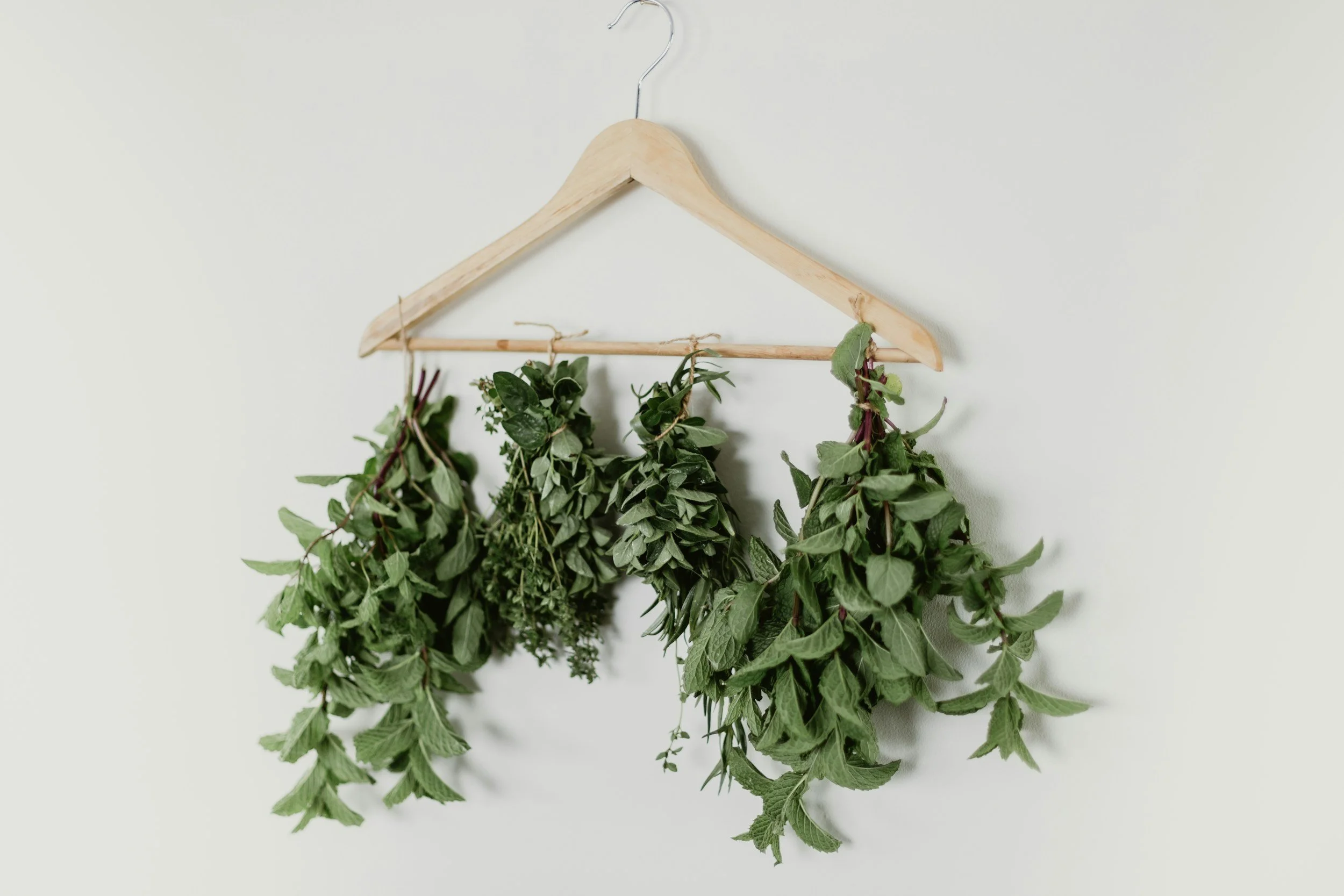
ALL DRIED HERBS
Few things are older than humanity’s relationship with plants. Before pharmacies, before laboratories, before medicine had a modern name, people turned to leaves, roots, flowers, bark, and smoke. Entire villages survived because someone remembered which herb soothed fever, which flower honored the dead, and which root should never be touched after sunset.
Within this herbarium, you’ll find botanical folklore, protective traditions, poisonous plants, mourning herbs, dream-inducing flowers, and centuries of stories tied to the green things growing quietly at the edge of the forest. Some herbs healed. Some warned. Some became sacred simply because enough frightened people trusted them to work.
🜂 A
Agrimony
The tall, rough-leaved agrimony with its spike of small yellow flowers was one of the most trusted herbs in the medieval English apothecary — used for liver complaints, wound healing, and in the folk tradition for sleep and protection. Placed beneath the head of a sleeping person, it was believed to induce a sleep so deep the sleeper would not wake until the herb was removed, which made it both a remedy for insomnia and, in the wrong hands, a tool of a different kind. In Anglo-Saxon herbal tradition agrimony appeared in the Nine Herbs Charm, one of the oldest surviving pieces of English magical writing. A plant trusted enough to appear in the oldest written charm is a plant a community had been relying on for a very long time before anyone wrote anything down.
full entry coming soon
Angelica
Named for the archangel Michael, whose feast day in some traditions coincides with the plant's blooming, angelica was one of the most powerfully protective herbs in the European tradition — carried against plague, hung in houses to ward evil, and burned as a protective incense. The name was not assigned casually: angelica was understood to operate at the level of divine protection rather than mere herbal remedies, which placed it in a category above most other plants in the folk pharmacopoeia. In Scandinavian tradition angelica was a food plant and a medicine before it was a protective herb; its protective reputation accumulated as the plant traveled westward into traditions that already had a category for divinely endorsed botanicals and needed something to put in it.
full entry coming soon
Anise
The licorice-scented seeds of Pimpinella anisum have been used medicinally since ancient Egypt, where they were documented in the Ebers Papyrus, and were traded across the Mediterranean as both spice and medicine. Roman wedding cakes (mustaceum) were flavored with anise and eaten at the end of feasts to aid digestion after the meal — one of the possible ancestors of the modern wedding cake tradition. In folk magic tradition anise was protective against nightmares and the evil eye, used in protective sachets, and burned as incense to ward off malevolent spirits. Seeds placed beneath the pillow were held to produce pleasant dreams. The same seed that settled the Roman stomach was protecting the medieval sleeper — a useful range for a small aromatic seed.
full entry coming soon
Asafoetida (as herb)
The dried resinous gum of Ferula assa-foetida occupies a unique position in the herbal tradition: indispensable in South Asian and Middle Eastern cooking, where heating transforms its sulfurous raw smell into something savory and essential, and equally trusted in folk magic as a banishing and protective material precisely because of the raw smell that cooking eliminates. The same substance doing sacred Indian temple cooking and American hoodoo banishing work is using its two forms — raw and heated — as two different tools. The herbarium entry covers its use as a dried material in protective and banishing traditions. See also: Incense and Resins for its smoke history.
full entry coming soon
Autumn crocus (Colchicum)
Colchicum autumnale blooms in autumn without leaves — the bare purple flowers emerging from bare ground, the leaves arriving separately in spring — which gave it the folk name "naked ladies" and an association with the uncanny reversal of natural order. Every part of the plant is severely toxic, containing colchicine, a compound that disrupts cell division and has been used in gout treatment for over two thousand years. It appears in ancient Greek accounts of the sorceress Medea, who used it in preparations. Modern medicine uses colchicine still. The plant that Medea knew and the plant in the contemporary pharmacopoeia are the same plant, which should not be surprising and somehow still is.
full entry coming soon
🜃 B
Basil
No herb divides its symbolic tradition more thoroughly by geography than basil. In Western Europe and America it is a culinary herb of summery warmth. In ancient Greece it was associated with hatred and mourning — Pliny reported that it would only grow if planted while cursing, and it was strewn on graves. In India Tulsi — holy basil — is one of the most sacred plants in Hinduism, an embodiment of the goddess Lakshmi, tended in household shrines and used in religious ceremony. Tulsi beads are worn by Vaishnavas. In Romania basil exchanged between lovers signals acceptance of a proposal. The same plant simultaneously grieving in ancient Greece, sacred in India, and proposing marriage in Romania is a reminder that botanical symbolism is a local language, not a universal one.
full entry coming soon
Atropa belladonna takes its genus name from Atropos, the Fate who cuts the thread of life — a naming choice that tells you everything you need to know about how seriously botanists took the plant's lethality when they classified it. The berries are sweet, which is why children have died eating them; the root is more toxic still. Medieval witchcraft folklore placed belladonna in flying ointments alongside henbane and mandrake, and modern pharmacological analysis of the alkaloids confirms genuine transdermal absorption and hallucinatory effects at subtoxic doses — the ointments worked, within a margin that occasionally didn't. The herb's medicinal legacy is enormous: atropine and scopolamine derived from it are still in clinical use. A plant named for the Fate who cuts threads, used to dilate pupils, induce visions, and kill — belladonna has never tried to be subtle. See also: Floral Allies for flower symbolism, Botanical Oils for historical preparations.
Betony (Wood betony)
Stachys betonica was considered one of the most magically powerful herbs in medieval European tradition — the Italian proverb "sell your coat and buy betony" reflects a widespread belief that it cured everything from serpent bites to demonic possession to nightmares to the failing sight of old age. It was planted in churchyards as a protective herb and carried as an amulet against witchcraft. Modern herbalists use it primarily for headaches and nervous tension, where it has genuine calming effects. The gap between its medieval reputation (cure-all, demon repellent, serpent antidote) and its current use (headache tea) is the gap that appears whenever a folk remedy gets subjected to clinical evidence. Betony lost some things in that translation and retained a few that held up.
full entry coming soon
Blackthorn (as herb)
The sloe berries of Prunus spinosa have been fermented into sloe gin and used medicinally for centuries, but it is the thorns and the wood that carry the blackthorn's darkest folklore. A blackthorn walking stick was the traditional weapon of Irish faction fighters — a shillelagh — and the wood was associated with strife, misfortune, and the kind of ill-wishing that arrives without obvious cause. In Irish folk tradition the blackthorn was a fairy tree, left untouched in hedges, its thorns potentially used by those who knew how in the preparation of cursing thorns. Blackthorn flowers before its leaves emerge, covering bare branches in white blossom during cold weather — a display some traditions read as beautiful and others as ominous, which is the blackthorn's entire personality in a single image.
full entry coming soon
Blue vervain
Verbena hastata, the North American blue vervain, shares its genus and much of its folk reputation with European vervain — sacred herb of the Druids, carried by Roman ambassadors, used in religious purification rites, associated with protective and divinatory magic across the whole of the Western tradition. The Druids reportedly used vervain alongside mistletoe in their most important ceremonies. Early Christian tradition sometimes called it "herb of the cross" and attributed its reddish tinge to the blood of Christ. Native American medicinal traditions use blue vervain for respiratory complaints and nervous tension. A plant sacred enough for Druids and Roman diplomats simultaneously was doing something right, even if the two groups would have disagreed about what.
full entry coming soon
Burdock root
The large, tenacious burdock — whose hooked seed heads inspired the invention of Velcro — is one of the great overlooked herbs of European and East Asian tradition. In Japanese cuisine gobo (burdock root) is a staple vegetable with documented medicinal use stretching back over a thousand years. In European folk medicine burdock root treated skin conditions, purified the blood, and cleared what had accumulated in the body after winter. In folk magic burdock was planted around dwellings as a protective herb. The seed heads that attach to anything passing are not accidental: burdock's entire reproductive strategy is to make itself impossible to leave behind, which the folk tradition read as the plant demonstrating its own persistence and used accordingly.
full entry coming soon
🜄 C
Calamus (Sweet flag)
Acorus calamus — sweet flag, calamus root — appears in the Hebrew sacred anointing oil formula alongside myrrh, cinnamon, and cassia, making it one of the most theologically significant herbs in the Western tradition. It grows at the edges of water, its long sword-like leaves rising from marshes and riverbanks, its root releasing a warm, spicy, complex fragrance when bruised. In Ayurvedic tradition calamus root (vacha) is used for cognitive function and speech — the root that improves the ability to communicate placed in sacred formulas alongside the oils that consecrate those who are set apart to speak for the divine. In North American folk tradition calamus root was chewed by Ojibwe people for stamina and illness prevention. See also: Botanical Oils.
full entry coming soon
Catnip
Nepeta cataria is, for cats, a reliable euphoriant — the nepetalactone compounds trigger a rolling, vocalizing, briefly euphoric response in roughly two thirds of domestic cats, a response that has no agreed evolutionary explanation and remains one of the more charming mysteries of veterinary science. For humans the same plant is a gentle sedative, used in folk medicine for insomnia, anxiety, and children's fevers. In Hoodoo tradition catnip is used in love and attraction workings — the logic being that a plant that makes creatures helplessly pleased with its presence can be applied to human relationships with similar intent. The folk magic use of catnip is, in its way, one of the most honest applications of sympathetic magic in the tradition: it demonstrably works on cats, and the rest is a reasonable extrapolation.
full entry coming soon
Cayenne pepper
Capsicum annuum and its relatives — the hot peppers of the Americas — have been in use by indigenous peoples for at least nine thousand years and entered European awareness after Columbus's voyages, spreading with extraordinary speed across Africa, Asia, and the Middle East because they provided the heat of expensive black pepper at a fraction of the cost. In Hoodoo and rootwork tradition cayenne is a heating and accelerating herb: added to workings to speed their effect, used in crossing and cursing preparations, and placed in enemy-repelling formulas for its burning quality. A substance that makes skin burn on contact was a natural fit for traditions requiring heat, urgency, or the specific discomfort of being near something one should have left alone.
full entry coming soon
Chamomile
The small, apple-scented flowers of Matricaria chamomilla have been used in European medicine since ancient Egypt — appearing in the Ebers Papyrus, in Greek medical texts, in Anglo-Saxon herbal tradition, and in every subsequent European pharmacopoeia up to the present day in a record of continuous documented use that few other herbs can match. In folk magic tradition chamomile is associated with luck, money, and the gentle removal of obstacles — a plant that, like its medicinal application, smooths and calms rather than forcing or pushing. In German folk tradition it is called alles zutraut ("capable of anything"), which is either an endorsement or the most ambitious claim made about a tea ingredient in the history of herbal medicine. Given the evidence, probably somewhere in between.
full entry coming soon
Comfrey
Symphytum officinale — knitbone, boneset, bruisewort — has been used in wound healing and bone repair since ancient Greece, where Dioscorides described it for exactly those purposes. The allantoin in comfrey root genuinely promotes cell proliferation and wound healing, which is why it was trusted for so long and why modern research confirmed what the tradition maintained. The same pyrrolizidine alkaloids that make it effective in topical application make internal use potentially hepatotoxic at sustained doses — a complication the folk tradition did not know about and that modern herbal medicine is still negotiating. A plant called knitbone for two thousand years and actually useful for knitting bones together is the kind of direct correspondence that makes the doctrine of signatures feel less like superstition and more like careful observation.
full entry coming soon
Cunningfolk herbalism (overview)
The cunning folk of early modern Britain and Europe — healers, diviners, and magical practitioners who served their communities outside formal church and medical structures — operated primarily through botanical knowledge, charm texts, and divination. Their herbal practice combined genuine pharmacological knowledge accumulated over generations with a ritual framework that understood the healer's intention and the patient's belief as active components of the treatment. The cunning folk were not witches in the demonological sense; they were the community's first recourse against illness, cursing, lost animals, and bewitched butter. The herbs they used were largely the same herbs the physicians used, applied within a different framework of meaning that took seriously the idea that how a plant was prepared and administered mattered as much as which plant was chosen.
full entry coming soon
🜁 D
Dandelion
The dandelion — considered a weed by everyone who did not know what it was for, which was most people after the 20th century removed it from the diet — was a cultivated medicinal plant in European tradition, used for liver support, digestive health, and the kind of spring cleansing that the folk tradition prescribed after a winter of preserved food and insufficient vegetables. The seed head blown for divination ("he loves me, he loves me not" counted by remaining seeds after one breath) is documented folk practice. The milky sap was used for warts. The roots were roasted as a coffee substitute. The entire plant was eaten. A plant this useful being reclassified as a weed is one of the stranger collective decisions of modern horticulture.
full entry coming soon
Datura (as herb)
The dried leaves, seeds, and roots of Datura stramonium and related species contain the same alkaloid profile as belladonna and henbane — scopolamine, atropine, hyoscyamine — in concentrations that vary unpredictably between individual plants, batches, and even different parts of the same plant. This variability is what makes datura historically both essential and lethal: the margin between a visionary dose and a fatal one was never clearly established, and the folk traditions that used it in initiatory ceremony developed protocols specifically to manage that margin. The Chumash and other California indigenous peoples used Datura wrightii in coming-of-age rituals under careful supervision. The supervision was not optional; it was the difference between a ceremony and a funeral. See also: Floral Allies for flower symbolism.
full entry coming soon
Doctrine of signatures
The belief — attributed to Paracelsus in the 16th century but considerably older in practice — that plants indicate their medicinal uses through their physical appearance: a plant with heart-shaped leaves treats the heart; a plant with yellow sap treats jaundice; a walnut kernel that resembles a brain treats brain complaints. The doctrine was not simply naive pattern-matching; it was a framework for organizing botanical knowledge in an era without chemistry, and it produced a number of connections that pharmacology later confirmed (St. John's Wort, whose perforated leaves suggest pierced skin, has documented effects on nerve pain) and a rather larger number it did not. The doctrine's value was less in its conclusions than in the attention it trained: people who believed plants were communicating through form looked at plants very carefully, which is the prerequisite for knowing anything about them.
full entry coming soon
🜂 E
Echinacea
The purple coneflower of the North American prairies was one of the most widely used medicinal plants among Plains indigenous peoples — employed for toothache, snakebite, infections, and general immune support — before its adoption into European-American herbal medicine in the 19th century. It is now one of the most commercially successful herbal supplements in the Western market, which is a trajectory from indigenous sacred medicine to health food store fixture that has become familiar enough to have a name. Research on its immune-stimulating properties is ongoing, conflicting, and heavily influenced by the financial interests of the supplement industry. The Lakota used it for a long time before anyone needed a clinical trial to trust it, which is a data point of a different kind.
full entry coming soon
Elder (as herb)
Sambucus nigra — the elder tree whose berries, flowers, bark, and leaves all have documented medicinal and folk magic uses — earns its herbarium entry on the strength of those materials while its full tree symbolism belongs to the future tree section. Elderberries for immune support and elderflower for fevers and inflammation are among the oldest documented herbal uses in Northern Europe. The folk tradition surrounding elder is extensive and contradictory: cutting elder without asking the Elder Mother's permission brought misfortune; burning elder wood brought death into the house; yet elder was simultaneously among the most powerful protective plants available. A plant this ambivalent — simultaneously dangerous to offend and powerful to use — had clearly been in close relationship with the communities that surrounded it for a very long time.
full entry coming soon
Elecampane
Inula helenium — named for Helen of Troy, reportedly growing from her tears — is one of the oldest European medicinal herbs, documented by Pliny and Dioscorides for respiratory complaints and by Anglo-Saxon herbalists for the same. Its large, bitter root contains inulin (named after the plant) and a range of antimicrobial compounds that modern research has found genuinely effective against bacteria including drug-resistant tuberculosis strains. In folk magic tradition elecampane was an elf herb — used in the Anglo-Saxon tradition for conditions attributed to elf-shot, which encompassed what we would now call sudden inexplicable pain and illness. A root that treats respiratory infection being used against invisible arrows shot by supernatural beings is less of a category error than it appears: both are attempting to address the same experience of sudden, mysterious suffering.
full entry coming soon
🜃 F
Fennel
Foeniculum vulgare was one of nine sacred herbs in the Anglo-Saxon Nine Herbs Charm alongside mugwort, plantain, and lamb's cress — a plant trusted enough to be included in the oldest surviving piece of English magical writing. In Greek myth Prometheus carried fire from Olympus to humanity concealed in a fennel stalk — the plant that delivered light to the world contains fire within it, which made it both practically useful (fennel stalks are naturally hollow and slow-burning) and cosmically significant. Medieval tradition held fennel hung over a door protective against witchcraft. Its seeds were chewed to suppress hunger during fasting and long church services. A plant sacred enough for the Nine Herbs Charm, mythologically significant enough to carry divine fire, and practical enough to suppress hunger during sermons has been doing a lot of work for a long time.
full entry coming soon
Feverfew
Tanacetum parthenium — feverfew, featherfoil, medieval aspirin — has been used for headache and fever reduction since at least the first century CE, when Dioscorides described it. The name in Greek was parthenion, possibly from the story that it saved a man who fell from the Parthenon during its construction; the Latin name reflects this. Clinical research in the 1980s confirmed significant migraine prophylactic effects from regular consumption, making feverfew one of the better-validated traditional herbal medicines in contemporary evidence-based herbalism. It was also used to reduce fever in children, induce delayed menstruation, and treat arthritis — a range that suggests the folk tradition was paying attention to its anti-inflammatory effects across a broad range of applications long before the mechanism was identified.
full entry coming soon
Fungi and mushrooms (folklore of)
Fungi occupy a category of their own — neither plant nor animal, appearing overnight in fairy rings, some capable of feeding and some of killing with almost identical appearance — which made them among the most folkllorically active organisms in the natural world. The fairy ring of mushrooms growing in a circle was understood across Europe as a site of fairy dancing, dangerous to step inside, marking a portal or a place where the two worlds had touched. Fly agaric — the red-and-white mushroom of fairy tale illustration — contains psychoactive compounds that may be the basis of some shamanic traditions. Psilocybin mushrooms appear in Mesoamerican religious ceremony. The identification of edible from deadly was one of the most consequential pieces of knowledge in any traditional community, which gave fungi an atmosphere of danger and initiation that no other plant category quite matches.
full entry coming soon
🜄 G
Garlic
Allium sativum has been simultaneously a food, a medicine, and a protective charm since at least ancient Egypt, where it was found in the tomb of Tutankhamun and reportedly fed to pyramid workers for strength. Its protective folklore is extraordinary in geographic reach: garlic hung at the door or worn around the neck to ward vampires in Eastern European tradition; garlic buried under the threshold in Greek tradition; garlic braided and hung in Mediterranean kitchens as much for protection as for cooking. The vampire-repelling property almost certainly derives from garlic's powerful antimicrobial activity, which the folk tradition observed — things that spread disease were warded by a plant that actually inhibited the spread of disease — and then extended into the supernatural register that the folk tradition habitually used to explain what it observed but could not yet measure.
full entry coming soon
Ginger root
Zingiber officinale has been in continuous medicinal use across South Asia, Southeast Asia, China, and the Middle East for over five thousand years — one of the most thoroughly documented medicinal plants in human history, used in Ayurvedic, Traditional Chinese, and Unani medical systems with consistent recommendations across traditions that had no contact with each other. Research has validated its antiemetic, anti-inflammatory, and digestive properties, making it one of the rare cases where traditional use, modern pharmacology, and personal experience all point in the same direction without significant disagreement. In Hoodoo tradition ginger is used for power, speed, and the heating of workings — the same warming, activating quality that makes it medicinally effective read directly into its folk magic applications.
full entry coming soon
Graveyard dirt (as herbal materia)
Not a plant, but the soil taken from graves — collected according to specific protocols, from specific graves, in exchange for specific offerings left behind — is categorized in the Hoodoo and rootwork tradition as a materia magica with properties derived from the person buried there. Dirt from a soldier's grave carries protective and aggressive qualities; dirt from a lawyer's grave aids legal matters; dirt from an enemy's grave facilitates cursing work. The collection protocols — offering coins, rum, tobacco, or food; taking only what is offered; leaving payment — treat the collection as a transaction with the dead rather than a theft from the churchyard. The tradition takes the personality of the grave's occupant as seriously as any herb's properties, which is either a very different category of material or the same logic applied to a very different source.
full entry coming soon
🜁 H
Henbane
Hyoscyamus niger — stinking nightshade, henbane — has been associated with witchcraft, poisoning, prophecy, and the underworld since antiquity. The Oracle at Delphi may have inhaled its smoke before prophesying. Hamlet's father was reportedly poisoned with it. Archaeological evidence from a 9th-century Norse female burial in Denmark found henbane seeds in the pouch buried with what appears to have been a völva — a seeress. The alkaloids (hyoscyamine, scopolamine) produce hallucination, disorientation, and the sense of flying at subtoxic doses. At toxic doses the progression continues past where anyone wants to be. Medieval witchcraft prosecution testimony frequently mentioned henbane in preparations. Whether those preparations were used as described or confessed under duress is a question the archive leaves open. See also: Botanical Oils.
full entry coming soon
High John the Conqueror root
The root of Ipomoea jalapa — a morning glory relative with a large, smooth, brown root — is the central talisman of the Hoodoo tradition: carried for luck, power, and the ability to overcome obstacles, named for a figure of African American folklore who outwitted the devil and every master who tried to break him. High John is simultaneously a root, a legend, and a spirit — the personification of wit, resilience, and the survival of dignity under impossible conditions. The root is fed with whiskey or oil, carried close to the body, and consulted before important endeavors. It is the most distinctly American entry in the herbarium — a folk magic tradition that emerged from the specific historical conditions of slavery and retained its power precisely because it was needed.
full entry coming soon
Horehound
Marrubium vulgare was one of the five bitter herbs of the Jewish Passover seder — eaten to recall the bitterness of slavery in Egypt — and simultaneously one of the most widely used cough remedies in European folk medicine from ancient times through to the horehound candy still available in old-fashioned sweet shops. Its appearance in both sacred religious ritual and everyday medicine reflects the medieval framework that did not distinguish between the two: a bitter herb that was good for the chest was appropriate for a ceremony of bitter remembrance, and the same herb that appeared at the Passover table was the one the village healer reached for when the children coughed in winter. The same plant doing sacred ceremony and practical medicine is the norm in this archive. Horehound is just unusually clear about it.
full entry coming soon
🜂 I
[no entries]
🜃 J
[no entries]
🜄 K
[no entries]
🜁 L
Lavender (as herb)
Lavandula angustifolia has been used medicinally and ceremonially since ancient Rome — added to bathwater, used to scent linens, placed in sachets for moths and nightmares, burned as incense, and applied to wounds as an antiseptic throughout the medieval and early modern period. The Romans may have given it its name from lavare, to wash — the herb of cleansing, physical and spiritual simultaneously. In folk magic tradition lavender is used for love, sleep, protection, and the purification of spaces — an unusually benign folkloric resume for an herb that has also, in its concentrations, been used to treat anxiety, insomnia, and skin conditions with enough clinical evidence to appear in European medical databases. The herbarium entry covers its use as a dried herb; see Botanical Oils for lavender essential oil history.
full entry coming soon
Lemon balm
Melissa officinalis — bee balm, sweet balm, heart's delight — was described by the 11th century Arab physician Avicenna as making the heart merry and driving away melancholy, which is a remarkably accurate traditional description of an herb now known to have measurable anxiolytic and mood-supporting effects through its action on GABA receptors. The name melissa means bee in Greek, and the plant's specific attractiveness to bees made it sacred in several ancient traditions — bees being associated with the soul, prophecy, and the transport of messages between worlds. Medieval monks cultivated lemon balm extensively, earning it the folk name "herb of scholars." An herb that keeps bees, lifts melancholy, and was grown by monks who had time to pay attention to what their garden was doing had accumulated its reputation honestly.
full entry coming soon
🜂 M
Mandrake root
Mandragora officinarum — the most mythologized plant root in the European tradition — grows in a bifurcated form that was almost universally interpreted as human: two legs, a body, sometimes a head, the resemblance close enough to inspire centuries of elaborate folklore about a root that shrieked when pulled from the earth (killing the puller), that glowed in the dark, that grew beneath gallows from the last fluids of the hanged, and that served as a familiar spirit for the witch who owned it. Every element of the mythology reflects something real: the alkaloids do produce genuine psychoactive and anesthetic effects; the root does sometimes grow in humanoid forms; it was used in medicine as a surgical anesthetic since antiquity. The myth protected knowledge the folk tradition needed to keep dangerous and therefore kept it elaborate. See also: Botanical Oils.
full entry coming soon
Mint
The nymph Minthe, beloved of Hades and transformed into the plant by Persephone's jealousy — or stamped underfoot by Demeter, depending on the version — is mint's origin myth, and it places the herb firmly in the underworld tradition from its first appearance in classical literature. Mint was strewn at Greek and Roman funerals. It was also used in hospitality offerings to guests, in digestive medicine, in ritual purification, and in the protection of stored grain. A plant that smells simultaneously of freshness and coolness, that grows invasively and cannot be easily removed once established, that survived being stamped into the ground by a goddess — mint understood its own persistence before the myth tried to explain it.
full entry coming soon
Mistletoe
Viscum album — the plant that grows without touching the ground, rooted in air and living bark, producing white berries in winter when everything else is bare — was the most sacred plant in the Druidic tradition, cut from oak with a golden sickle at the winter solstice after six days of the moon's cycle, received in a white cloth so it never touched the earth, believed to cure all ills and protect against all evil. Pliny documents this ceremony in the 1st century CE; archaeologists have found it confirmed in the material record. The Norse arrow of mistletoe that killed Balder — the one thing not asked to swear not to harm him because it seemed too young and small — is the plant's dark chapter. The kissing tradition is recent, 18th century, and has nothing to do with any of this.
full entry coming soon
Motherwort
Leonurus cardiaca — lion-heart, motherwort — is named for two things simultaneously: its traditional use in women's medicine (particularly for delayed menstruation, childbirth, and the anxieties of new mothers) and its cardiac-strengthening properties. The combination is not accidental; the folk tradition that named it understood that women's health and heart health were related in ways that formal European medicine of the same period was slower to acknowledge. In Chinese medicine the related Leonurus japonicus has been used in women's medicine for over a thousand years. The plant's actual pharmacological activity — research confirms uterine-stimulating and mild cardiac effects — supports both traditional applications with enough fidelity to make the common name look less like folk poetry and more like careful notation.
full entry coming soon
Mourning herbs (overview)
Every culture that worked with plants developed specific botanical associations for death, dying, and the tending of the dead. Some plants were chosen for their scent — masking the smell of decomposition, purifying the air of a sickroom or deathbed. Others for their symbolism — evergreens that persisted through winter, white flowers that signaled purity of the soul departed. Others for their practical properties — antimicrobials that slowed decay, bitter herbs that discouraged insects, aromatics that eased the grief of those who remained. The mourning herb tradition is the intersection of pharmacology, symbolism, and the human need to do something — anything — at the moment when nothing can be done. The herbs gave the living a task when the dead no longer needed their help.
full entry coming soon
Mourning herbs — rosemary
Rosmarinus officinalis — "dew of the sea" — was the primary mourning herb of the European tradition for centuries: carried by mourners, cast into graves, laid on coffins, pressed into the hands of the dead. "There's rosemary, that's for remembrance" is Shakespeare, but the tradition is considerably older — Ophelia's speech in Hamlet was drawing on a living folk practice that her audience would have recognized immediately. Rosemary was placed in graves to ensure the dead would be remembered, because the herb's own remarkable scent persistence — fresh rosemary bruised between the fingers days after picking — was a demonstration of its memory. The plant that remembered its own scent was trusted to hold the memory of the dead. See also: Incense and Resins.
full entry coming soon
Mourning herbs — yew (as herb)
Taxus baccata — the yew — appears in the herbarium on the strength of its berries and needles as herbal materia, with its full tree symbolism deferred to the future tree section. The yew's entire tradition is death: planted in churchyards across Britain for over a thousand years, producing the longest-lived trees in Europe (some exceed four thousand years), toxic in almost all parts except the fleshy red aril surrounding the berry, associated with Hecate and underworld passage in classical tradition. Yew bark contains taxol, now one of the most important cancer chemotherapy drugs in clinical use. The death tree that produces a medicine against death has a symmetry the herbalist tradition would have found entirely appropriate.
full entry coming soon
Mourning herbs — rue
Ruta graveolens — the herb of grace, the herb of repentance — was carried at funerals, strewn in courtrooms where prisoners were tried, and used in the Passover bitter herbs in some traditions. Its bitter, acrid scent was understood as purifying in a specifically moral sense: rue cleared the spiritual contamination of death, of guilt, of what needed to be repented. Ophelia distributes rue in Hamlet alongside rosemary and pansies — a bouquet that was a coherent message to a contemporary audience, each herb carrying its folk meaning as clearly as words. "You must wear your rue with a difference" she says to the Queen, and the audience understood the difference between the rue of grief and the rue of guilt. The herb encoded that distinction before Shakespeare wrote the line.
full entry coming soon
Mourning herbs — cypress
The cypress bough carried at Mediterranean funerals, the branches strewn before the bier, the sprigs tucked into burial wrappings — the cypress as mourning herb is an entry adjacent to the tree section it will eventually occupy, included here because the physical material was used herbal-fashion in preparation of the dead. The essential oil is covered in Botanical Oils. The tree's symbolism — unchanging, upward only, evergreen through winter — made it the natural plant of the soul's persistence beyond death in Greek, Roman, and later Christian traditions. A sprig of something that does not change, placed with someone who has changed entirely, is a gesture of hope in the only direction it can go.
full entry coming soon
Mourning herbs — mugwort
Artemisia vulgaris — mugwort, the mother of herbs in Anglo-Saxon tradition — appears in the mourning herb cluster because of its specific association with the liminal: the in-between, the threshold, the passage between states. Used in the Nine Herbs Charm, placed in shoes for travel protection, burned for dream induction, hung at midsummer fires — mugwort is consistently the herb of transitions and the periods between. It was placed with the dead in some Northern European traditions as a herb of passage, the plant of the threshold accompanying whoever was crossing the largest threshold available. See also: Incense and Resins for smoke history.
full entry coming soon
Mugwort
See also: Mourning herbs — mugwort. Artemisia vulgaris is the most versatile herb in the Anglo-Saxon herbal tradition — the first of the Nine Herbs Charm's sacred plants, called "eldest of herbs" in the charm itself, a designation that suggests it was ancient even when the charm was written. In folk magic tradition mugwort is a dream herb: burned before sleep to induce vivid and prophetic dreaming, tucked under the pillow, drunk as a tea before divination. In Chinese medicine moxa — dried mugwort burned near acupuncture points — is documented for two thousand years. In European folk tradition it protected travelers and was stuffed into shoes to prevent fatigue on long journeys. The scientific evidence for its effects on dreaming is preliminary but not absent. A plant this consistently trusted across this many traditions earned its reputation through something. See also: Incense and Resins.
full entry coming soon
🜃 N
Nettle
Urtica dioica — stinging nettle — has been feeding, healing, and clothing people for thousands of years in a relationship of remarkable intimacy given that the plant bites back on contact. Nettle fiber was used for cloth before flax; nettle was eaten as a spring green across Europe and Asia; nettle treated arthritis, anemia, and allergies in folk medicine; nettle was used in folk magic to break curses and protect against lightning. The Germanic folk tale in which a woman must spin nettle fiber into shirts to break a spell on her brothers is not a random choice of material — nettle was the fabric of protective effort, the thing that was painful to work but produced something that defended. The plant that stings when you touch it carelessly but submits to careful, patient handling was a natural symbol for the kind of work that required exactly that.
full entry coming soon
Nine Herbs Charm (Anglo-Saxon)
The oldest surviving piece of English herbal magic — a charm recorded in the 10th century Lacnunga manuscript, invoking nine sacred plants against venom, infection, and the malevolent forces understood to cause sudden illness. The nine herbs are mugwort, plantain, lamb's cress, betony, chamomile, nettle, crab apple, chervil, and fennel — each addressed directly and praised before being used in a compound preparation applied with the charm spoken aloud. The text layers Christian invocations over an older structure that predates them, as Anglo-Saxon folk medicine habitually did — the new theology wrapped around the old knowledge because the old knowledge was useful and no one wanted to lose it. The Nine Herbs Charm is not a curiosity. It is a window into the working medicine of a community that took its plants as seriously as its prayers.
full entry coming soon
🜄 O
Orris root
The dried rhizome of Iris germanica florentina — orris root — develops a violet-like fragrance over three years of drying, a transformation that made it seem alchemical to those who produced it and valuable to those who used it. It has been one of the primary fixatives in European perfumery since at least the Renaissance, used to fix and extend other scents in compound preparations. In Hoodoo tradition orris root (called "Queen Elizabeth root" in some American folk magic sources) is used in love workings, particularly to attract and hold a romantic partner. In Italian herbal tradition it was used to freshen linen and scent rooms. A root that smells like nothing when fresh and like violets after three years of patience teaches something about what preparation and time produce that the tradition was paying attention to.
full entry coming soon
🜁 P
Pennyroyal
Mentha pulegium — the smallest and sharpest-scented of the mints — was used in ancient Greek and Roman medicine as an emmenagogue (herb to bring on delayed menstruation) and abortifacient, and is documented in this use continuously from Dioscorides to the early modern period. The folk tradition encoded this in the language of euphemism — "bringing on the courses," "clearing the womb" — but the use was understood and the herb was available to women who needed it. In folk magic tradition pennyroyal was carried for protection, used in protective sachets, and hung in houses to deter fleas (it genuinely does). The protective use and the medical use coexisted in the folk pharmacopoeia without the tension that later centuries imposed on the same combination of functions. An herb that protects the household and the body was doing the same work at different scales.
full entry coming soon
Plantain (Plantago)
The broad-leafed plantain growing in every disturbed soil, footpath, and lawn edge worldwide was called "white man's foot" by Native American peoples because it followed European settlers everywhere they went — the colonial weed that announced itself as an uninvited companion. Anglo-Saxon tradition called it "waybread" and included it in the Nine Herbs Charm as one of the most important protective plants available. The mucilaginous leaf applied fresh to insect bites, small wounds, and inflamed skin produces genuine relief through genuine pharmacological activity. A plant available in nearly every ecosystem on earth, included in the oldest surviving herbal charm, used medically on every inhabited continent — plantain is the most democratic herb in the archive. It grows where people walk, which is everywhere people have been.
full entry coming soon
Poisonous plants (overview)
The category of baneful or poisonous plants in the herbal tradition is not simply a list of things to avoid — it is a distinct tradition of knowledge requiring specialized training, specific protocols, and the understanding that the dose and preparation method determine whether a plant heals, harms, or kills. Belladonna, henbane, datura, mandrake, hemlock, monkshood — the plants of the witch's garden — were also the plants of the physician's cabinet, the surgeon's anesthetic, the midwife's labor aid. The folk tradition that marked these plants as requiring care was doing pharmacology through a different framework: knowing that the plant was powerful in ways ordinary herbs were not, and encoding that knowledge in stories, warnings, and rituals of handling that protected those who needed protection and preserved access for those who needed the plant.
full entry coming soon
🜂 Q
[no entries]
🜃 R
Rowan (as herb)
The rowan tree's berries, bark, and wood all have documented herbal and folk magic uses that earn it a herbarium entry, with its full tree symbolism awaiting the tree section. Rowan berries were used in Scandinavian and British folk medicine for their high vitamin C content and astringent properties. The wood and red berries were the most powerful protective materials in the British and Norse traditions — red being the color that repelled evil, the rowan being the tree that grew in the highest and most difficult locations and therefore belonged to the same fierce survival tradition that made it effective against whatever was trying to get into a house or a person. A branch of rowan tied with red thread was the most trusted protective charm in the Scottish Highlands. The protection was portable. That mattered.
full entry coming soon
Rue (as herb)
See: Mourning herbs — rue. Ruta graveolens earns a second entry here for its uses outside the mourning tradition: an abortifacient and emmenagogue used by women throughout European history, a protective herb hung in houses and worn as amulets against the evil eye (still used this way in southern Italy and Latin America), a flavoring for grappa and certain liqueurs, and a bitter medicinal used for eye complaints and internal parasites. The rue of everyday life and the rue of the funeral cortege are the same plant doing different work in different registers — practical, protective, and ceremonial simultaneously, in the way the best herbs always are.
full entry coming soon
🜄 S
Sage, common (Salvia officinalis)
Salvia officinalis — garden sage, common sage — carries a name (from the Latin salvare, to save) that announces its medical reputation before you open any text about it. Medieval European medicine considered sage a near-panacea; the Salerno school of medicine asked "why should a man die while sage grows in his garden?" In folk tradition sage in the garden indicated a prosperous household. If it grew too vigorously, the wife wore the trousers; if it withered, misfortune was coming. A wise woman was a sage woman — the plant and the quality of wisdom shared a root in multiple European languages simultaneously. Contemporary research has confirmed antimicrobial, anti-inflammatory, and memory-supporting properties. The name, the folklore, and the pharmacology are, unusually, all pointing at the same thing.
full entry coming soon
St. John's Wort
Hypericum perforatum — gathered on St. John's Eve (Midsummer Night) when its powers were at their peak, hung in windows to ward evil spirits and lightning, worn as a protective amulet, and prescribed in European folk medicine for melancholy, nerve damage, and wound healing for over two thousand years. The timing of its bloom precisely at midsummer made it a natural candidate for Midsummer ritual, and early Christians attached St. John the Baptist's feast day to it rather than attempting to dislodge a tradition this deeply embedded. The perforated leaves (tiny translucent oil glands that look like holes when held to light) made it a doctrine of signatures candidate for wounds that penetrate — perforated leaves for pierced skin. Modern clinical evidence confirms antidepressant effects and wound-healing properties. The folk tradition was right about the melancholy, the wounds, and the timing. The evil spirits remain its own business.
full entry coming soon
Skullcap
Scutellaria lateriflora — the North American skullcap, named for the cap-shaped seed pods — was used by Cherokee and other indigenous peoples as a ceremonial plant for women's rites and as a treatment for nervous disorders before its adoption into American folk medicine as one of the primary nervine herbs of the 19th century Eclectic physicians. It was prescribed for rabies, for nervous exhaustion, for insomnia, and for the kind of anxiety that colonial American medicine called "hysteria" and treated with considerably less effective methods. Preliminary research suggests genuine GABA-modulating effects. A plant used in women's ceremony by the people who knew it first, then adopted by the folk medicine tradition of the people who arrived afterward, is a common enough trajectory in North American herbalism to be almost predictable.
full entry coming soon
🜁 T
Thyme
Thymus vulgaris was carried by Greek soldiers for courage, strewn on Greek funeral pyres to ensure the soul's passage, and used by medieval European women to embroider on scarves given to knights going to battle — a sprig of thyme beside a bee the common motif of courage and activity. The word "thyme" is related etymologically to the Greek thymos, meaning spirit or courage, though the precise connection is debated. What is not debated is its antimicrobial and antiseptic properties — thymol, its primary compound, is potent enough to appear in modern antiseptic formulas. The courage herb that was used on funeral pyres and battle scarves was also the herb that actually inhibited the infection that battle wounds caused. The folk use and the pharmacological use were always the same use.
full entry coming soon
Tobacco (as herb)
See: Incense and Resins for tobacco's sacred smoke tradition. As a dried herb, tobacco's folk uses extend beyond ceremony into medicine, pest control, and the kind of everyday protective magic that surrounded an enormously significant plant. Nicotiana species were used by indigenous peoples for wound treatment, as offerings placed in the earth before planting, and as the primary gift plant — given to spirits, to allies, to those from whom something was being asked. In Hoodoo tradition tobacco is used in commanding and persuasion formulas. The same plant that became a global commercial catastrophe was a nuanced, carefully managed sacred and medicinal herb in the traditions that developed it, and those traditions understood it well enough to use it carefully. The understanding did not travel with the plant.
full entry coming soon
Turmeric
Curcuma longa — the golden root of South Asian cooking, medicine, and ritual — has been used in India for over four thousand years as a medicine, a dye, a ritual purifier, and the central ingredient in the haldi ceremony of Hindu weddings, where turmeric paste is applied to the bride and groom before the ceremony as a blessing, a beautifier, and a protection. The Vedas reference it. Ayurveda uses it extensively. The modern wellness industry rediscovered it in the form of golden milk and curcumin supplements — a plant that has been doing everything it is currently being celebrated for continuously since at least 1500 BCE, without any gap in use by the people who always knew what it was for.
full entry coming soon
🜂 U
[no entries]
🜃 V
Valerian root
Valeriana officinalis has been used as a sedative and anxiolytic since ancient Greece — Dioscorides and Galen both described it for sleep — and was among the most prescribed herbal medicines in Europe through the medieval period, the Renaissance, and into the 19th century when it appeared in official pharmacopoeias. Its distinctively unpleasant smell (cats are attracted to it, which historically led to the theory it was the active ingredient in the Pied Piper's pipe) comes from isovaleric acid produced during drying. Research supports modest sleep-promoting and anxiety-reducing effects. An herb used for sleep for two thousand years that actually helps with sleep is less remarkable than the fact that this remains the exception rather than the rule in the history of medicinal plant validation.
full entry coming soon
Vervain (European)
Verbena officinalis — the herb sacred to the Druids, carried by Roman ambassadors as a symbol of peace, used in the purification of altars and sacred spaces, gathered at specific lunar phases with specific ritual protocols across Celtic, Roman, and later European magical traditions — is one of the most consistently sacred herbs in the Western tradition without being among the most pharmacologically validated. Its reputation rests almost entirely on its ritual history, which is extensive enough to require no additional support. Gathering vervain required leaving a honeycomb offering to the earth for what was taken. A plant demanding payment for its use in a tradition that understood reciprocity as the basis of the relationship between humans and the plant world is the tradition at its most philosophically coherent.
full entry coming soon
🜄 W
Wormwood
Artemisia absinthium — the bitter herb of absinthe, of the biblical "waters of Marah," of the angel of Revelation who turns the waters bitter — has been used medicinally since ancient Egypt for intestinal parasites, in European brewing as a bittering agent before hops became standard, and in the distillation of absinthe whose 19th-century prohibition was based on thujone content later measured as significantly lower than claimed. In folk magic tradition wormwood is burned for spirit communication, divination, and the kind of visionary work that requires the loosening of ordinary consciousness. The Artemisia genus (mugwort, wormwood, sagebrush) spans continents and folk traditions with consistent associations: these are the threshold herbs, the ones used at the edges of ordinary perception. See also: Incense and Resins.
full entry coming soon
🜁 X
[no entries]
🜂 Y
Yarrow
Achillea millefolium — named for Achilles, who reportedly used it to staunch the wounds of his soldiers at Troy — has been used to stop bleeding so consistently across so many cultures that the folk names in multiple languages simply mean "wound herb" or "blood herb." Archaeological evidence of yarrow in Neanderthal burials suggests intentional medicinal use at least sixty thousand years ago, which would make it one of the oldest documented human-plant relationships in existence. In folk magic tradition yarrow is used for love divination, for courage, and — in the I Ching — the stalks are the traditional medium for casting hexagrams. The same plant stopping bleeding at Troy, carried for love divination in English fields, and used for divination in Chinese ceremony has been trusted for longer than writing has existed to record why. See also: Floral Allies for flower symbolism; Incense and Resins for smoke use.
full entry coming soon
🜃 Z
Zedoary (as herb)
Curcuma zedoaria — the bitter, camphoraceous cousin of turmeric and ginger — was used in Ayurvedic medicine for digestive complaints and as a general tonic, appeared in medieval European apothecary preparations, and was traded along the same spice routes that carried frankincense and myrrh westward. It faded from Western use as cheaper and more available herbs took its place, leaving it in the historical record as one of the herbs that mattered enormously to a particular era of trade and medicine and then quietly became an archival subject rather than a working one. Every herbarium needs a few of these — the plants that remind you that the archive is also a record of what was lost, not only what was kept. See also: Incense and Resins; Botanical Oils.
full entry coming soon
Submit to the Archive
If you would like to suggest a topic or share a lead worth investigating, submit it to us for review. Click Here