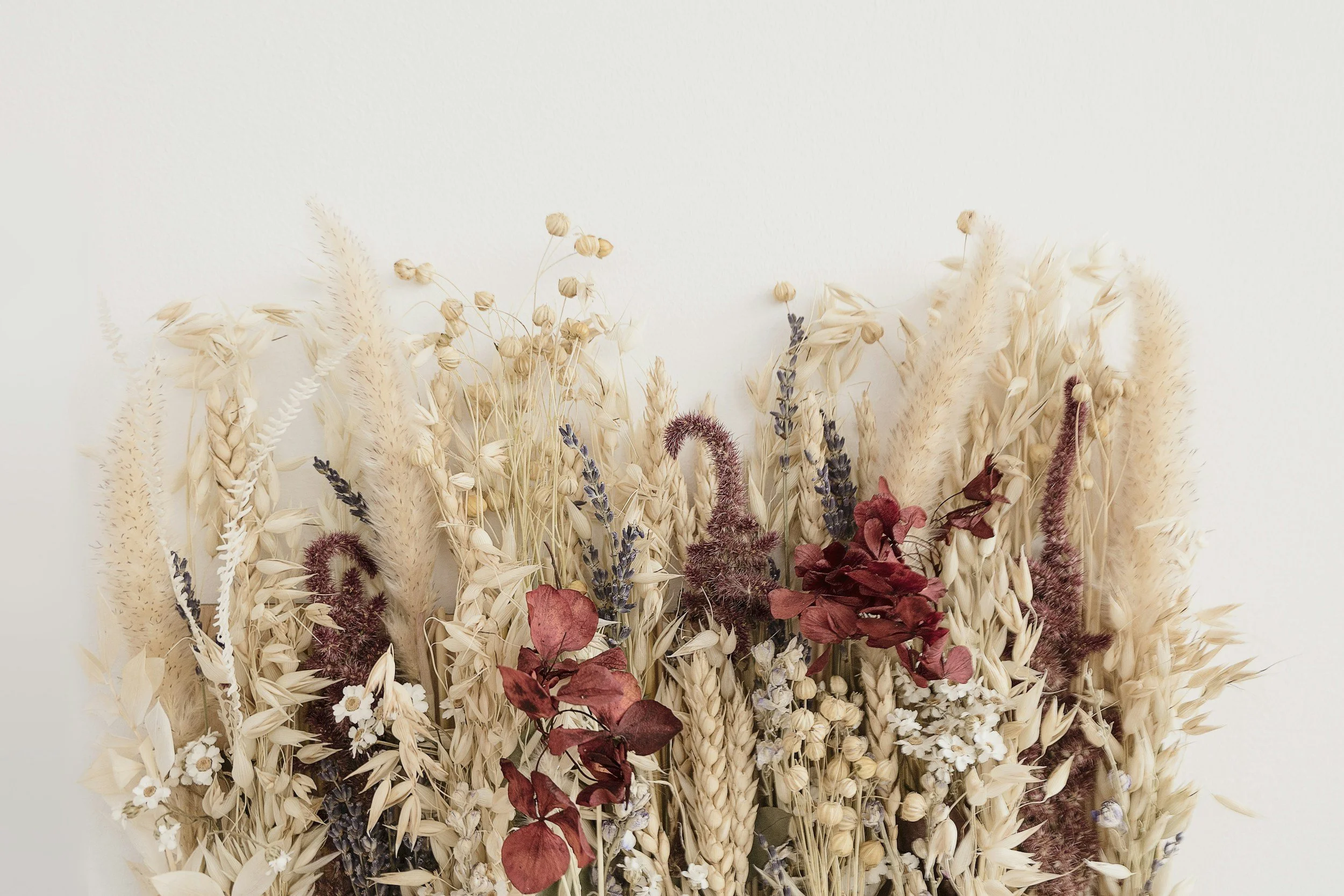
ALL FLORAL ALLIES
Flowers have accompanied humanity through nearly every threshold imaginable: birth beds, wedding aisles, funeral processions, sickrooms, shrines, battlefields, and graves. Some blooms symbolized devotion and rebirth. Others became tied to mourning, poison, seduction, death, or dangerous beauty hidden beneath soft petals.
This archive gathers floral folklore, funeral symbolism, sacred blossoms, poisonous gardens, and the old language people once spoke through bouquets and carefully chosen arrangements. Even now, flowers continue carrying messages most people no longer realize they are sending.
🜂 A
Aconite (Wolfsbane, Monkshood)
One of the most poisonous flowering plants in the Northern Hemisphere, aconite produces violet-blue flowers of deceptive beauty that have killed people who mistook it for edible plants, handled it without gloves, or consumed it deliberately. In Greek mythology it grew from the saliva of Cerberus, dragged into the upper world by Heracles — a flower literally born of the underworld's guardian. It appears in werewolf lore as a transformation trigger and in witchcraft folklore as an ingredient in flying ointments. Medieval poisoners reportedly favored it for the difficulty of detection. The flowers are lovely. The plant knows this and does not apologize.
full entry coming soon
Amaranth
The name means "unfading" in Greek, and the deep crimson flower that dries without losing its color became a natural symbol of immortality, eternal love, and the persistence of memory beyond death. It was woven into funeral crowns in ancient Greece and placed at tombs as a gesture toward the afterlife. The Aztecs used amaranth in ritual foods shaped into figures of gods — a practice the Spanish colonizers found so theologically alarming they banned its cultivation, which is a reliable indicator that something mattered enormously. Amaranth has been feeding and symbolizing human longing for permanence for at least eight thousand years.
full entry coming soon
Anemone
Wind flowers — the name comes from the Greek for wind, anemos, and the blooms open and scatter at the first strong gust, lasting days before they fall. In Greek mythology the anemone sprang from the blood of Adonis, dying where he fell, making it the flower of grief, forsaken love, and beautiful things that do not last. In some traditions it is a flower of luck and protection; in others, particularly in Chinese and Egyptian contexts, it signals coming illness or death. The Victorian floriography meaning of "forsaken" sits precisely where the mythology placed it. The flower arrived at the same meaning from two directions and settled there permanently.
full entry coming soon
Asphodel
The pale, ghostly flower of the Greek underworld — the Asphodel Meadows were the destination of ordinary souls, neither heroic enough for Elysium nor wicked enough for Tartarus, wandering forever among fields of these pale blooms. Homer places them there. Hades is described as crowned with them. The asphodel was planted on graves and offered to the dead, and its tubers were eaten by the very poor in times of famine — a flower associated simultaneously with death, the ordinary afterlife, and survival at the margins of the living world. It has never quite shed the atmosphere of the in-between.
full entry coming soon
🜃 B
Belladonna (Deadly Nightshade) — flower
The small, dull purple flowers of belladonna are easy to overlook beside the berries that have made the plant famous, but the flowers carry their own history: used in flying ointments, associated with Circe and Hecate, and named for the Renaissance Italian practice of using diluted belladonna eye drops to dilate the pupils to a size considered fashionably alluring. The name means "beautiful woman." The plant contains atropine, scopolamine, and hyoscine — compounds that at toxic doses cause hallucination, delirium, and death, and at medical doses are still used in surgery and ophthalmology today. The flower that made women beautiful and killed them if they were careless about the dosage is an apt emblem for a certain kind of story.
full entry coming soon
Black rose (symbolism)
No truly black rose exists in nature — the deepest varieties are a very dark red or purple, appearing black in certain light. The black rose as a symbol is therefore always a cultural construction: death, anarchism, the end of things, elegance in grief, and in the Irish tradition, rebellion and resistance. "The little black rose shall be red at last" is a line from a 19th-century Irish nationalist poem, the black rose a coded name for Ireland under oppression. In the Ottoman Empire, the town of Halfeti produces roses so dark they appear nearly black — used there as a symbol of both love and ill omen simultaneously, which is a useful combination for a rose.
full entry coming soon
Bleeding heart
The heart-shaped pink and white flower that droops in a perfect anatomical suggestion of a pierced heart gave rise to multiple folk legends explaining its form — most of them involving a love that ended badly, which the flower's appearance makes inevitable. In Asian traditions where it is native, the bleeding heart is associated with compassion and willing sacrifice rather than loss. The Victorian floriography meaning was "hopeless but undying love." The plant blooms in spring and vanishes entirely by midsummer, disappearing before anything else in the garden, which only reinforces the symbolism for anyone paying attention to the growing cycle.
full entry coming soon
Blossom, cherry (sakura)
The Japanese cherry blossom lasts approximately two weeks before falling, and the entire cultural weight of mono no aware — the bittersweet awareness of impermanence — concentrates in those two weeks annually. Hanami, the practice of gathering beneath blooming cherry trees to appreciate their beauty and transience, dates to at least the 8th century. The samurai adopted the falling blossom as a symbol of the noble death: beautiful, complete, and brief. The same flower symbolizes renewal, spring, and the cycle of return in other contexts. Cherry blossom is perhaps the most culturally elaborated flower in any single national tradition — a bloom that has had a philosophy built around it.
full entry coming soon
Buttercup
Held under the chin to see if the reflected yellow glow indicates a fondness for butter — this is the game most people know the buttercup for, and it is one of the oldest plant divination games in English folk tradition. Below the charming surface, the buttercup is mildly toxic to livestock and was associated in folk medicine with madness and blistering. In floriography it signaled ingratitude or childishness. The gap between the flower's cheerful appearance and its various darker associations is instructive: the prettiest flowers in the folk tradition are often the ones with the most complicated footnotes.
full entry coming soon
🜄 C
Carnation
The carnation's mythology reaches back to the Greek dianthus — flower of the gods — and its folklore runs through medieval Christian symbolism (carnations appeared in paintings of the Virgin and Child as symbols of divine love), Spanish bullfighting tradition (carnations thrown into the ring), political protest (the Carnation Revolution in Portugal, 1974, named for the flowers placed in soldiers' gun barrels by civilians), and the specific modern convention that white carnations go to living mothers and red carnations to the dead on Mother's Day — a distinction that trips up florists regularly and matters enormously to anyone who knows it.
full entry coming soon
Chrysanthemum
In China and Japan the chrysanthemum is among the most venerated flowers — a symbol of longevity, nobility, and autumn's particular kind of persisting beauty. The Japanese imperial throne is the Chrysanthemum Throne. The flower appears on the imperial seal. In China it is one of the Four Gentlemen of traditional painting, representing integrity in adversity. In most of Europe, however, the chrysanthemum is unambiguously a funeral flower — the bloom you bring to the grave, not the wedding. Bringing chrysanthemums as a hostess gift in France or Italy is a significant social miscalculation. The same flower carrying imperial honor and funeral association is an unusually wide spread for one bloom.
full entry coming soon
Clover blossom
The white and red clover blossoms that carpet fields throughout the temperate world were understood in Celtic tradition as fairy-adjacent plants — the four-leaf mutation granting the ability to see through fairy glamour, the three-leaf form echoing the sacred triplicities of Celtic cosmology. Clover blossoms were woven into May Day garlands and used in love divination: sleeping with a clover blossom under the pillow was said to produce dreams of the future beloved. In folk medicine clover blossoms treated coughs and skin complaints. The bee's relationship to clover made the blossom additionally sacred in traditions that linked bees to the soul and divine communication.
full entry coming soon
Columbine
The columbine's name derives from the Latin for dove, and its petals were said to resemble a cluster of doves gathered around a fountain — a reading that requires a certain generosity of imagination but has been maintained for centuries. In Christian symbolism the dove-shaped petals made it a symbol of the Holy Spirit. In folk tradition the columbine was associated with cuckoldry and abandoned love — a flower given as a sly insult. Shakespeare used it this way. In alchemy it was associated with melancholy. The same flower simultaneously signaling divine presence and marital humiliation across different contexts is the kind of contradiction the folk tradition was entirely comfortable sustaining.
full entry coming soon
Corpse flower (Amorphophallus titanum)
The largest unbranched inflorescence in the plant world, the corpse flower blooms for 24 to 48 hours every several years and produces a smell accurately compared to rotting flesh — an adaptation for attracting the carrion beetles and flies that pollinate it. Botanical gardens that possess one draw crowds when it blooms, the combination of rarity, spectacle, and genuine offensiveness producing a uniquely compelling event. The corpse flower has no historical folk symbolism — it was unknown to Western botany until 1878 — but it has accumulated a cultural atmosphere of fascinating wrongness that functions like symbolism: something this extraordinary and this repellent simply must mean something.
full entry coming soon
Crocus
One of the first flowers to emerge from snow, the crocus signals winter's end so early and so reliably that its appearance has marked the beginning of the growing year in temperate cultures for millennia. Saffron — the most expensive spice in the world by weight — is the dried stigma of the saffron crocus, and its harvest appears in Minoan frescoes, making it one of the oldest documented human agricultural practices. The crocus in Greek mythology sprang from the blood of the youth Crocus, killed accidentally by Hermes — another flower born from divine carelessness. The first flower of spring arriving from blood and accident is a very Greek origin story.
full entry coming soon
🜁 D
Daffodil (Narcissus)
Named for Narcissus, who fell in love with his own reflection and was transformed after his death into the flower that bends toward water — the daffodil carries mythology about the danger of self-absorption and the persistence of beauty after self-destruction. In Wales the daffodil is the national flower and considered good luck if the first one spotted in spring has its head facing the finder. In Chinese tradition a blooming narcissus at New Year brings luck. In Western floriography it signaled unrequited love or vanity depending on the giver's intent. In some English folk traditions, a single daffodil brought indoors brought bad luck; a bunch was perfectly fine. Single flowers were always more dangerous than arrangements.
full entry coming soon
Dahlia
The dahlia is native to Mexico and was a sacred and practical plant for Aztec civilization long before it became a Victorian garden obsession. The Aztecs used the hollow stems as water pipes and cultivated the tubers as food. Spanish colonizers brought it to Europe in the 18th century as a potential food crop; it failed as a vegetable and succeeded spectacularly as an ornamental flower. The dahlia's name honors Anders Dahl, a Swedish botanist who never saw one in the wild. Its Victorian floriography meaning was "dignity and elegance," then "instability," depending which Victorian source you consulted — a disagreement that reflects a tradition in the process of inventing itself.
full entry coming soon
Daisy
The daisy's folk uses are disproportionate to its modesty. "He loves me, he loves me not" is an ancient petal-counting divination practice documented across Europe and likely much older than its written records. In Norse mythology daisies were sacred to Freya as flowers of love, childbirth, and motherhood. The name in Old English was "day's eye" — the flower that opens with the sun and closes at night, tracking the light like a small faithful thing. Chaucer called it the "eye of the day." Medieval Christians associated it with the Virgin Mary. In floriography the daisy meant innocence, which is exactly what you'd expect from the flower most available to children in any meadow.
full entry coming soon
Datura (Jimsonweed, Devil's Trumpet)
The large white trumpet-shaped flowers of datura open at dusk and close at dawn, blooming on the schedule of moths and the night — which is appropriate for a plant this dangerous. All parts of datura are toxic, containing the same alkaloids as belladonna in more variable and therefore more unpredictable concentrations. It was used in initiatory rituals by indigenous peoples of the American Southwest and California, in Hindu ritual as an offering to Shiva, and in European witchcraft lore as a flying ointment ingredient. It has killed people who experimented with it recreationally in every century since its documentation. The flowers are spectacular. The plant means every word of that.
full entry coming soon
🜂 E
Edelweiss
The small white alpine flower growing only at high altitude in the European Alps became a symbol of courage and devotion because the only way to obtain one was to climb to dangerous elevations — bringing an edelweiss to a beloved was proof of genuine commitment, or recklessness, or both. In Austrian and Swiss folk tradition it was a protective charm against evil spirits and bad luck. The sentiment of "reaching impossible heights for love" attached itself to the edelweiss so completely that by the 19th century it was one of the most romanticized flowers in European folk tradition — an achievement for a small woolly alpine composite that looks, in photographs, considerably less dramatic than its mythology.
full entry coming soon
🜃 F
Floriography (overview)
The Victorian language of flowers — a system of communication through floral arrangement in which specific blooms, colors, and combinations conveyed messages that could not be spoken aloud in polite society. Floriography reached its peak in Britain and America between roughly 1820 and 1880, producing dozens of competing dictionaries whose meanings often contradicted each other, meaning that the message received was not always the message sent. The tradition drew on much older strands of flower symbolism from Persian, Ottoman, Greek, and medieval European sources, but formalized them into a social code with the particular Victorian combination of sentimentality and rigid propriety. A suitor who knew his floriography could conduct an entire courtship through carefully chosen bouquets.
full entry coming soon
Floriography — color meanings
In Victorian floriography, color often modified a flower's base meaning: red for passionate love, white for purity or innocence, yellow for friendship or — more dangerously — jealousy and infidelity, pink for admiration and gentle affection, purple for enchantment or dignity, orange for enthusiasm and desire. A red rose and a yellow rose said entirely different things, and the distinction was understood by anyone who had read the relevant guidebook — which was the problem, since the guidebooks disagreed. A yellow rose in one popular dictionary meant "jealousy"; in another it meant "friendship." The sender and the recipient were working from different editions, and no one thought to check.
full entry coming soon
Floriography — negative messages
The Victorian language of flowers was entirely capable of delivering insults, rejections, warnings, and declarations of hatred in bouquet form. Basil meant hatred in some dictionaries. Yellow carnations meant disdain. Striped carnations meant refusal. Orange lilies meant contempt. Meadowsweet meant uselessness. The withered flower meant rejected love. Sent in the right combination, a bouquet could constitute a thorough social destruction delivered to the door in a paper cone with a ribbon. Whether any of these messages were actually understood as intended at the receiving end is a separate question. Sending a basil-and-orange-lily arrangement to someone and knowing they knew exactly what you meant was its own kind of satisfaction.
full entry coming soon
Floriography — funeral flowers
Death had its own floral vocabulary in Victorian tradition, distinct from but overlapping with the living-world flower language. White lilies for the purity of the soul departed. Rosemary for remembrance — "there's rosemary, that's for remembrance" is Shakespeare three centuries before Victoria, and the tradition is older still. Forget-me-nots for exactly the plea their name makes. Cypress branches for mourning. White chrysanthemums in the European tradition. Violets for faithfulness beyond death. The funeral wreath composed according to floriography principles said specific things about who the dead had been and what the mourners felt — a last conversation conducted through flowers with someone who could no longer answer.
full entry coming soon
Floriography — love messages
The red rose for love is so thoroughly overwritten that its Victorian origins feel almost beside the point — the association predates floriography by centuries, reaching back through medieval courtly love tradition to classical antiquity, where roses were sacred to Aphrodite and Venus. What floriography added was granularity: red roses for deep love, but also the specific number of roses (one for devotion, twelve for complete love, thirteen bad luck), the stage of bloom (a rosebud for young love, a full-blown rose for beauty, a withered rose for love past). A thornless rose meant love at first sight. A rose with thorns intact meant love with caution attached — the beauty acknowledged and the risk alongside it.
full entry coming soon
Forget-me-not
The small blue flower's name is its entire symbolic program — remember me — and the folk legends attached to it are consistently about the danger of forgetting. The most common: a knight picking them beside a river was swept away by the current and threw the flowers to his beloved on the bank, crying "forget me not" as he drowned. The flower's association with remembrance, faithfulness, and the persistence of love beyond separation or death made it ubiquitous in mourning jewelry, embroidery, and cemetery planting throughout the 19th century. Henry IV of England adopted it as his personal emblem during his exile in 1398. The flower had been doing this work for a long time before Victoria made it fashionable.
full entry coming soon
Foxglove
Digitalis purpurea — the purple foxglove — produces tall spires of tubular flowers perfectly sized to fit over a small finger, which is either the origin of the name or simply a convenient coincidence the folklore seized upon. The plant's folk names include fairy fingers, fairy thimbles, and witch's gloves, connecting it firmly to the fairy tradition: a plant marked by the fae, and therefore both protected and dangerous. The same plant that caused the symptoms of "fairy stroke" (digitalis poisoning, resembling heart failure) also yielded digitalis, one of the most important heart medications in pharmacological history. The fairy plant that healed the heart was also the one that stopped it.
full entry coming soon
Funeral flowers (overview)
Flowers at funerals predate recorded history — Neanderthal burial sites in Shanidar Cave, Iraq, show pollen concentrations suggesting deliberate flower placement with the dead roughly 60,000 years ago. The practice continues in every culture that has access to flowers because flowers do what nothing else quite manages: they are alive, brief, beautiful, and they will also die, which is exactly the right thing to put beside a body. The specific flowers chosen carry meaning — white for purity, yellow for resurrection, red for the blood of sacrifice — and the traditions vary enormously while the underlying impulse does not. Something living belongs with the dead, at least for the time it takes to bloom and fall.
full entry coming soon
🜄 G
Gardenia
The gardenia's heavy white blooms and almost aggressively sweet scent made it the chosen flower of several overlapping traditions: secret love in Victorian floriography (the scent too strong to ignore, the flower too white to misread), purity and refinement in Chinese tradition, and the specific signal of availability worn in the hair by women in Hawaii and Tahiti — right side for taken, left side for available, a communication system considerably more efficient than floriography. Billie Holiday wore a gardenia in her hair so consistently it became part of her image — the sweet-scented white flower against the darkness of her voice carrying its own kind of message.
full entry coming soon
Gladiolus
Named for the Latin gladius — sword — the gladiolus grows in a vertical spike and was associated in floriography with strength of character, moral integrity, and the readiness to do what must be done regardless of personal cost. Gladioli were the flowers of gladiators by etymological association if not by documented historical practice. In South Africa the gladiolus is the flower of remembrance for those who died in war. As a funeral flower it conveys sincerity and the strength of the character being mourned. For a flower named after a weapon, it has ended up primarily in arrangements intended to console, which is a reasonable trajectory.
full entry coming soon
🜁 H
Hawthorn
The hawthorn is one of the most ambivalent trees in British and Irish folk tradition: its blossom (May blossom) heralded spring and decorated May Day celebrations, but bringing it indoors was considered deeply unlucky — a harbinger of death in the house, carrying the smell of the Great Plague according to later scientific analysis (trimethylamine, which hawthorn flowers produce in abundance, is also produced by decaying flesh). Solitary hawthorn trees standing alone in fields were fairy trees, untouchable and unbothered by farmers who would route fences and plows around them rather than disturb them. In Arthurian legend Merlin was imprisoned in a hawthorn by Nimue. The tree is a threshold: outside it blesses, inside it warns.
full entry coming soon
Heliotrope
The heliotrope turns its face to follow the sun through the day — its name from the Greek for sun-turning — and this behavior made it a natural symbol of devoted love, unwavering faithfulness, and the attachment that cannot look away from its object. In Greek mythology Clytie, a water nymph abandoned by the sun god Helios, sat on the ground watching him cross the sky until she was transformed into a heliotrope, forever following the source of her grief. The flower named for that myth was used in folk magic for attraction and invisibility spells simultaneously — the logic being that what follows the sun so faithfully might also learn how to disappear in its light.
full entry coming soon
Hellebore
The hellebore blooms in the deepest cold of winter — sometimes pushing through snow in January and February — which made it a flower of magic, mystery, and the power to survive what should be unsurvivable. It was called Christmas rose and Lenten rose for its winter flowering, and its association with the nativity gave it a gentle Christian overlay that barely covered its older, darker history. Hellebore was used in ancient Greece to treat madness, and the treatment was sometimes worse than the condition. It appears in witchcraft lore as an ingredient in preparations for invisibility and travel to the underworld. A flower that blooms when everything else is dead has earned at least some of the reputation it carries.
full entry coming soon
Hibiscus
The hibiscus's symbolic meanings shift dramatically with geography. In Korea the mugunghwa — the rose of Sharon — is the national flower, representing tenacity and the immortality of the Korean people. In Malaysia the bunga raya is the national flower, symbolizing courage and life. In Egypt and throughout the Middle East hibiscus tea (karkade) has medicinal and ritual associations stretching back centuries. In Hawaiian tradition specific hibiscus forms are sacred and worn at celebrations. In Victorian floriography it signaled delicate beauty. A flower this widely distributed across warm climates worldwide has accumulated symbolic weight in proportion to its reach — which is considerable.
full entry coming soon
Hollyhock
One of the oldest cultivated flowering plants, hollyhocks appear in ancient Egyptian tomb paintings and were grown in medieval cottage gardens primarily for their medicinal properties before becoming the cottage garden ornamental most associated with a specifically English domestic ideal. In folk tradition hollyhocks were planted beside cottage doors for protection and to mark the home as inhabited by those who knew their plants. The Crusaders supposedly brought them from the Holy Land — "holy" in the name has been traced to "holy mallow" through various disputed etymologies. The hollyhock's association with an idealized English rural past is powerful enough that the actual plant has become somewhat secondary to the image it carries.
full entry coming soon
Hyacinth
In Greek mythology the hyacinth sprang from the blood of the youth Hyacinthus, accidentally killed by a discus thrown by Apollo — the letters AI AI (a Greek cry of grief) visible in the markings on the petals if you look in the right light with sufficient willingness to see them. The flower is therefore both a product of grief and a permanent memorial to it, the god's love and guilt inscribed into the bloom itself. In floriography the hyacinth conveyed sport or play (the discus again), constancy, or sorrow depending on color: purple for sorrow, blue for constancy, white for loveliness, yellow for jealousy. The mythology and the Victorian code were working with the same raw material and producing slightly different results.
full entry coming soon
🜂 I
Iris
Named for the goddess of the rainbow — the messenger who carried communications between the gods and the dead across the bridge of colored light — the iris was planted on women's graves in ancient Greece so the goddess could guide them to the Elysian Fields. The fleur-de-lis of French royal heraldry is a stylized iris, adopted by Clovis I in the 5th century and carried through the French monarchy as a symbol of divine right and royal purity. In Egyptian tradition the iris was a symbol of eloquence and was placed at the brow of the Sphinx. The flower named for a divine messenger became, across cultures, a symbol for the reliability of communication between worlds — which is either a very heavy responsibility for a garden plant or an entirely appropriate one.
full entry coming soon
🜃 J
Jasmine
The small white flowers of jasmine produce a fragrance disproportionate to their size — sweet, rich, and slightly narcotic at high concentrations, which is why jasmine has been used in perfumery, in ritual, and in seduction across Asia, the Middle East, and the Mediterranean for thousands of years. In South and Southeast Asia jasmine garlands are offered to deities and worn by brides. In Persia jasmine was associated with love and prophetic dreams. The night-blooming jasmine intensifies its scent after dark, making it a flower of secrets and the kind of beauty that operates in the dark rather than the light. In floriography jasmine meant amiability, grace, and attachment — polite meanings for a flower with considerably more atmosphere than that.
full entry coming soon
🜄 K
[no entries]
🜁 L
Lily (white)
The white lily's association with purity, death, and the divine is so old and so consistent across cultures that it has become almost too obvious to examine — and therefore worth examining carefully. In Christian tradition the white lily is the Annunciation flower, present in countless paintings of the angel Gabriel appearing to Mary. In ancient Greece it was associated with Hera and with the milk that fell from her breast, creating the Milky Way and, some myths hold, the lily simultaneously. As a funeral flower the white lily signals the restored innocence of the soul departed. Victorian floriography gave it purity and majesty. The lily that appears at both the birth announcement and the funeral has understood something important about the shape of a life.
full entry coming soon
Lily of the valley
The tiny bell-shaped flowers of lily of the valley are among the most beloved in the European floral tradition and among the most toxic — all parts of the plant contain cardiac glycosides that can cause heart failure. In Christian legend the lily of the valley sprang from the tears of the Virgin Mary at the Crucifixion, or from the blood of St. Leonard shed fighting a dragon, depending on which tradition you consult. It is called "Our Lady's tears" in some regions. In floriography it meant the return of happiness. In folk magic it was used in love spells and placed in bridal bouquets for luck — the bride carrying a flower that means happiness is returning and is also quietly lethal if anyone eats it.
full entry coming soon
Lotus
The lotus rises from mud and murky water to open a perfect flower on the surface, which made it the natural symbol of spiritual emergence, enlightenment, purity, and the possibility of transcendence without denying the material world that sustains it. In Egyptian religion the lotus was the flower from which the sun god Ra emerged at the beginning of creation. In Hindu and Buddhist tradition it is the flower of the divine, the seat on which gods sit, the symbol of the enlightened mind rising above ordinary existence. Blue lotus was used in ancient Egypt for its mild psychoactive properties in religious contexts. The same flower that symbolizes transcendence was, in practice, a mild intoxicant used in temple ritual — which is a remarkably honest combination.
full entry coming soon
🜂 M
Marigold
The marigold is simultaneously a flower of the sun, a flower of the dead, and a flower of the Virgin Mary — three identities that coexist without apparent contradiction across the traditions that hold them. In Mexico the cempasúchil — the marigold — guides the spirits of the dead home on Día de los Muertos with its bright color and strong scent, the petals scattered in paths from grave to altar. In India marigold garlands are ubiquitous at festivals and weddings, offerings to gods and decorations for celebration. Medieval Europeans called it "Mary's gold" and used it to honor the Virgin. A flower this willing to work across the boundary between the living and the dead is genuinely useful, which may be why it keeps being chosen.
full entry coming soon
Moonflower
A relative of the morning glory, the moonflower blooms only at night, opening in the evening and closing at dawn — large, white, intensely fragrant, and visible in darkness in a way that daylight flowers are not. Its entire existence is structured around the hours when most flowers are closed, which gave it obvious associations with the moon, with dreams, with the nocturnal world, and with the kind of beauty that only certain people ever see because most people are asleep when it is available. In folk magic it is associated with lunar workings, divination, and dreamwork. In gardens it is planted for the specific pleasure of sitting outside in summer darkness and watching something open.
full entry coming soon
🜃 N
Night-blooming cereus
The night-blooming cereus flowers once a year, for a single night, producing an enormous white bloom of extraordinary beauty that is completely withered by morning. People who grow them host parties to watch the event; they set alarms to not miss it. The flower has no particular folk tradition because it was only introduced to cultivation relatively recently, but it has accumulated a contemporary symbolic weight around the themes of rare beauty, the importance of presence, and the specific sorrow of missing something unrepeatable because you weren't paying attention. It is the flower most likely to appear in a contemporary meditation on impermanence written by someone who has never heard of the cherry blossom tradition.
full entry coming soon
🜄 O
Orchid
The name orchid derives from the Greek orchis — testicle — referring to the shape of the root tubers, which led directly to the doctrine of signatures: if a plant resembles a body part, it affects that body part, and orchid roots were accordingly used in love potions and fertility preparations across Mediterranean and Near Eastern traditions. Orchid tubers ground into the drink called salep were the primary warming beverage of the Ottoman Empire before coffee and were sold on the streets of 19th-century London. Victorian orchid hunters traveled to jungles and died there; orchid fever was a recognized social phenomenon. In floriography the orchid meant luxury and rare beauty — which was accurate, since at the time owning one required either extraordinary luck or extraordinary money.
full entry coming soon
🜁 P
Pansy
From the French pensée — thought — the pansy was the flower of memory, meditation, and the kind of love that operates at a distance through sustained attention. Shakespeare used it in A Midsummer Night's Dream as the source of the love potion that creates desire for whoever is seen upon waking — the flower of thought made into the flower of enchanted vision. In floriography the pansy meant "you occupy my thoughts," a sentiment that could be tender or alarming depending on the sender. Victorian mourning wreaths used pansies alongside forget-me-nots; together they said: I remember you and I am thinking of you still. The flower named for thought placed at a grave is one of the tidier symbolic choices in the floral tradition.
full entry coming soon
Peony
In Chinese culture the peony is the "king of flowers" — associated with nobility, prosperity, good fortune, and female beauty in a tradition stretching back to the Tang dynasty and still fully operative. In Western tradition the peony is named for Paeon, the physician of the gods, who used the plant to heal Pluto after Heracles wounded him — a flower born from divine medicine, later used in European folk medicine for epilepsy, gout, and nightmares. Victorian floriography gave the peony a less heroic meaning: bashfulness, or shame. The cultural distance between "king of flowers associated with imperial prosperity" and "bashfulness" represents the full range of what floriography was capable of getting wrong.
full entry coming soon
Periwinkle
The small blue-violet flower of the periwinkle vine was called "sorcerer's violet" in medieval Europe — woven into garlands for condemned prisoners on their way to execution and placed on the graves of infants in Wales where it was called "the flower of death." It was also used in love magic, woven into garlands to strengthen romantic bonds, and prescribed in folk medicine for headaches and memory. The same plant doing execution garlands, infant grave flowers, and love charms is using the full range of what a small blue flower can be called upon to do. The periwinkle's association with memory and endurance — it is nearly unkillable once established — threaded through all of its uses without quite resolving the tension between them.
full entry coming soon
Poisonous flowers (overview)
The most beautiful flowers in the European garden tradition — foxglove, lily of the valley, aconite, datura, oleander, belladonna, daffodil, autumn crocus — are among the most toxic plants available to a moderately attentive gardener. This is not coincidence; it is evolution. Toxicity is a defense, and flowers that are left alone by browsing animals survive long enough to reproduce, which selects for both beauty (to attract pollinators) and poison (to deter everything else). The folk tradition's association of dangerous beauty with specific flowers was therefore an accurate observation. The warning embedded in the story of the beautiful flower that kills is not merely moral — it is botanical.
full entry coming soon
Poppy
Poppies have meant sleep, death, remembrance, and the dangerous mercy of oblivion since ancient Greece, where they were sacred to Hypnos (sleep) and Thanatos (death) simultaneously. Demeter was given poppies to ease her grief for Persephone — sleep as the only available anesthesia for what cannot be healed. The opium poppy has been cultivated for its narcotic properties for at least five thousand years, making it one of the oldest human pharmaceutical relationships. The red poppy of Flanders fields became the symbol of World War One remembrance after John McCrae's poem, choosing as the memorial flower one already ancient in its association with the sleep of the dead. The choice was not accidental. The tradition knew what it was doing.
full entry coming soon
Primrose
The pale-yellow primrose is one of the first flowers of spring in the British Isles and carries all the symbolism of that timing: new beginning, the world returning, the confirmation that winter has been survived. In Irish tradition primroses scattered on the doorstep at Beltane prevented fairies from entering the house — the spring flower as a specific protective measure at the season's most liminal moment. In Welsh tradition primroses were fairy flowers, and treading on a primrose patch could make you visible to — and at the mercy of — the fairy world. The flower of spring's return simultaneously welcomed the season and warned you to handle it carefully.
full entry coming soon
🜂 Q
[no entries]
🜃 R
Rose (general symbolism)
The rose is the most symbolically elaborated flower in the Western tradition and one of the most ancient in cultivation — archaeological evidence of rose cultivation dates to China five thousand years ago, and roses appear in the oldest surviving love poetry. Sacred to Aphrodite and Venus, adopted by the Virgin Mary as the "mystical rose," used as the symbol of secret speech in Roman tradition (sub rosa — "under the rose" — meaning in confidence, because roses hung above meeting tables indicated that what was said there was not to be repeated), present at weddings and funerals and battles with equal ease — the rose has done more symbolic work than any flower should be asked to sustain, and has sustained it without apparent strain.
full entry coming soon
Rose, wild
The wild rose — single-petaled, thorned, blooming briefly in hedgerows — carries a different symbolic charge than its cultivated counterparts. In European folk tradition wild roses were protective: planted on graves to prevent the dead from wandering, placed at thresholds to bar the passage of vampires and harmful spirits, woven into protective garlands. The thorns mattered as much as the flower — wild rose was a barrier plant as well as a beautiful one. In fairy tales the rose hedge that grows around the sleeping princess, impenetrable to all suitors but the right one, draws on this protective tradition. The wild rose guards what sleeps inside it. That is a different job than the one the cultivated rose is asked to do.
full entry coming soon
🜄 S
Sacred flowers (cross-cultural overview)
Every major religious tradition has flowers it treats as sacred — set apart from ordinary botanical existence by their association with the divine, the dead, or the ceremonial. The lotus for Buddhism and Hinduism, the chrysanthemum for Japanese imperial and Buddhist tradition, the marigold for Hinduism and Mexican folk Catholicism, the lily for Christianity, the narcissus for Islam (referenced in the hadith as a flower of paradise), the white chrysanthemum for Japanese Shinto ritual. The category of the sacred flower is universal; the specific flowers differ according to climate, geography, and the accidental availability of what was growing when a tradition needed something to elevate.
full entry coming soon
Snowdrop
The snowdrop flowers in January and February, pushing through frozen ground as one of the first signs that the year has turned — which gave it associations with hope, purity, and the consolation of return. In Christian tradition it was connected to Candlemas (February 2nd), when the church was decorated with snowdrops in place of the summer flowers that were not yet available. In the folk tradition of some regions it was deeply unlucky to bring a single snowdrop indoors — it looked too much like a shrouded corpse, and a single white flower in a house signified the death of someone in it before the year was out. A bunch was perfectly acceptable. The snowdrop's symbolic status teetered precisely on this razor between hope and death, and never quite fell to either side.
full entry coming soon
Sunflower
The sunflower follows the sun — or appears to, through a process called heliotropism that actually stops once the plant matures and the stem stops growing, leaving the flower permanently facing east. The folk tradition never noticed the flower had stopped moving, which is understandable: it was always facing the same direction, which is consistent with devotion regardless of the mechanism. Native to the Americas, the sunflower was a sacred crop plant for multiple indigenous cultures and was associated with solar deities across Mesoamerica. In Victorian floriography it meant haughtiness or false riches — which is an ungenerous reading of a flower most people find straightforwardly cheerful, and reflects the floriography tradition at its most contrarian.
full entry coming soon
🜁 T
Thistle
The thistle is the national emblem of Scotland, and the legend attached to it is satisfyingly practical: a Norse raiding party, attempting to approach a Scottish camp silently under cover of darkness, encountered a field of thistles that caused one soldier to cry out in pain, alerting the Scots and allowing them to repel the attack. The thistle that protected the camp became the symbol of protective prickliness — the beautiful thing that defends by being painful to approach. The Order of the Thistle is Scotland's highest chivalric honor. Few national flowers are chosen for the quality of being genuinely unpleasant to encounter, which makes Scotland's choice more honest than most.
full entry coming soon
Tulip
The tulip caused the first recorded speculative financial bubble — Tulip Mania in the Dutch Golden Age of the 1630s, when single tulip bulbs sold for the price of a house and the market for them collapsed catastrophically in 1637. Before this economic misadventure, tulips were Persian flowers of perfect love, cultivated in Ottoman gardens and depicted in Islamic art as symbols of paradise. The craze for them in Europe reflected not only the flower's beauty but the specific excitement of a new and rare thing arriving from an unfamiliar world. In floriography the red tulip declared love and the yellow tulip declared hopeless love — the same flower, different colors, entirely different messages, which is the floriography system working exactly as intended.
full entry coming soon
🜂 U
[no entries]
🜃 V
Violet
Napoleon reportedly loved violets enough that they became the covert symbol of his supporters — the nickname "Corporal Violet" circulated among Bonapartists, and violets were brought to his grave in such quantities that the plants were reported growing from the soil above him the following spring. Before this political chapter, violets were the flowers of Athens, associated with the city the way the rose is now associated with romance. They were scattered on graves in Roman tradition. Josephine wore them. In floriography the violet meant faithfulness and modesty — the small flower, the low-growing plant, the scent that disappears and then returns. "I return with the spring" is the symbolic message of a flower that reappears reliably, exactly where you planted it, every year.
full entry coming soon
🜄 W
Water lily
The water lily rises from the mud of ponds and still water to float on the surface and bloom toward the sky — the same journey as the lotus, in a different climate. Where the lotus is the sacred flower of warm climates, the water lily held similar symbolic weight in colder regions: the ancient Egyptians used both; the Maya sacred water lily was as central to their cosmology as the lotus was to Hindu and Buddhist traditions. Monet's late paintings of water lilies, created as his eyesight failed, are among the most recognized images in Western art — a specific merging of the flower's symbolic qualities with the theme of perception, beauty, and what the eye insists on seeing even as it dims.
full entry coming soon
Wisteria
The wisteria grows slowly for years, appearing to do nothing, and then flowers with such abundance that it can collapse the structure it was given to climb — a plant that rewards patience and then punishes it in the same season. In Japan wisteria (fuji) is associated with gentle endurance, longing, and the particular beauty of something that takes time. The Wisteria Festival at Ashikaga is held when the century-old vines are in bloom. In Western garden tradition wisteria is simultaneously beloved and feared: the romantic cascades of purple flowers and the root system quietly dismantling the pergola beneath them. The symbolism practically writes itself — beauty that takes decades to develop and then becomes something you cannot control.
full entry coming soon
🜁 X
[no entries]
🜂 Y
Yarrow blossom
Yarrow is primarily documented in the Dried Herbs section for its extensive medicinal and magical history, but its flat-topped white flower clusters carry their own symbolism worth noting here: yarrow blossoms were used in love divination across British and European folk tradition, tucked under pillows to dream of a future spouse, held to the face while reciting charms to make the face appear to a beloved far away. The flower that stops bleeding in wound medicine was also the flower called upon to make the heart bleed a little — to create longing, reveal love, or confirm fidelity. Yarrow was trusted with the body's most urgent needs, which is why it was also trusted with the hearts.
full entry coming soon
🜃 Z
Zinnia
The zinnia's Victorian floriography meaning was "thinking of absent friends" — a meaning that derived from the flower's long blooming period and its tendency to remain vivid and present in the garden long after other summer flowers have faded. The zinnia stays. In an era when absence was genuinely dangerous — when letters took weeks, when people left for other continents and were simply not heard from — a flower that meant "I am thinking of someone not here" was doing real emotional work. NASA grew zinnias on the International Space Station as the first flowering plants cultivated in space, where they bloomed reluctantly, required significant intervention, and eventually produced one usable orange flower that an astronaut photographed and then, apparently, ate. The zinnia stays, even in orbit.
full entry coming soon
Submit to the Archive
If you would like to suggest a topic or share a lead worth investigating, submit it to us for review. Click Here