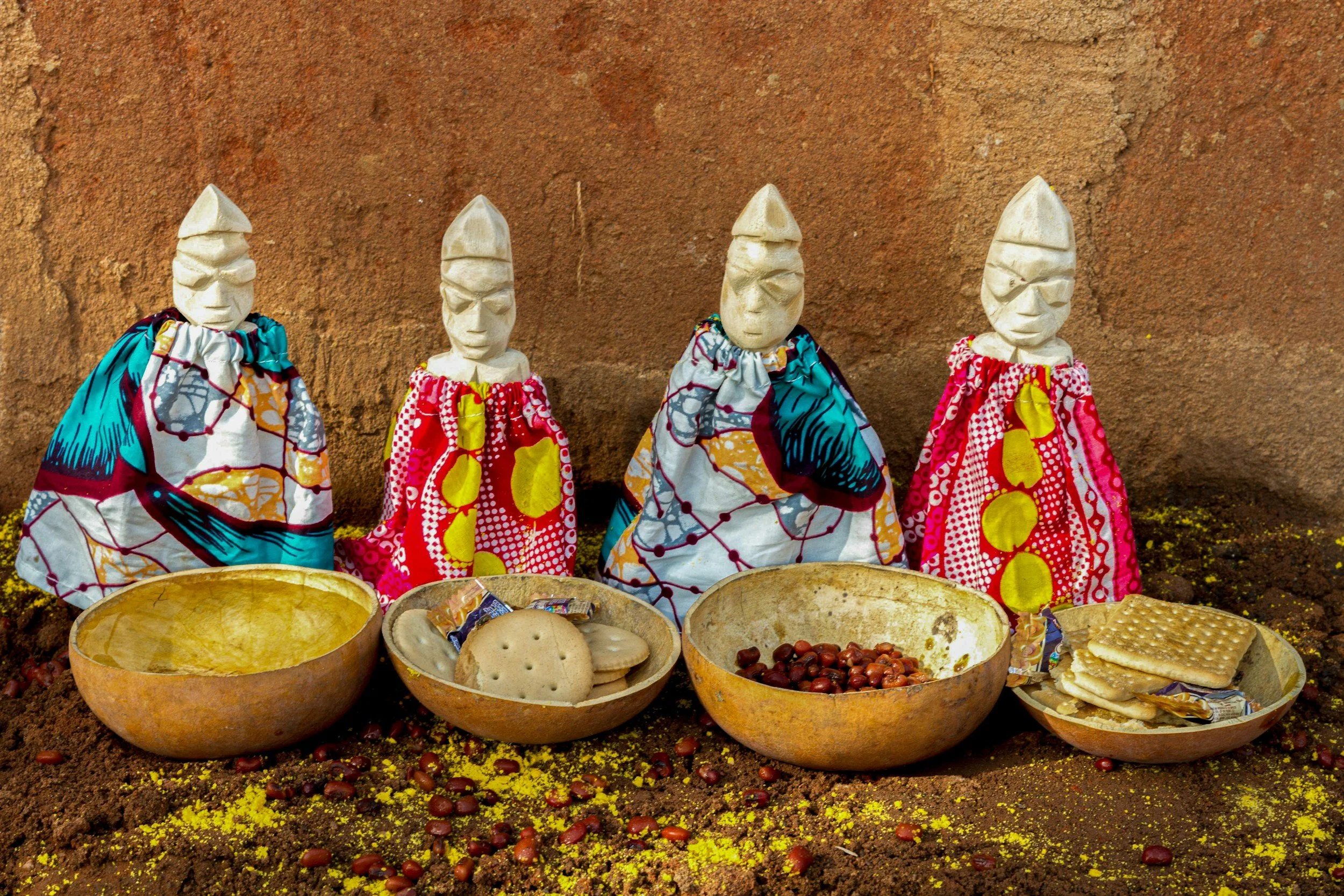
Vodou Tradition
A syncretic, living religion rooted in West African traditions and shaped by the history of Haiti. Vodou centers on community, ancestral reverence, and reciprocal relationships with the lwa—often misunderstood, yet deeply structured and sacred.
Introduction
Vodou is a living Afro-Caribbean religion that emerged in Haiti through the meeting of West and Central African spiritual systems—particularly from the Fon and Yoruba peoples—with elements of Catholicism and Indigenous Caribbean influence. At its center is the relationship between humanity and the lwa (spirits), who serve as intermediaries between the distant creator, Bondye, and the living community. Ritual in Vodou involves drumming, song, dance, offerings, and sometimes spirit possession, through which the lwa temporarily “mount” devotees to communicate, heal, or guide. Far from the sensationalized portrayals in popular culture, Vodou is a deeply structured, communal religion grounded in ancestral reverence, moral responsibility, and reciprocal exchange between visible and invisible worlds. It remains an active, practiced tradition, particularly in Haiti and throughout the Haitian diaspora, emphasizing continuity, resilience, and sacred relationship.
Vodou is a spirit-centered religion blending African roots, Catholic saints, and ritual possession. From Haiti’s revolutionary ceremonies to New Orleans’ Vodou queens, it thrives through drumming, offerings, and communion with the loa. Discover how this misunderstood tradition endures as a living dialogue with spirits, ancestors, and the mysteries at the crossroads.