The Devil's Apprentice
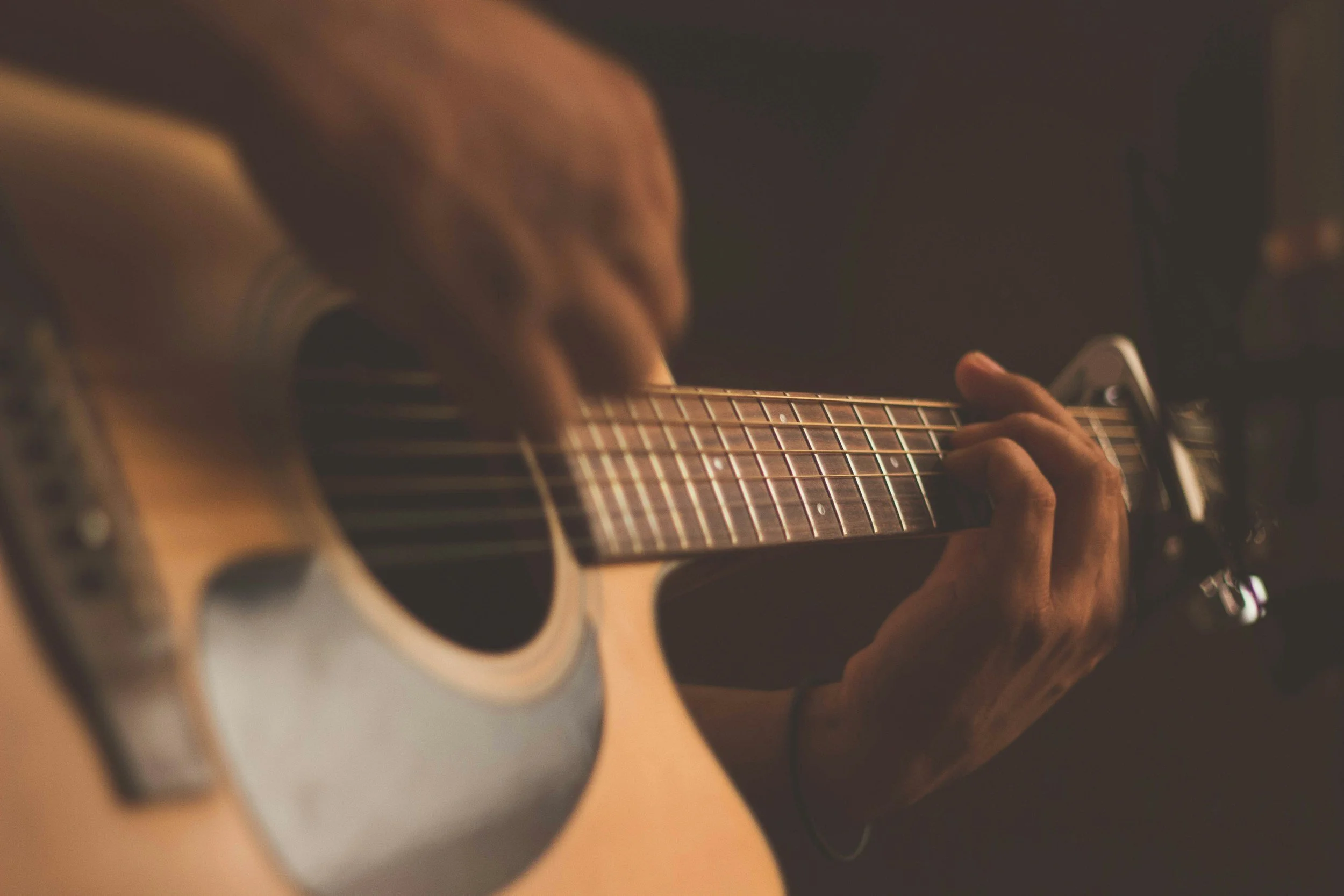
The Delta breathes at night.
Most people don't know that — the ones who come down here with their cameras and their curiosity, looking for something they read about in a book. They don't know that the land itself is alive in the dark, that the cotton fields exhale something warm and sour like the mouth of a beast, that the ditches hum with water that has nowhere left to go. You have to be born here to understand it. You have to be broke here. You have to be owned here — or at least come from people who were — to understand what the soil is actually made of.
I was born in the Delta and I was going to die in it. That was the understanding. That was the agreement the land had made with my blood before I could speak.
I was not a good guitar player.
That is the honest truth I have to start with, because none of the rest of it makes sense without that admission. I could hold a chord. I could find a note if I went looking for it long enough. But there are men I watched as a boy — old men, mostly, with broken-knuckle hands and eyes that had seen too much — who could make a guitar sound like it was weeping for you personally. Like it had been waiting its whole life in that hollow wooden body to grieve something specific to you. I was not one of those men. I sat at their feet and tried to learn and I couldn't get close enough to even see what I was reaching for.
I wanted it more than anything I had ever wanted. That's the thing about wanting — it doesn't guarantee anything. It just eats you.
I left. I went north for a while, came back south. I married once and it ended in the worst way a thing can end. I drank and I wandered and I played badly in corners of juke joints where no one was listening, and I felt the years moving through me like a current that had somewhere else to be.
There are stories told in those places — the low, lamp-lit places where men drink corn liquor and talk low because the walls have ears and the night outside has eyes. Stories about power that doesn't come from practice. About men who woke up one morning and could play — not well, not better than before, but transformed. Transfigured. As if someone had reached inside their hands and rewired the bones.
The stories always named a price.
I listened to those stories the way a hungry man watches someone else eat. With a particular quality of attention that has nothing to do with belief and everything to do with desperation.
It was a woman who first told me how it was done.
She was old in the way that some women in the Delta are old — not fragile, not slow, but deep. Like a well. She read palms and cards and the direction smoke curled from incense she burned in a coffee can, and she looked at me one afternoon when I was sitting on her porch and she said, You want something you can't get by wanting.
I told her what I wanted.
She was quiet for a long time. Then she told me about the crossroads.
Not any crossroads. The right kind. Two dirt roads meeting in the flat dark, nowhere near a town, nowhere near a light. And you had to go at midnight — not because midnight is symbolic but because midnight is liminal, she said, a threshold time, and what I was looking for lived in thresholds. In the between places. In the space that belongs to neither side.
She told me to bring my guitar.
She told me not to be afraid, and then she paused, and she said, Actually. Be afraid. It's more honest.
I am not going to tell you I wasn't scared.
The road I chose was south of Dockery, flat as a board, the fields on either side black and barely visible under a sky that had clouded over so completely I couldn't see the moon. I walked out from where I'd parked myself and I walked until the two roads crossed and I stood there and I was shaking so badly I had to grip the neck of the guitar to keep my hands still.
I waited.
And I will tell you that what I felt first was not supernatural. It was ordinary humiliation. Standing alone in the dark like a fool, holding a cheap guitar, asking for something no man should ask for. I felt small. I felt like all the things people had said about me — that I was talented for nothing, built for nothing, going nowhere — were confirmed and witnessed and written down somewhere permanent.
Then the air changed.
I cannot describe it the way it actually was, because the language I have is for things that can be described. It wasn't a figure in the road. It wasn't a voice from the dark. It was more like — a pressure. A sense of something immensely patient turning its attention toward you. The way a great weight, balanced for a long time, finally tips.
I felt it in my teeth first. Then in the pit of my stomach.
What do you want?
The question didn't come from outside me. That's the part no one understands when they hear the stories. It came from inside, from somewhere beneath the wanting, and it had a quality that was not mine. A register I had never used. Like a voice that had borrowed my throat.
I said: I want to play. I want to play like it means something.
The pressure deepened. I felt my hands on the guitar without deciding to move them.
Play.
I played.
And I cannot tell you what happened except that something in me that had been locked since birth — some door I had been standing outside of my entire life, pressing my ear against — opened.
Not slowly. All at once.
The notes I played that night were not notes I knew. My left hand found shapes on the neck that I had never practiced, chord positions that shouldn't have been comfortable, slides and hammers that arrived whole and completed without my thinking them through. My right hand moved in a pattern that was almost a rhythm but kept escaping rhythm, kept falling into something more complex, something that had the feel of a conversation between two people who have known each other long enough to finish each other's sentences.
I played until I was crying.
I didn't notice I was crying until it was over.
The pressure lifted like a hand lifting from the back of your neck.
The air was just air again. The fields were just fields. I was standing alone at a crossroads in the Mississippi Delta at midnight with a guitar and wet cheeks and hands that felt — different. Not different in the way a tool feels different after you've used it correctly for the first time. Different in the way a key feels different after you've found the lock it was made for.
I walked back to where I'd left my things and I lay down and I did not sleep.
I will not tell you what I gave.
Every man who stands at a crossroads and asks for something gives something, and what I gave is between me and what I met that night. I will say only that I knew it immediately. Not at the crossroads — after. In the months that followed, in the particular way things began to go. The woman who had sent me told me, when I came back to tell her what happened, that the payment is never made in one lump sum. It is collected slowly, in a currency you don't always recognize until after the transaction.
She looked at me with something that was not quite pity and not quite awe.
You got what you went for, she said.
I did.
The music that came out of me after that night was not like anything I had made before. It was not pretty — I want to be clear about that. The people who heard it did not feel comforted. They felt found. Like the song had reached into some drawer inside them that they kept locked and pulled out something they had put away and said: I know about this. I know what this is.
I wrote songs about the road because I was always on it. I wrote about women because I loved them and lost them with a consistency that started to feel like skill. I wrote about whiskey and rambling and the particular sorrow of being someone the world didn't quite have a place for, and I wrote about the crossroads, and I wrote — obliquely, carefully, in the sideways language of a man who knows what he's said a said — about what it costs to want something badly enough to go looking for it in the dark.
I recorded some of it. Twenty-nine songs, give or take, pressed into shellac in hotel rooms and warehouses, captured by men with equipment and clipboards who were looking for something they could sell.
I did not live to see what those songs became.
I died in 1938.
I was twenty-seven years old, which will mean something to people who pay attention to that particular number and what it does to musicians. I died in Greenwood, Mississippi, on a night in August, under circumstances that have never been fully settled. The most popular story involves a poisoned whiskey and a jealous husband. It might be true. It might not be the whole truth.
The woman from the porch — long dead by the time anyone wrote this down — might have said that the currency I mentioned, the payment that comes in pieces over time, had simply come due.
I leave it to you to decide what you believe.
What I know is this:
I stood at a crossroads in the dark and I asked for something, and I received it, and the music I made with what I received has outlived me by nearly a century. It has been studied, copied, worshipped. Men who were not born when I played have broken their hands trying to learn what my hands knew. Scholars have written books trying to explain where it came from.
The crossroads are still there. The Delta still breathes at night. The between-places are still full of old and patient things that will make you an offer if you show up at the right hour with the right want and the right willingness to pay.
I was not the first man to go.
I will not be the last.
My name was Robert Johnson.
And I sold my soul at the crossroads, and I would do it again.
Robert Johnson (May 8, 1911 – August 16, 1938) recorded 29 songs between 1936 and 1937. He is considered the father of modern blues. Three of his recordings — "Cross Road Blues," "Me and the Devil Blues," and "Hellhound on My Trail" — gave rise to the legend that he made a deal with the devil at a Mississippi crossroads in exchange for his extraordinary guitar skill. He died at 27 under mysterious circumstances. His influence on rock and roll, and on virtually every form of American popular music that followed, is immeasurable.