Taoist Folk Tradition
Blending philosophy, ritual, ancestor veneration, and local spirit practice, Taoist folk religion reflects a cosmology of balance—yin and yang, order and flow. It exists both in temples and in household shrines.
Introduction
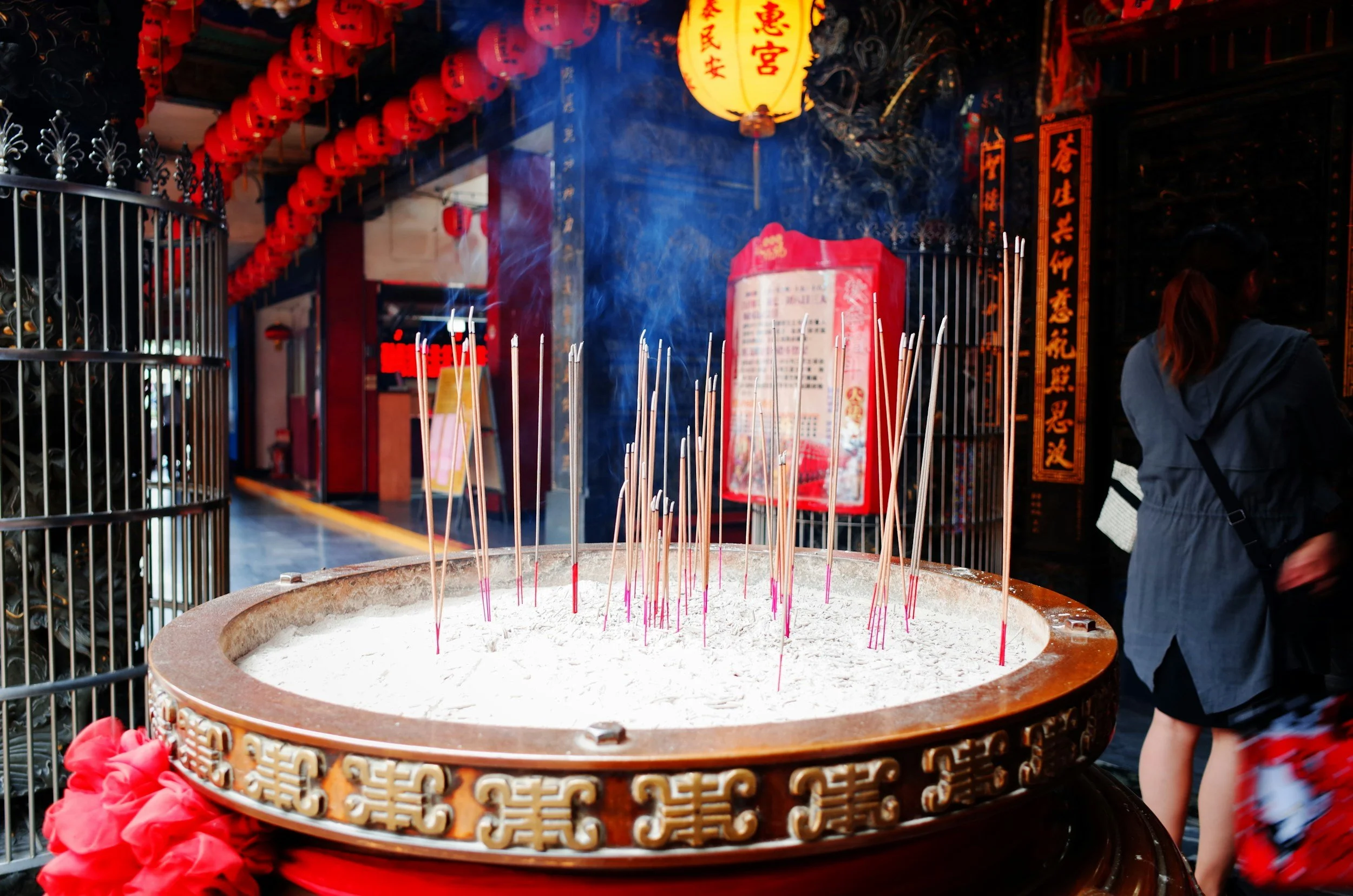
Taoist Folk Religion refers to the lived, devotional expression of Taoism as practiced in households, temples, and local communities across China and the Chinese diaspora. While philosophical Taoism explores harmony with the Dao—the underlying way or pattern of the cosmos—folk Taoist practice engages with a vast pantheon of deities, immortals, ancestors, and local spirits. Ritual offerings, incense, divination, talismans, festivals, and temple ceremonies form the backbone of daily devotion. Ancestor veneration and the maintenance of balance between yin and yang are central themes. Rather than a single uniform system, Taoist folk religion is fluid and regionally varied, blending cosmology, ethics, ritual technology, and community life into a continuous relationship with heaven, earth, and the unseen order that binds them.
Taoist folk religion is China’s living bridge between heaven and earth, blending animism, ancestor worship, and celestial deities into daily life. From the Jade Emperor’s heavenly court to village earth gods and ancestral shrines, discover how rituals of harmony and protection keep this ancient spiritual current alive in modern China.