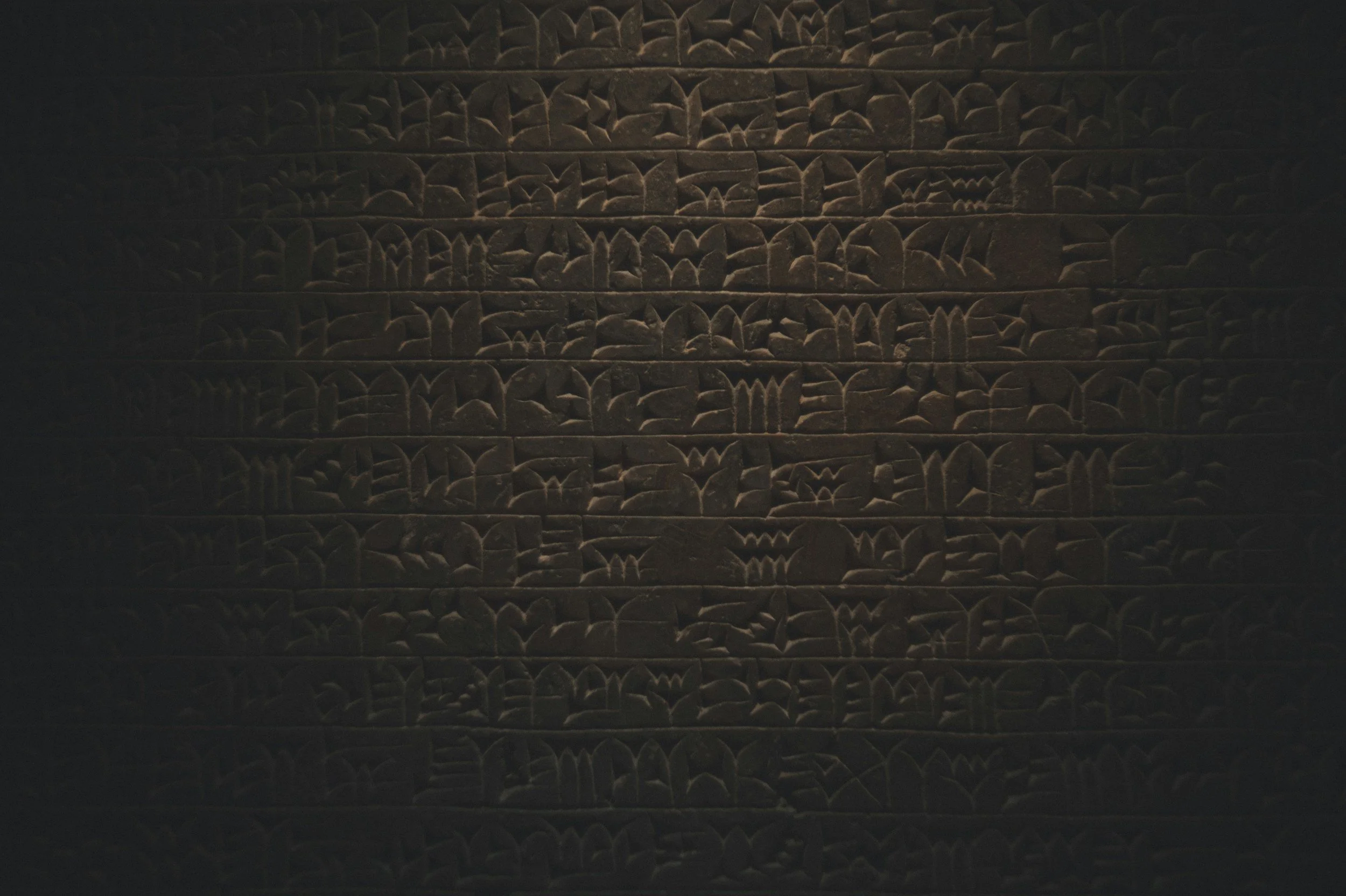
Sumerian Pantheon
Among the earliest recorded gods in human history, the Sumerian deities governed city-states, storms, love, and the underworld. Their myths echo through later Mesopotamian traditions, forming a foundation for much of ancient Near Eastern cosmology.
Deities
🜂 An (Anu)
Domain: Sky, supreme authority
Symbols: Horned crown, celestial imagery
Realm: Highest heaven
Key Associations: Divine kingship
An is the sky god and symbolic head of the divine assembly. Though less active in surviving myths, he represents ultimate authority.
🜂 Enlil
Domain: Air, wind, storms, kingship
Symbols: Storm imagery, horned cap
Realm: Earth and atmosphere
Key Associations: Divine decree
Enlil is a powerful storm and air god who shapes destinies and governs earthly order.
🜂 Enki (Ea)
Domain: Freshwater, wisdom, creation, magic
Symbols: Flowing water streams, goat-fish
Realm: Abzu (freshwater abyss)
Key Associations: Human protector
Enki is associated with intelligence and creative intervention. He often aids humanity, including warning of the flood.
🜂 Inanna
Domain: Love, war, political power, fertility
Symbols: Eight-pointed star, lion
Realm: Heaven and earth
Key Associations: Descent to the underworld
Inanna is a complex and assertive goddess whose descent into the underworld is one of the earliest recorded mythic journeys.
🜂 Nanna (Sin)
Domain: Moon, timekeeping
Symbols: Crescent moon
Realm: Sky
Key Associations: Cycles and order
Nanna governs lunar cycles and is associated with measurement of time.
🜂 Utu (Shamash)
Domain: Sun, justice
Symbols: Solar disk
Realm: Sky
Key Associations: Moral oversight
Utu sees all from his solar vantage and is associated with truth and fairness.
🜂 Ereshkigal
Domain: Underworld
Symbols: Throne, darkness
Realm: Kur (land of the dead)
Key Associations: Sovereignty of death
Ereshkigal rules the underworld and presides over its fixed and shadowed realm.
🜂 Dumuzi (Tammuz)
Domain: Shepherding, fertility
Symbols: Pastoral imagery
Realm: Seasonal cycle
Key Associations: Death and return motif
Dumuzi is associated with agricultural cycles and appears in myths involving seasonal loss and renewal.
🜂 Ninurta
Domain: War, agriculture, hunting
Symbols: Bow, mace
Realm: Earth
Key Associations: Heroic conquest
Ninurta is a warrior god who defeats monstrous adversaries and restores order.
🜂 Ninhursag
Domain: Earth, fertility, mountains
Symbols: Mountain imagery
Realm: Land
Key Associations: Motherhood
Ninhursag is an earth mother figure associated with creation and fertility.
🜂 Nisaba
Domain: Writing, grain
Symbols: Stylus, tablet
Realm: Learning and agriculture
Key Associations: Record-keeping
Nisaba is associated with scribal knowledge and grain production.
🜂 Gula (Nintinugga)
Domain: Healing
Symbols: Dog
Realm: Earth
Key Associations: Medicine
Gula is a healing goddess often depicted with a dog.
Creatures
🜂 Kur
Type: Underworld entity / dragon-like force
Domain: Underworld, primordial chaos
Symbols: Serpent or mountainous mass
Key Associations: Cosmic opposition
Kur represents both the land of the dead and, in some myths, a chaotic being opposed to the gods. The term can refer to the underworld itself or a monstrous force within it.
🜂 Asag
Type: Monstrous demon
Domain: Chaos and disease
Symbols: Deformed body, rocky imagery
Key Associations: Defeated by Ninurta
Asag is a terrifying being whose presence causes illness and environmental devastation until slain by the god Ninurta.
🜂 Anzû (Imdugud)
Type: Storm bird
Domain: Sky and authority
Symbols: Lion-headed eagle
Key Associations: Theft of divine power
Anzû steals the Tablet of Destinies, disrupting cosmic order before being defeated.
🜂 Apkallu
Type: Semi-divine sages (often fish-human hybrid)
Domain: Wisdom and civilization
Symbols: Fish-cloak figures
Key Associations: Pre-flood knowledge
The Apkallu are wise beings who bring arts and knowledge to humanity before the great flood.
🜂 The Bull of Heaven
Type: Celestial bull
Domain: Divine punishment
Symbols: Massive destructive bull
Key Associations: Epic of Gilgamesh
Sent by Inanna when angered, the Bull of Heaven brings drought and destruction before being killed by Gilgamesh and Enkidu.
🜂 Basmu
Type: Horned serpent
Domain: Chaos
Symbols: Serpent form with horns
Key Associations: Primordial monsters
Basmu appears among the chaos creatures aligned against the gods in later Mesopotamian adaptations.
🜂 Mushmahhu
Type: Seven-headed serpent
Domain: Chaos
Symbols: Multi-headed dragon
Key Associations: Chaos army
Mushmahhu is one of the monstrous beings created in primordial conflict narratives.
🜂 Labbu
Type: Sea monster
Domain: Primeval waters
Symbols: Giant serpent
Key Associations: Storm god combat
Labbu is described as a massive serpent defeated by a storm deity in early myth traditions.
🜂 Scorpion-Beings (Girtablullu)
Type: Hybrid guardians
Domain: Horizon gates
Symbols: Human torso, scorpion body
Key Associations: Threshold protection
These beings guard the gates where the sun enters and exits the world, appearing in the Epic of Gilgamesh.

When life becomes challenging, calling on guardian spirits and deities for protection can offer profound support. Discover how to invoke these powerful beings from various traditions for spiritual shielding and guidance.