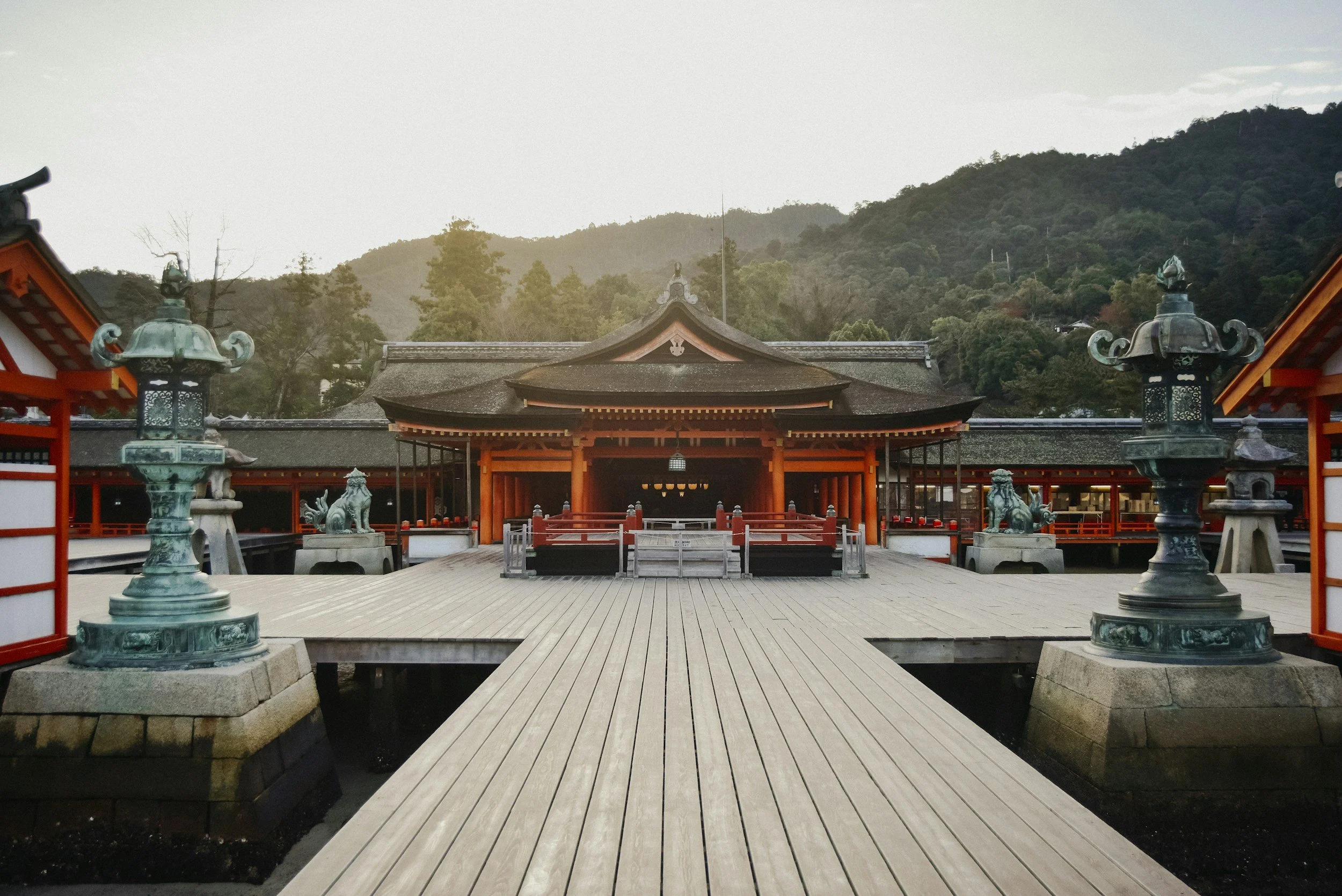
Shinto Tradition
A reverence for kami—spirits of place, ancestor, and phenomenon—woven into daily life in Japan. Shinto emphasizes purification, seasonal ritual, and harmony between human community and the natural world.
Introduction
Shinto is the indigenous spiritual tradition of Japan, centered on reverence for the kami—sacred presences that inhabit natural forces, ancestral lines, landscapes, and phenomena. Kami are not distant creator gods but immanent powers: mountains, rivers, storms, ancestors, even particular places may hold them. Shinto practice emphasizes purification, seasonal festivals, offerings, and community ritual conducted at shrines marked by torii gates. There is no single sacred scripture or fixed dogma; instead, the tradition lives through ritual continuity and cultural memory. Deeply interwoven with Japanese history and daily life, Shinto coexists alongside Buddhism and other influences. At its heart, it is a religion of relationship and harmony—between people, land, and the unseen presences that dwell within it.
Shinto, Japan’s native spirituality, honors kami—nature spirits, deities, and ancestors. From purification rituals and festivals to local shrine worship, Shinto weaves the sacred into everyday life. Discover how this ancient reverence for kami continues to shape Japanese identity, blending ritual purity, community celebration, and the quiet awe of a world alive with spirits.