Fae, Forests & Midsummer Magic: What Shakespeare Knew and the Folk Remembered
A Midsummer Night's Dream is usually discussed as theater — as comedy, as romance, as Shakespeare's most perfect structural achievement. What it is less often discussed as is folklore documentation.
The specific supernatural mechanics of Shakespeare's midsummer — the fairy court with its internal politics, the capacity of the fae to meddle in human affairs through dreams and enchantment, the forest as the place where the ordinary rules of the human world break down, the night itself as a period when nothing can be taken as it appears — are not Shakespeare's invention. They are the living folklore of his time, the specific beliefs of the English countryside, the things that the people in his audience believed because their grandparents had believed them and their grandparents had believed them going back to a time before the Norman Conquest reorganized the cultural landscape of the island. Shakespeare set his play at midsummer because midsummer was when these things happened. The play is set in the woods at night on the eve of the solstice because that is where and when the fae were most present and most powerful. He did not invent the premise. He dramatized it.
Understanding this changes the play — and it changes Litha. The midsummer fae are not sweet creatures of Victorian fantasy, reduced to tinker-bell scale and given gauze wings and a benevolent disposition. They are the beings of the folk tradition: beautiful, powerful, dangerous, operating by their own rules, perfectly capable of ruining a human life while believing themselves to have done something entirely reasonable. Oberon does not think of himself as malicious when he orders Puck to enchant Titania. The fae do not think of themselves as malicious when they interfere in human affairs. That is part of what makes them terrifying.
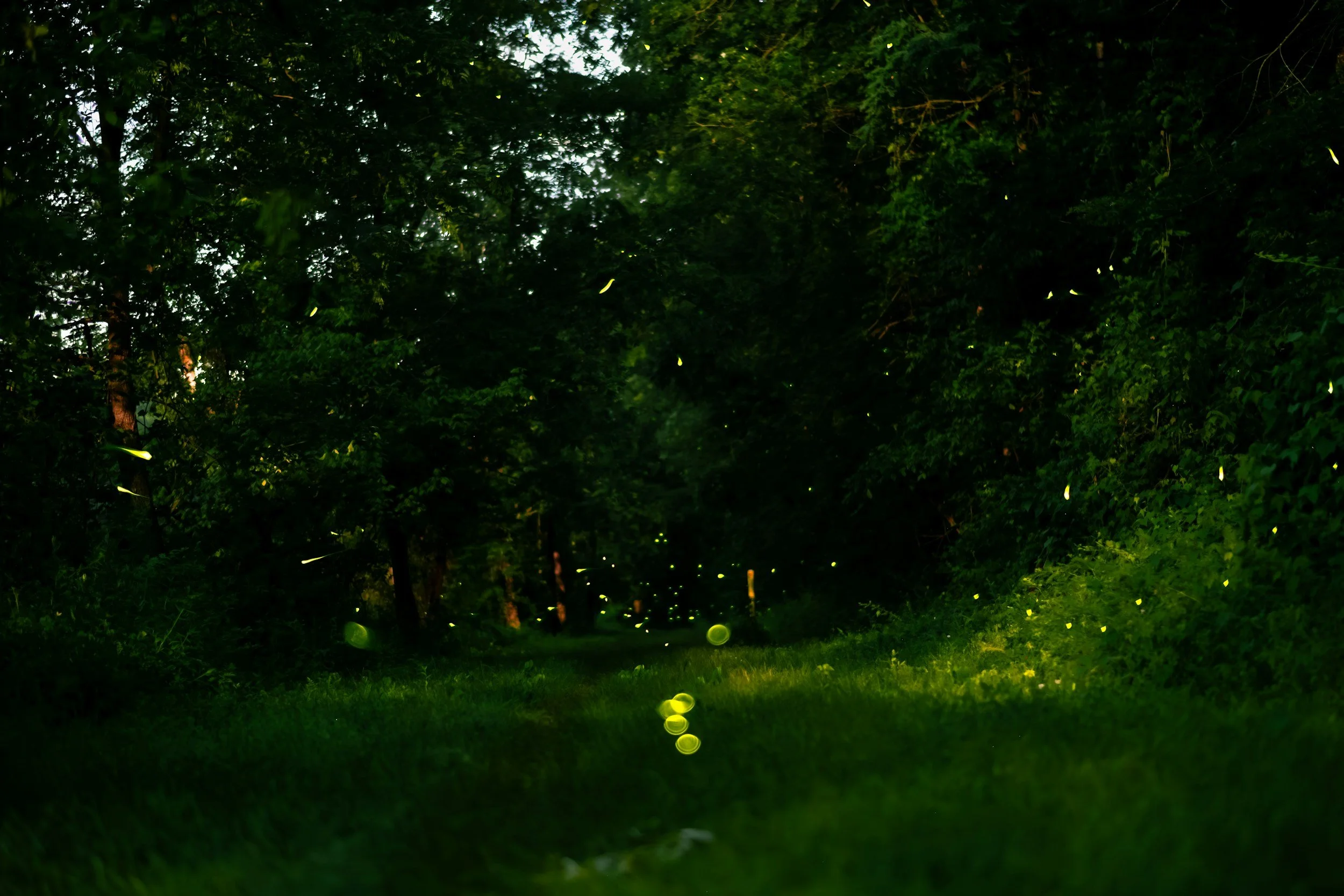
Why Midsummer: The Fae at Their Peak
The Beltane fae and the Litha fae are related but not identical. Beltane's supernatural activity is threshold energy — the crack between the cold world and the warm one, the moment when the membrane is at its thinnest and anything can cross in either direction. Litha's supernatural activity is something different: it is the energy of the peak, of fullness at its most extreme, of power so concentrated that it spills over the edges of the ordinary world into the supernatural one.
Think of it this way: at Beltane, the door between the worlds opens. At Litha, both worlds are so full of energy that containment becomes difficult. The fairy court does not need a door at midsummer. They are present because the world is too full of itself to keep anything out. The overflowing abundance of the solstice — the longest day, the most light, the loudest birdsong, the most extravagant flowering — creates conditions in which the boundary between the human and supernatural worlds becomes permeable not through thinning but through overflow.
"The veil does not thin at midsummer. It stretches. It is still there — but the pressure on both sides is so great that what was separate begins to bleed through. This is a different kind of liminal than Samhain or Beltane. This is the liminality of a world too full to hold its own edges."
In the folk tradition of the British Isles, the specific activities attributed to the fae at midsummer were distinct from their Beltane behavior. Where Beltane saw the Fairy Rade — the court processing ceremonially through the landscape — midsummer saw the fae at play, at court, at their most socially complex and least predictable. The fairy court at midsummer was not traveling. It was gathered. And a gathered court is a court with energy to spend, with attention available for whatever catches its interest, with the particular danger of the bored and powerful.
The Green Man: The Forest's Own Face
Litha's forest is not simply a backdrop for the fae. It is itself a supernatural presence — and at the solstice, the figure who embodies the forest's own intelligence and power is at his most fully expressed.
The Green Man — the foliate face carved into the stonework of medieval churches across Europe, leaves pouring from his mouth, his features half-obscured by the growth he generates — is one of the most persistently mysterious figures in the entire Western supernatural tradition. He appears in churches from the twelfth century onward, carved by craftsmen who were nominally Christian into the sacred architecture of Christianity with an insistence that suggests either deliberate preservation of something older or an irresistible folkloric force that expressed itself through whatever hands were available.
His origins are disputed and genuinely unclear. The most careful scholars resist the temptation to connect him directly to any specific pre-Christian deity, because the evidence for that connection is thin. What is not thin is the evidence of his presence: hundreds of carved foliate faces across England, France, Germany, and beyond, in contexts ranging from the central bosses of cathedral vaulting to the capitals of minor parish churches, always the same image — the face that is also the forest, the intelligence that looks out from the green.
Picture the nave of a Norman church in the English countryside, sometime in the twelfth century. The congregation is gathered for the midsummer feast of John the Baptist, the Christian reframing of the solstice that has absorbed the date but not quite absorbed everything that the date meant. Above them, in the carved stonework of the arcade, the Green Man looks down from three or four different positions — this church's carvers were generous with him. The leaves pour from his mouth in the specific way that suggests speech: the forest speaking through a human face, or a human face speaking through the forest, the two things so thoroughly merged that the distinction is theological rather than practical. Nobody in the congregation looks up at him. He has always been there. He will always be there. The sermon proceeds.
The Green Man is at his peak at Litha because the forest is at its peak at Litha — the canopy at maximum density, the undergrowth at its most impenetrable, the living world of the woods most completely itself. To enter a midsummer forest at midday is to enter a green world so enclosed, so total in its vegetation, that the human world outside it seems to retreat. The Green Man's domain is most fully established at the solstice. His face, in the carved stone, is most alive in June.
In contemporary practice, the Green Man is invoked at Litha as the male principle of the living earth — the companion to the goddess in her summer fullness, the forest's own deity, the intelligence that moves through the green at the peak of the growing season. He is not a named god from a specific mythology. He is older than names, or he predates the transmission of names, which amounts to the same thing.
Fairy Rings and Midsummer Ground
The fairy ring — the circle of darker grass, or the circle of mushrooms, that appears in meadows and at the edges of forests and that the folk tradition consistently attributed to fairy dancing — was at its most active and most dangerous at midsummer.
The practical explanation for fairy rings is fungal: the rings are produced by a single mycelial network expanding outward from a central point, the mushrooms fruiting at the expanding edge, the darker grass produced by the nitrogen released as the inner mycelium decomposes. They can be centuries old, the mycelial network expanding steadily, the ring growing larger each year. The oldest documented fairy rings in Britain are estimated to be hundreds of years in diameter and corresponding in age.
But the folk tradition predates the fungal explanation, and its specific claims about midsummer fairy rings were precise enough to suggest something more than random superstition. The rings were most dangerous, in the consistent folk account, on midsummer night — when the fae danced in them, and when any human who stepped into the ring risked being drawn into the dance and carried into the Otherworld, emerging in a mortal world that had moved on by years or decades while the dancer experienced what seemed like a single night.
The specific danger of the midsummer fairy ring was temporal. To enter was not necessarily to be harmed in any bodily sense. It was to slip out of time — to experience the Otherworld's relationship to duration, which was nothing like the human one. A night in the fairy ring was a night of extraordinary music and beauty and dancing that felt complete in itself, and the person who emerged would discover that weeks or months or years had passed in the mortal world while they danced.
"The fairy ring at midsummer was not a trap set for humans. It was simply a place where a different relationship to time was in operation — where the Otherworld's calendar, which has no particular interest in aligning with the human one, briefly became the dominant reality. The human who stepped in was not taken. They simply found themselves in a world where the rules were different, and those rules did not pause for human discomfort."
The protection against fairy rings was pragmatic: don't step in them. Especially not at midsummer. Especially not at night. Walk around them. If you must pass close, turn your coat inside out — the reversal of clothing confused the fae, disrupted the enchantment, created a momentary barrier through the simple act of inversion. A four-leafed clover in the pocket allowed you to see the ring for what it was before you were inside it. Iron, as always, provided protection.
Midsummer Night Divination: What the Long Night Reveals
✦ ✦ ✦
The folk tradition of the British Isles associated midsummer night with divination in forms distinct from those of Samhain or Imbolc. Where Samhain's divination was about survival — will I live through the winter, will I marry, what does the coming dark hold — and Imbolc's divination was about hope — is spring truly coming, what do the first signs say — midsummer's divination was about truth. About seeing clearly. About the specific quality of the solstice night, which was understood to strip away the illusions that the rest of the year permitted.
The Fern Seed: Among the most widely distributed of midsummer's folk beliefs was the legend of the fern seed. Ferns do not flower and do not produce visible seeds — their reproduction is through spores, microscopic and invisible. The folk tradition, reasoning from this invisibility, held that ferns did flower at midsummer midnight, and that the invisible seed produced at that moment conferred invisibility on whoever could gather it. To collect fern seed was extraordinarily difficult: it was visible only for an instant, on only one night of the year, required a white cloth held beneath the frond at the precise moment of midnight, and was contested by supernatural forces who would attempt to distract the gatherer or claim the seed before it fell.
The legend of fern seed is documented across England, Scotland, Germany, Poland, and the broader Slavic world — appearing in Shakespeare (Henry IV, Falstaff mentions it), in German folklore collections, in Polish midsummer customs. Its persistence across this geographic range suggests either a genuinely ancient origin or an idea so intuitive — that the longest night reveals what is ordinarily invisible — that it generated itself independently in multiple traditions.
Running Water at Midsummer: Wells and springs and rivers at midsummer were understood as particularly oracular. The practice of looking into a well or a still pool on midsummer night — by moonlight, or by the light of a candle reflected in the water — was a form of scrying specific to the solstice, the water's surface acting as a mirror for the specific revelations the long night made possible.
The Dream of Midsummer: Sleep on midsummer night was considered prophetic. What you dreamed on the solstice night was understood as a direct communication from the Otherworld — less filtered than ordinary dreams, more literal in its content, more reliable as guidance. The practice of placing specific herbs under the pillow — St. John's Wort, yarrow, mugwort — was intended to encourage and clarify the midsummer dream, to open the channel between the dreaming mind and the fairy world that was most active outside the window.
The Forest at Midnight: Entering Midsummer's Green World
The forest at midsummer midnight is the most complete expression of what Litha's supernatural tradition points toward: a world so fully alive, so saturated with the energy of the solstice peak, that the ordinary categories of the human experience — the separation between self and world, between the seen and the unseen, between the human time and the Otherworld's time — temporarily dissolve.
This is what Shakespeare's mechanicals stumble into when they enter the forest to rehearse their play. They are not entering a dangerous place. They are entering a place where the rules are different — where Bottom's transformation into an ass-headed man is not impossible, where Titania's love for him is not absurd, where the fairy king's quarrel with his queen can reorganize the entire natural world in its fallout. The forest at midsummer midnight is a place where the world's ordinary logic has been suspended in favor of something older and stranger and considerably more interesting.
You do not have to believe in fairies to access this quality of the solstice. You only need to go outside, at the longest night of the year, and stand in whatever green is available to you, and pay attention to what the world is doing when it is at its absolute fullest. The birdsong that begins at 3am. The smell of the night-blooming flowers. The specific quality of the solstice dark, which is barely dark at all, which is the color of deep water rather than the color of absence. The sense, which is not imaginary, that something is moving at the edges of what you can see.
The Green Man looks out from the leaves. The fairy ring waits in the meadow. The fern seed is falling, invisibly, exactly once.
Pay attention. The longest night only comes once a year.