FLINT
(Alternate Names: Chert (var.), Fire Stone)
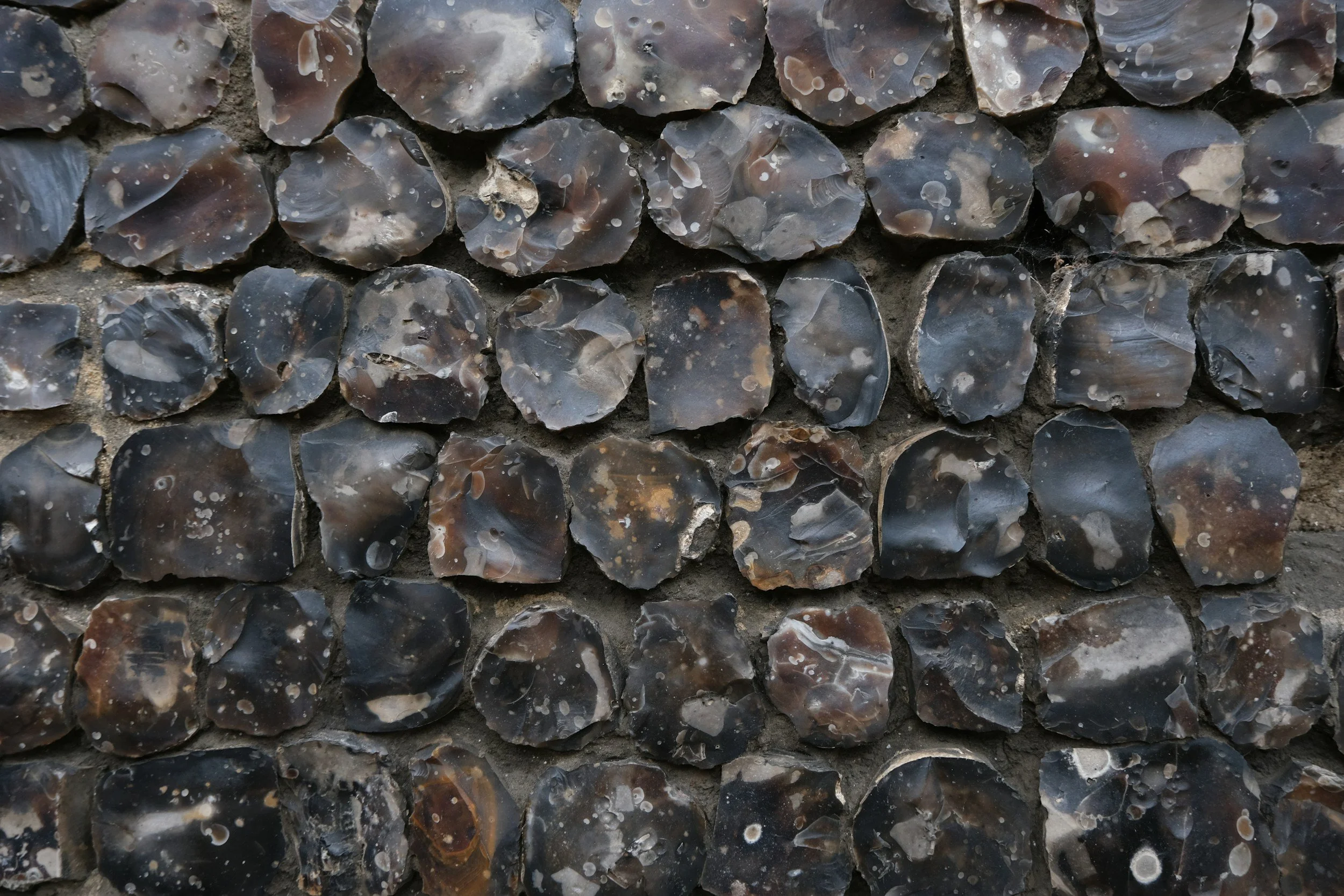
Appearance
Flint is typically dark gray, black, brown, or smoky blue, with a matte to faintly glassy surface and razor-sharp fracture lines when struck. It forms in nodules or rough masses rather than crystals, breaking with conchoidal curves that look deliberately shaped—even when untouched. Dense, cold, and utilitarian, it carries a prehistoric authority.
This is a stone that looks like fire waiting for permission.
Quick Reference Summary
Planet: Mars (secondary: Saturn)
Element: Fire & Earth
Chakra: Root (secondary: Solar Plexus)
Uses: Spark-making, warding, primal protection, boundary defense
Safety: Safe to handle; edges can be sharp
Best For: Protection rites, ancestral magic, survival symbolism, grounding raw power
Planetary Correspondence
Mars governs spark, strike, and defensive force.
A Saturnian undertone adds boundaries, discipline, and endurance.
Flint does not burn constantly—it ignites when needed.
Elemental Association
Fire & Earth — ignition anchored in matter.
This stone teaches that fire begins with friction and intention, not excess.
Chakra / Energy Center
Root Chakra — survival, safety, primal instinct.
A Solar Plexus influence supports decisive action and self-protection.
Ideal for magic that must defend before it declares.
Myth & Lore
One of humanity’s oldest tools, Flint shaped blades, lit fires, and guarded lives long before metal. In folklore and ancestral traditions across Europe and beyond, flint was believed to ward off spirits, lightning, and ill intent—its spark seen as a controlled form of sacred fire.
In modern practice, Flint is regarded as a threshold stone: protective, activating, and deeply ancestral—used where modern polish would feel dishonest.
Magical Properties
Core Uses
– Creates symbolic and literal sparks
– Strengthens warding and protection
– Anchors primal survival magic
– Cuts through interference
– Grounds raw energy into action
Witchcraft Applications
– Protection and warding rites
– Primal or ancestral spellwork
– Boundary-setting rituals
– Fire-starting symbolism in magic
– Defensive workings rooted in instinct
Best Uses in Spellwork
– Protective circles and thresholds
– Spark rituals (ignition of will)
– Ancestral honoring rites
– Survival and resilience magic
– Wards for homes, land, and tools
Pairing Companions
– Obsidian: cutting and reflection
– Fire Agate: aura defense
– Hematite: grounding and containment
– Black Tourmaline: modern warding
– Iron tools or keys: folk synergy
Magical Correspondences
Zodiac: Aries, Capricorn
Deities (optional): Mars, Hephaestus, ancestral fire spirits
Sabbats: Samhain, Imbolc
Intentions: protection, warding, ignition, survival, boundaries
Ritual Tip
Strike Flint (safely) against steel or symbolically tap it to awaken its purpose. State your boundary once. Flint respects decisiveness and silence more than repetition.
Shadow Side (Warnings / Common Myths)
Toxicity: Non-toxic
Water/heat/sunlight safety:
– Water-safe
– Sunlight-safe
– Heat-resistantCleansing cautions:
– Over-polishing dulls its working edgeKnown myths:
– “Too crude for refined magic” (false; its power lies in honesty and function)
Care & Charging Methods
🌿 Safe
– Sunlight
– Moonlight
– Water rinse
– Smoke cleansing
– Sound cleansing
– Placement at thresholds or hearth-adjacent spaces
⚠️ Caution
– Sharp edges; store thoughtfully
❌ Do Not
– Smooth or polish excessively if used ritually
How to Tell Real from Fake
Real Flint:
– Hard, dense feel
– Conchoidal fracture lines
– Matte to faintly glassy surface
Common imitations:
– Dyed glass
– Resin “primitive” stones
If it feels tool-ready rather than decorative, it’s likely real.
Affirmation
“My boundaries spark when crossed.”
Work with Flint when protection must be ancient and immediate—this stone remembers how to strike fire without asking permission.